axe-core Integrations Update

Jonathan Thickens

By Jonathan Thickens

September 17, 2020

axe core integration

Following our release of axe-core 4.0 and the upcoming release of axe DevTools 4.0, we’ve made some changes to our other open-source packages. This post will detail the important changes and provide some insight into the reasons we made them.

Open Source Packages Are Migrating

Possibly the biggest change we’re making is migrating all open-source axe-core integrations to new locations. All previous packages will soon be deprecated, and the replacement packages have a new namespace: axe-core. There were a few reasons for this change. With the upcoming release of axe DevTools 4.0, we decided to rename our open source packages to have more consistent and meaningful package names and prevent confusion between open source and enterprise offerings. 

We are also going to sync the version numbers of all of these packages with their axe-core version. This change was made much easier by migrating all of the packages to new repositories and starting all of their version numbers off at 4.0 to match the latest version of axe-core. Here’s a breakdown of all our new axe-core packages, and which original packages they replace:

NPM packages

Old Package  New Package
react-axe @axe-core/react
axe-webdriverjs @axe-core/webdriverjs
axe-webdriverio @axe-core/webdriverio
axe-puppeteer @axe-core/puppeteer
axe-cli @axe-core/cli

Java Packages

Old Package  New Package
com.deque:axe-selenium-java com.deque.html.axe-core:selenium 

Ruby Packages

The axe-matcher package in Ruby has been split up into five separate packages, each integrating with a different testing framework.

User Impact

If you’re a current user of axe-core open-source packages, you don’t have to worry about anything changing right now. Even though original packages will be deprecated, they will continue to be available. This means you won’t have to worry about migrating right away, and can make the jump when you’re ready.

Other Updates

Besides the locations moving and package names changing, there is one other big update to axe-core 4.0 packages. This change adds new rule customization options via the brand new axe-core standards object. This object allows for customization of how axe-core interprets ARIA role, attributes, and use. The axe-core standards object works with ARIA attributes and roles, DPUB roles, HTML elements, and CSS colors to customize the way axe tests for elements with these properties.

Jonathan Thickens

Jonathan Thickens

Jonathan is an Associate Product Manager and Evangelist working on axe-core and axe DevTools having joined Deque after graduating from the University of Wisconsin-Madison in 2019. His goal is making accessibility testing as user friendly as possible and is passionate about the developer experience of automated accessibility testing.

Tags:  axe-core news

Get blogs in your inbox

No slop, just real accessibility insights from qualified experts.

You consent to Deque receiving, using, and sharing information as stated in Deque's privacy statement. You can change your consent at any time by contacting us.

More on this topic

Test your custom elements and trust the results with Axe-core’s support for ElementInternals

wilco fiers 400x400 1 300x300
August 27, 2026 By Wilco Fiers

If you're a large enterprise organization with accessibility issues resulting from interoperability challenges, moving to ElementInternals is a savvy move. You can standardize, and safely test. And, with Axe-core now supporting ElementInternals, you can test those components and trust the results.

Read Article
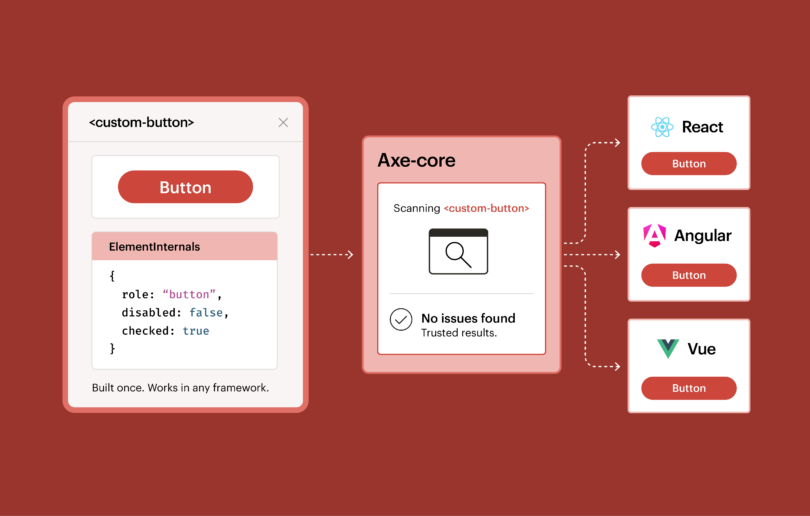
A testing flow, depicting a single custom button scanned by Axe-core for React, Angular or Vue frameworks

Deque and Microsoft: Two decades of shaping the future of accessibility

cropped preety kumar400x400 300x300 1 1.jpg
August 25, 2026 By Preety Kumar

What started nearly two decades ago as conversations between two people passionate about improving accessibility across Microsoft's digital experiences has grown into a lasting partnership built on shared learning, mutual respect, and a common belief that accessibility should be built into every stage of software development.

Read Article
Preety Kumar and Jenny Lay-Flurrie conducting an interview, with the Seattle skyline in the background.