
 Screen readers are designed to do one thing: read what’s on the screen. That’s why they call them screen readers, right? You would think that screen reader software would have perfected the art of reading text by now, because that was the whole reason why screen readers were invented. If there’s one thing a screen reader ought to do really well, it’s read what’s on the screen.
Unfortunately, screen readers don’t always read what’s on the screen. Sometimes that’s OK, but sometimes that’s really bad. If a screen reader fails to read important text, the user will fail to understand it. It’s not the user’s fault, and it’s usually not the web developer’s fault either. These are problems with the screen reader software itself. It’s high time for screen reader programmers to fix these problems, and to get some consistency across brands of screen readers, because right now it’s kind of a mess… and I’m just talking about text, typographic symbols, and static HTML here: the things that screen readers are supposed to excel at reading.
- Part 1 of this series focuses on the way screen readers read (or don’t read) punctuation and typographic symbols.
- Part 2 will focus on the problems with inline semantic markup.
- Part 3 will focus on problems with pronunciation, including common content — like telephone numbers, dates, and abbreviations — as well as uncommon or new words, or words with more than one possible pronunciation.
You Can’t Count on Screen Readers to Read Most Punctuation or Typographic Symbols
The way screen readers treat punctuation is incredibly inconsistent from one screen reader to another, and there isn’t a single screen reader on the market that can reliably handle the full set of punctuation marks and typographical symbols that you might want to use. If you type an HTML document using all the punctuation marks available on your keyboard and listen to a screen reader read the document in a web browser, you’ll hear only some of the punctuation and characters read aloud to you. If you use HTML entities or other special characters, you’ll hear even less.
This is partly (but not entirely) by design. Screen reader manufacturers have understandably decided that most users don’t need to hear every comma, period, and apostrophe in a document. Screen readers will pause at commas rather than say “comma,” and screen readers will say “don’t” rather than say “don apostrophe t.” Those are reasonable decisions. But every screen reader has major flaws in reading some aspect of typographical symbols.
Here’s a sample of some of the problems:
- The NVDA screen reader, for instance, doesn’t read hardly any typographical symbols at all in its default configuration, making common symbols like asterisks and plus symbols essentially useless to NVDA users. This means web developers can’t use an asterisk to denote a required field on a form, unless they supplement the asterisk with some other NVDA-friendly method.
- Similarly, NVDA ignores the plus and equals symbols. It says “five two seven” when it should say “five plus two equals seven,” making it hard — or impossible — to write basic math expressions.
- JAWS reads the plus symbol correctly, but not the minus symbol. Jaws incorrectly says “five dash two” when it should say “five minus two,” even when using the HTML entity − (not a regular dash) to specify the minus symbol.
- JAWS also reads the “less than or equal to” symbol incorrectly. JAWS says “equals,” which is wrong. Between NVDA and JAWS, web authors who want to write even the most basic of arithmetic expressions — one plus one, or one minus one, for example — can’t count on screen readers to read them right. That’s a serious limitation.
- On the Mac side, VoiceOver doesn’t inform users about quotation marks, parentheses, or dashes, making it so users don’t know when quotation or parenthetical phrases begin or end. To its credit, VoiceOver does pause briefly for these elements, but users won’t know the difference between a dash, parentheses, or a quotation, because all pauses sound the same, even though the reasons for the pauses are all different, and should convey different semantic meanings.
These are just some of the examples of where things can go wrong when trying to use basic punctuation or typographic symbols to communicate on the web. These are significant flaws in the most basic of screen reader functions: reading what’s on the screen. There is too much potential for screen readers to miss out on the information that is right there in front of them. I’m not talking about anything complicated here. I’m talking about the text and symbols right there on your keyboard, and the ones available in HTML entities and other standard character sets.
It’s time for screen reader manufacturers to step up to the plate and design software that does a better job of actually reading what’s on the screen
User Verbosity Preferences versus Default Settings
Screen readers have verbosity settings that let users choose how much punctuation to hear. I’m not saying to take away user preferences. Let users choose their own verbosity level, but the default level needs to be high enough for average users to get the information communicated in typical web content by the authors. Authors need to know that they can trust screen readers to read the text that the authors write, and right now, author’s can’t trust screen readers to do that.
There are certainly reasons for users to ignore some kinds of punctuation under some circumstances. It would be annoying to most users to hear every single comma or period in every sentence sentence, for example. And sometimes users would rather hear a pause than hear every opening and closing parenthesis. That’s understandable. By pausing instead of reading all punctuation, screen readers sound more natural and human-like, and that can be a good thing.
But when the punctuation or typographic symbols convey important meaning, users need to be able to hear the punctuation and symbols, or the meaning will be lost. At the extreme end, blind web developers probably need to hear all the punctuation when reading HTML or JavaScript code, for example. They may want to toggle the verbosity setting to “all punctuation” when reading code, and use a less verbose mode for reading prose. There’s no need to force a high verbosity level on all users.
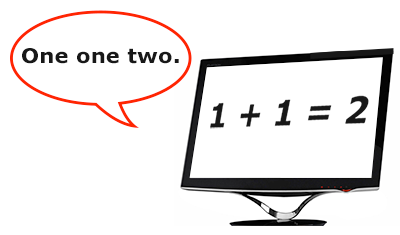
Even so, the verbosity probably should not be set so low by default that the screen reader can’t even read a URL correctly (for example, by not reading the colon or slashes), or convey even the most basic punctuation to readers. NVDA’s settings, in particular, are so sparse that users hear almost no punctuation or symbols at all. That doesn’t seem right, and it leaves authors with a no-win choice of either stripping the document of nearly all punctuation for all users, or writing out everything in words instead of punctuation (like “1 plus 1 equals 2” instead of “1+1=2”), or simply saying “I don’t care what the screen reader does. It should read the text, but it doesn’t. It’s not my fault. I’m not responsible, because I did my part by putting the text in there.”
Screen Reader Flaws Breed Apathy
Screen reader flaws breed apathy among web developers and content writers. Such apathy is counter-productive to the goal of creating an accessible web. Too many people will just assume that screen readers are always a little bit broken, and not bother to investigate workarounds, especially for the simplest tasks, like reading the text and punctuation on the screen. No one should have to wonder if a screen reader will read text.
Testing How Screen Readers Read Typographical Symbols
I knew that screen readers were inconsistent in the way they handled typographical symbols, but I didn’t know all of the intricate details of exactly what they did or didn’t read, so I set up some tests.
Versions Tested:
- NVDA 2013.3, tested with Firefox 26.0 on Windows 7
- JAWS 15.0.4203, tested with Internet Explorer 9.0.23 on Windows 7 and Internet Explorer 11 on Windows 8
- VoiceOver OSX 10.9.1, tested with Safari 7.0 (9537.71)
In all cases, the screen reader language was set to English. The doctype was HTML 5. The character encoding was UTF-8.
I didn’t test every possible typographical character possible; not even close. I chose from among the more common characters; characters that most English-speaking authors would expect screen readers to get right. A more comprehensive test would involve different languages, all the characters in UTF-8, and all the HTML entities. I’m not going to be that thorough. I admit I sympathize with screen reader manufacturers when considering the scale of the task once you consider all possible character sets, but with just this limited set of common characters, the results are still disappointing.
Findings:
JAWS Bugs
First of all, it’s time to fix the bugs, in JAWS in particular. How is it that there are still bugs in screen reader software for reading basic text and typographical symbols? That’s something screen readers should have perfected long, long ago.
| Symbol | Markup | JAWS says | JAWS should say |
|---|---|---|---|
| – | − | “dash” | minus |
| ? | ≤ | “equals” | less than or equal to |
| ? | ≥ | “equals” | greater than or equal to |
| ~ | ≈ | “tilde” | approximately equals |
| ? | ≠ | “question mark” | not equals |
Safe Characters (all screen readers read the characters out loud):
If you need the typographical symbols to be read out loud explicitly, of the 91 symbols tested, the only “safe” symbols to use across all screen readers tested in their default configurations are these 17:
- @ (the at symbol)
- & (ampersand, written either as & or & in the markup)
- / (slash)
- © (copyright, written as ©)
- ® (registered, written as ®)
- ™ (trademark, written as ™)
- ¶ (paragraph, written as ¶)
- • (bullet, written as •)
- $ (dollar)
- € (Euro, written as €)
- £ (British pound, written as £)
- ¥ (Yen, written as ¥)
- % (percent)
- ½ (one half, written as ½)
- ¼ (one fourth, written as ¼)
- ¾ (three fourths, written as ¾)
- ° (degrees, written as °)
Everything else fails in at least one of the three screen readers tested. When I say it “fails,” I mean that the symbol itself isn’t read out loud. Sometimes that’s OK, but often it is not OK.
Safe, But Sometimes Unspoken Characters (often accompanied by a pause or voice inflection)
Just to be clear: just because a screen reader doesn’t read something out loud doesn’t always mean you can’t use it. It just means that the meaning of that symbol will not be communicated explicitly. If the meaning of the symbol is essential to your message, be very cautious in how you use the symbols. If the meaning of a symbol is only tangential or not essential to the message, you have a bit more freedom.
You can use such punctuation as periods, commas, semi-colons, colons, parentheses, brackets, quotation marks, dashes, exclamation points, question marks and some others. JAWS is the most likely of the screen readers to read these kinds of punctuation marks. NVDA is the least likely. Across all three screen readers, most of these punctuation marks will generate pauses, or voice inflections in the case of exclamation marks and question marks. Just don’t expect the screen reader to actually read most of these punctuation marks themselves out loud unless the user pauses and listens character by character, or unless the user changes the default settings of the screen reader.
To give a specific example, if you’re OK with the user simply hearing a pause at the beginning and end of a quotation, you’ll be fine. But if you need the user to know that the reason for the pause is because there are quotation marks, you’re out of luck in all screen readers except JAWS.
Unread Characters (meaning that at least one screen reader will not read the character out loud):
- ~ (tilde)
- ‘ (backtick)
- ! (exclamation mark)
- ¡ (inverted exclamation mark, written as ¡)
- # (pound sign)
- ^ (caret)
- * (asterisk)
- ( (left parenthesis)
- ) (right parenthesis)
- – (dash)
- — (m dash, written as —)
- — (double dash)
- – (n dash, written as –)
- _ (underscore)
- , (comma)
- . (period)
- … (pseudo ellipses, three periods)
- … (ellipses, written as …)
- \ (backslash)
- | (vertical bar)
- ? (question mark)
- ¿ (inverted question mark, written as ¿)
- ; (semi-colon)
- : (colon)
- ” (quotation mark)
- ” (quotation mark, written as ")
- ” (left double quotation mark, written as “)
- “ (right double quotation mark, written as ”)
- « (left double angle bracket, written as «)
- »; (right double angle bracket, written as »)
- ‹ (left single angle bracket, written as ‹)
- › (right single angle bracket, written as ›)
- ‘ (single quote, or apostrophe)
- ’ (right single quote, written as ’)
- ‘ (left single quote, written as ‘)
- { (left brace)
- } (right brace)
- [ (left bracket)
- ] (right bracket)
- § (section, written as §)
- · (small bullet, written as ·)
- † (dagger, written as †)
- ‡ (double dagger, written as ‡)
- ? (right arrow, written as →)
- ? (left arrow, written as ←)
- ? (up arrow, written as ↑)
- ? (down arrow, written as ↓)
- ? (horizontal arrow, written as ↔)
- ? (left double arrow, written as ⇐)
- ? (right double arrow, written as ⇒)
- ? (up double arrow, written as ⇑)
- ? (down double arrow, written as ⇓)
- ? (horizontal double arrow, written as ⇔)
- ? (spades, written as ♠)
- ? (clubs, written as ♣)
- ? (hearts, written as ♥)
- ? (diamonds, written as ♦)
- + (plus)
- – (minus, written as −)
- ± (plus or minus, written as ±)
- ÷ (divided by, written as ÷)
- × (multiplied by, written as ×)
- = (equals)
- ? (not equals, written as ≠)
- ? (approximately equals, written as ≈)
- ‰ (per mil, written as ‰)
- < (less than, written as <)
- > (greater than, written as >)
- ? (less than or equal to, written as ≤)
- ? (greater than or equal to, written as ≥)
- ? (prime, written as ′)
- ? (double prime, written as ″)
- ? (sum, written as ∑)
The least verbose of the screen readers tested was NVDA, by a large margin. If not for NVDA, the number of characters read out loud would be much higher. JAWS and VoiceOver have problems of their own though.
Here are the detailed tables showing which symbols were, or weren’t read by which screen readers.
| Symbol | Die Figur an sich | Im Kontext | JAWS 15 | NVDA | VoiceOver |
|---|---|---|---|---|---|
| tilde | ~ | https:// www.website.com/ ~user |
Für sich genommen: 
“tilde” Im Zusammenhang:
“H T T P colon slash slash website dot com slash tilde user” |
Für sich genommen: 
nichts Im Zusammenhang:
“H T T P slash slash website dot com slash user” (NVDA does NOT mention the tilde or the colon.) |
Für sich genommen:
“tilde” Im Zusammenhang:
“H T T P slash slash website dot com slash tilde user” (VoiceOver reads the tilde, but not the colon) |
| backtick mark | ` | &id=?1? | Für sich genommen:
“grave” (the “a” is pronounced with an “ah” sound, like the “a” in “bravo”) Im Zusammenhang:
“and I D equals grave one grave” |
Für sich genommen:
nichts Im Zusammenhang: “and I D one” (NVDA does NOT pronounce the tick mark or the equals sign.) |
Für sich genommen:
“accent” Im Zusammenhang:
“and I D equals one” (VoiceOver does NOT read the backtick.) |
| exclamation mark | ! | This is exciting!
This is exciting. |
Für sich genommen:
“exclaim” Im Zusammenhang:
JAWS does not change voice inflection at all. |
Für sich genommen:
nichts Im Zusammenhang:
NVDA changes the inflection very slightly (almost imperceptibly) when there is an exclamation mark at the end of a sentence. |
Für sich genommen:
“exclaim” Im Zusammenhang:
Nothing. VoiceOver does not change voice inflection at all when a sentence ends in an exclamation mark. |
| inverted exclamation mark, typed as ¡ | ¡ | Intersante. ¡Ay caramba!
Intersante. Ay caramba. |
Für sich genommen:
“inverted exclaim” Im Zusammenhang:
JAWS changes the inflection of the last word, but does not mention the inverted exclamation mark at the beginning. |
Für sich genommen:
nichts Im Zusammenhang:
NVDA reads the exclamation with a different inflection, but does not mention the inverted exclamation mark at the beginning. |
Für sich genommen:
“inverted exclamation mark” Im Zusammenhang:
VoiceOver does NOT change voice inflection. (It also does NOT change language, even though lang=”es” is added to the td tag. |
| at symbol | @ | I have a message for @paul | Für sich genommen:
“at” Im Zusammenhang:
“I have a message for at Paul” (But JAWS slurs the “at” and “Paul” together, so people might easily miss the “at”) |
Für sich genommen:
“at” Im Zusammenhang:
“I have a message for at Paul” |
Für sich genommen:
“at” Im Zusammenhang:
“I have a message for at Paul” |
| pound/hash/number sign | # | I live at apartment #40 | Für sich genommen:
“number” Im Zusammenhang:
I live at apartment number 40″ |
Für sich genommen:
nichts Im Zusammenhang:
“I live at apartment 40” (NVDA does NOT read the number sign) |
Für sich genommen:
“number” Im Zusammenhang:
I live at apartment number 4 zero” |
| caret | ^ | This is ^not the worst I’ve seen | Für sich genommen:
“caret” Im Zusammenhang:
“This is caret not the worst I’ve seen” |
Für sich genommen:
nichts Im Zusammenhang:
“This is not the worst I’ve seen (NVDA does NOT read the caret) |
Für sich genommen:
“caret” Im Zusammenhang:
“This is caret not the worst I’ve seen” |
| ampersand, typed as & | & | M&Ms
BB&T black & white |
Für sich genommen:
“and” Im Zusammenhang:
|
Für sich genommen:
“and” Im Zusammenhang:
|
Für sich genommen:
“and” Im Zusammenhang:
|
| ampersand | & | M&Ms
BB&T black & white |
Für sich genommen:
“and” Im Zusammenhang:
|
Für sich genommen:
“and” Im Zusammenhang:
|
Für sich genommen:
“and” Im Zusammenhang:
|
| asterisk | * | Fields marked with * are required.
Name* |
Für sich genommen:
“star” Im Zusammenhang:
|
Für sich genommen:
nichts Im Zusammenhang:
|
By itself: “star”
Im Zusammenhang:
|
| left parenthesis | ( | I am (understandably) excited. | Für sich genommen:
“left paren” Im Zusammenhang:
“I am left paren understandably right paren excited” |
Für sich genommen:
nichts Im Zusammenhang:
NVDA does not say anything, nor does it pause; it reads straight through |
Für sich genommen:
“left paren” Im Zusammenhang:
VoiceOver pauses briefly for the opening and closing parentheses, but does not say anything. |
| right parenthesis | ) | I am (understandably) excited. | Für sich genommen:
“right paren” Im Zusammenhang:
“I am left paren understandably right paren excited” |
Für sich genommen:
nichts Im Zusammenhang:
NVDA does not say anything, nor does it pause; it reads straight through |
Für sich genommen:
“right paren” Im Zusammenhang:
VoiceOver pauses briefly for the opening and closing parentheses, but does not say anything. |
| dash | – | blue-green.
This is — not unexpectedly — a parenthetical clause. |
Für sich genommen:
“dash” Im Zusammenhang:
“blue dash green” “This is m dash not unexpectedly m dash a parenthetical clause.” |
Für sich genommen:
nichts Im Zusammenhang:
NVDA does not say anything, nor does it pause; it reads straight through |
Für sich genommen:
“dash” Im Zusammenhang:
“blue green”. VoiceOver does not read the dash. |
| m dash, typed as — | — | This is also—not unexpectedly—a parenthetical clause. | Für sich genommen:
“m dash” Im Zusammenhang:
“This is also m dash not unexpectedly m dash a parenthetical clause.” |
Für sich genommen:
nichts Im Zusammenhang:
NVDA does not say anything, nor does it pause; it reads straight through |
Für sich genommen:
“m dash” Im Zusammenhang:
VoiceOver pauses briefly for each of the m dashes, but does not say anything. |
| n dash, typed as – | – | This is another – not unexpectedly – parenthetical clause.
This is another–not unexpectedly–parenthetical clause. |
Für sich genommen:
“n dash” Im Zusammenhang:
“This is another n dash not unexpectedly n dash parenthetical clause.” |
Für sich genommen:
nichts Im Zusammenhang:
NVDA does not say anything, nor does it pause; it reads straight through |
Für sich genommen:
“n dash” Im Zusammenhang:
VoiceOver pauses briefly for each of the m dashes, without saying anything, but ONLY IF there are spaces between the words and the dashes. Without spaces, VoiceOver does not pause at all. |
| underscore | _ | my_file_name.jpg | Für sich genommen:
“underline” Im Zusammenhang:
“my underline file underline name dot J P G” |
Für sich genommen:
nichts Im Zusammenhang: “my file name dot J P G” (NVDA does not say “underline”) |
Für sich genommen:
“underline” Im Zusammenhang:
“my underline file underline name dot jaypeg” |
| comma | , | The house is green, red, and orange. | Für sich genommen:
comma Im Zusammenhang: JAWS pauses briefly, but does not say “comma” |
Für sich genommen:
nichts Im Zusammenhang:
NVDA pauses briefly, but does not say “comma” |
Für sich genommen:
“comma” Im Zusammenhang:
VoiceOver pauses briefly, but does not say “comma” |
| period | . | I like cheese. | Für sich genommen:
“period” Im Zusammenhang: JAWS pauses, but does not say “period” |
Für sich genommen:
„Punkt“ Im Zusammenhang: NVDA pauses, but does not say “period” |
Für sich genommen:
“period” Im Zusammenhang: VoiceOver pauses, but does not say “period” |
| three periods (pseudo ellipses) | … | This sentence trails off… And here is another sentence. | Für sich genommen:
“dot dot dot” Im Zusammenhang:
“This sentence trails off dot dot dot and here is another sentence” |
Für sich genommen:
nichts Im Zusammenhang: NVDA pauses briefly, but does not read the periods |
Für sich genommen:
nichts Im Zusammenhang: VoiceOver does not say “ellipses,” but it does pause longer than normal. |
| ellipses typed as … | … | This sentence trails off… And here is another sentence. | Für sich genommen:
“ellipses” Im Zusammenhang:
JAWS does not say “ellipses,” but it does pause longer than normal. |
Für sich genommen:
nichts Im Zusammenhang:
NVDA pauses briefly, but does not read the ellipses |
Für sich genommen:
“ellipses” Im Zusammenhang: VoiceOver does not say “ellipses,” but it does pause longer than normal. |
| forward slash | / | home/products/widgets
Give him/her a prize. https://www.deque.com |
Für sich genommen:
“slash” Im Zusammenhang:
|
Für sich genommen:
“slash” Im Zusammenhang:
|
Für sich genommen:
“slash” Im Zusammenhang:
|
| backslash | \ | c:\folder\file.docx | Für sich genommen:
“backslash” Im Zusammenhang:
“c colon backslash folder backslash file dot docx” |
Für sich genommen:
nichts Im Zusammenhang:
nichts |
Für sich genommen:
“backslash” Im Zusammenhang:
“c backslash folder backslash file dot docx” |
| vertical bar | | | Products | Our web site | Für sich genommen:
“vertical bar” Im Zusammenhang:
“Products vertical bar our web site” |
Für sich genommen:
nichts Im Zusammenhang:
nichts |
Für sich genommen:
nichts Im Zusammenhang:
“Products vertical line our web site” |
| question mark | ? | What do you mean?
Are you crazy?? Are you still crazy?!? |
Für sich genommen:
“question?” Im Zusammenhang:
|
Für sich genommen:
nichts Im Zusammenhang:
|
Für sich genommen:
“question” Im Zusammenhang:
|
| inverted question mark, typed as ¿ | ¿ | No estoy seguro. ¿Quién soy?
No estoy seguro. Quién soy. |
Für sich genommen:
“inverted question” Im Zusammenhang:
JAWS changes the inflection for the question, but does not mention the inverted question mark at the beginning. |
Für sich genommen:
nichts Im Zusammenhang:
NVDA changes the voice inflection for the question, but does not mention the inverted question mark at the beginning |
Für sich genommen:
“inverted question mark” Im Zusammenhang:
VoiceOver does NOT change inflection (and it ignores the lang=”es” set on the td tag) |
| semi-colon | ; | The sentence paused; but not for long. | Für sich genommen:
“semi-colon” Im Zusammenhang:
“The sentence paused semi-colon but not for long” |
Für sich genommen:
nichts Im Zusammenhang:
NVDA pauses briefly, but does NOT read the semi-colon |
Für sich genommen:
“semi-colon” Im Zusammenhang:
VoiceOver pauses briefly, but does NOT say “semi-colon” |
| colon | : | Gaseous: having the properties of a gas.
https://www.deque.com |
Für sich genommen:
“colon” Im Zusammenhang:
|
Für sich genommen:
nichts Im Zusammenhang: NVDA pauses briefly, but does NOT read the colon |
Für sich genommen:
“colon” Im Zusammenhang: VoiceOver pauses briefly, but does NOT say “colon” |
| double quotation mark | “ | I feel “fine,” she said, sarcastically. | Für sich genommen:
“quote” Im Zusammenhang:
“I feel quote fine quote she said sarcastically” |
Für sich genommen:
nichts Im Zusammenhang: nichts |
Für sich genommen:
“quote” Im Zusammenhang: VoiceOver pauses briefly but does NOT say “quote” |
| double quotation mark, typed as " | “ | I feel “fine,” she said, sarcastically. | Für sich genommen:
“quote” Im Zusammenhang:
“I feel quote fine quote she said sarcastically” |
Für sich genommen:
nichts Im Zusammenhang:
nichts |
Für sich genommen:
“quote” Im Zusammenhang:
VoiceOver pauses briefly but does NOT say “quote” |
| right double quotation mark | ” | I feel “fine,” she said, sarcastically. | Für sich genommen:
“right quote” Im Zusammenhang:
“I feel left quote fine right quote she said sarcastically” |
Für sich genommen:
nichts Im Zusammenhang:
“I feel fine, she said, sarcastically” |
Für sich genommen:
“right double quotation mark” Im Zusammenhang:
VoiceOver pauses briefly but does NOT say anything |
| left double quotation mark | “ | I feel “fine,” she said, sarcastically. | Für sich genommen:
“left quote” Im Zusammenhang: “I feel left quote fine right quote she said sarcastically” |
Für sich genommen:
nichts Im Zusammenhang:
“I feel fine, she said, sarcastically” |
Für sich genommen:
“left double quotation mark” Im Zusammenhang:
VoiceOver pauses briefly but does NOT say anything |
| left double angle bracket, typed as «t; | « | This is a «word» surrounded by angle brackets. | Für sich genommen:
“left double angle bracket” Im Zusammenhang:
“This is a left double angle bracket word right double angle bracket surrounded by angle brackets” |
Für sich genommen:
nichts Im Zusammenhang:
“This is a word surrounded by angle brackets” |
Für sich genommen:
“left pointing double arrow” Im Zusammenhang:
VoiceOver pauses briefly, but does not pronounce the angle bracket. |
| right double angle bracket, typed as »t; | » | Home » Products | Für sich genommen:
“right double angle bracket” Im Zusammenhang:
“Home double angle bracket products” |
Für sich genommen:
nichts Im Zusammenhang:
“Home products” |
Für sich genommen:
“right pointing double arrow” Im Zusammenhang:
VoiceOver pauses briefly, but does not pronounce the angle bracket. |
| (written as ‹) | ‹ | This is a ‹word› surrounded by angle brackets. | Für sich genommen:
nichts Im Zusammenhang:
“This is a word surrounded by angle brackets” |
Für sich genommen:
nichts Im Zusammenhang:
“This is a word surrounded by angle brackets” |
Für sich genommen:
“left pointing [unintelligible] quotation mark Im Zusammenhang:
VoiceOver pauses briefly, but does not pronounce the angle bracket. |
| (written as ›) | › | Home › Products | Für sich genommen:
nichts Im Zusammenhang:
“Home products” |
Für sich genommen:
nichts Im Zusammenhang: “Home products” |
Für sich genommen:
“right pointing [unintelligible] quotation mark” Im Zusammenhang:
VoiceOver pauses briefly, but does not pronounce the angle bracket. |
| single quotation mark, or apostrophe | ‘ | Don’t rock the boat.
This is Mary’s. This is a ‘quotation’ of sorts. |
Für sich genommen:
“apostrophe” Im Zusammenhang:
|
Für sich genommen:
nichts Im Zusammenhang:
|
Für sich genommen:
“apostrophe” Im Zusammenhang:
|
| right single quotation mark, or right apostrophe, typed as ’ | ’ | Don’t rock the boat.
This is Mary’s This is a ‘quotation’ of sorts. |
Für sich genommen:
“apostrophe” Im Zusammenhang:
|
Für sich genommen:
nichts Im Zusammenhang:
|
Für sich genommen:
“apostrophe” Im Zusammenhang:
|
| left single quotation mark, or left apostrophe, typed as ‘ | ‘ | This is a ‘quotation’ of sorts. | Für sich genommen:
“apostrophe” Im Zusammenhang:
“This is a apostrophe quotation apostrophe of sorts” |
Für sich genommen:
nichts Im Zusammenhang:
nichts |
Für sich genommen:
„rechtes einfaches Anführungszeichen“ Im Zusammenhang:
„Das ist sozusagen ein Zitat“ (Der VoiceOver hält kurz inne, sagt hier aber NICHTS) |
| linke Klammer | { | Du solltest dich {darauf gefasst machen}. | Für sich genommen:
„linke Klammer“ Im Zusammenhang: „Du solltest dich wappnen – links, rechts, wappnen.“ |
Für sich genommen:
nothingIm Kontext: nichts |
„Für sich genommen:
„linke Klammer“ Im Zusammenhang: „Du solltest dich wappnen – links, rechts, wappnen.“ |
| rechte Klammer | } | Du solltest dich {darauf gefasst machen}. | Für sich genommen:
„rechte Klammer“ Im Zusammenhang:
„Du solltest dich wappnen – links, rechts, wappnen.“ |
Für sich genommen:
nichts Im Zusammenhang:
nichts |
Für sich genommen:
„rechte Klammer“ Im Zusammenhang:
„Du solltest dich wappnen – links, rechts, wappnen.“ |
| linke Klammer | [ | Du solltest deine Wörter [in Klammern] setzen. | Für sich genommen:
„linke Klammer“ Im Zusammenhang:
„Du solltest deine Wörter in Klammern setzen.“ |
Für sich genommen:
nichts Im Zusammenhang:
nichts |
Für sich genommen:
„linke Klammer“ Im Zusammenhang:
„Du solltest deine Wörter in Klammern setzen“ (VoiceOver macht eine kurze Pause, sagt aber NICHT „Klammern“) |
| rechte Klammer | ] | Du solltest deine Wörter [in Klammern] setzen. | Für sich genommen:
„rechte Klammer“ Im Zusammenhang:
„Du solltest deine Wörter in Klammern setzen.“ |
Für sich genommen:
nichts Im Zusammenhang:
nichts |
Für sich genommen:
„rechte Klammer“ Im Zusammenhang:
„Du solltest deine Wörter in Klammern setzen“ (Die VoiceOver-Stimme macht eine kurze Pause, sagt aber NICHT „Klammer“) |
| Symbol | Die Figur an sich | Im Kontext | JAWS 15 | NVDA | VoiceOver |
|---|---|---|---|---|---|
| Urheberrecht, geschrieben als © | © | Dieser Inhalt © Deque. | Für sich genommen:
„Urheberrecht“ Im Zusammenhang:
„Das Urheberrecht an diesen Inhalten liegt bei Deque“ |
Für sich genommen:
„Urheberrecht“ Im Zusammenhang:
„Das Urheberrecht an diesen Inhalten liegt bei Deque“ |
Für sich genommen:
„Urheberrechtszeichen“ Im Zusammenhang:
„Dieses Urheberrechtszeichen für den Inhalt: Deque“ |
| Symbol für ein eingetragenes Warenzeichen, geschrieben als ® | ® | Spam® | Für sich genommen:
„registriert“ Im Zusammenhang:
„Als Spam markiert“ |
Für sich genommen:
„registriert“ Im Zusammenhang: „Als Spam markiert“ |
Für sich genommen:
„eingetragenes Zeichen“ Im Zusammenhang:
„Schild ‚Spam registriert‘“ |
| Markenzeichen, TM, geschrieben als ™ | ™ | Passt wie angegossen™ | Für sich genommen:
„Marke“ im Kontext: „Passt wie angegossen – Markenzeichen“ |
Für sich genommen:
„Marke“ Im Zusammenhang: „Passt wie angegossen – Markenzeichen“ |
Für sich genommen:
„Marke“ im Kontext: „Passt wie angegossen – Markenzeichen“ |
| Abschnitt, geschrieben als § | § | Lesen Sie unbedingt § 24.1. | Für sich genommen:
„Abschnitt“ Im Zusammenhang:
„Lesen Sie unbedingt Abschnitt 24.1.“ |
Für sich genommen:
nichts Im Zusammenhang:
„Lesen Sie unbedingt 24,1 vor“ (NVDA liest das Abschnittszeichen NICHT vor) |
Für sich genommen:
„Abschnittszeichen“ Im Zusammenhang:
„Lesen Sie unbedingt Abschnitt Symbol 2.4.1.“ |
| Absatzzeichen, geschrieben als ¶ | ¶ | Haben Sie Absatz 3 auf Seite 3 gesehen? | Für sich genommen:
„Absatz“ Im Kontext: „Hast du den dritten Absatz auf Seite drei gesehen?“ |
Für sich genommen:
„Absatz“ Im Zusammenhang: „Hast du den dritten Absatz auf Seite drei gesehen?“ |
Für sich genommen:
Ich glaube, VoiceOver sagt „para Emoji“, aber es ist wirklich schwer zu verstehen. Im Kontext: „Hast du das Emoji mit den drei Strichen auf Seite 3 gesehen?“ |
| kleines Aufzählungszeichen, geschrieben als · | · | · Ein Satz · und ein weiterer Satz | Für sich genommen:
„Punkt“ Im Zusammenhang:
„Punkt, ein Satz, Punkt, und noch ein Satz“ |
Für sich genommen:
nichts Im Zusammenhang:
„Ein Satz und noch ein Satz“ (NVDA liest den kleinen Aufzählungspunkt NICHT vor) |
Für sich genommen:
nichts Im Zusammenhang:
Der Sprecher liest den Punkt nicht vor und macht auch keine Pause. |
| mittlere Kugel, geschrieben als • | • | • Ein Satz • und ein weiterer Satz
|
Für sich genommen:
„Kugel“ Im Zusammenhang: „Aufzählungspunkt, ein Satz, Aufzählungspunkt und ein weiterer Satz“ |
Für sich genommen:
„Kugel“ Im Zusammenhang:
„Aufzählungspunkt: ein neuer Ausdruck, Aufzählungspunkt: ein weiterer Ausdruck“ |
Für sich genommen:
„Kugel“ Im Zusammenhang:
„Aufzählungspunkt: ein neuer Ausdruck, Aufzählungspunkt: ein weiterer Ausdruck“ |
| Dolch, geschrieben als † | † | Lesen Sie die Fußnote† | Für sich genommen:
„einziger Dolch“ Im Zusammenhang: „Lies die Fußnote mit dem einfachen Dolch“ |
Für sich genommen:
nichts Im Zusammenhang:
„Lies die Fußnote“ (NVDA liest das Kreuzsymbol NICHT vor) |
Für sich genommen:
nichts Im Zusammenhang:
VoiceOver liest das Kreuzzeichen NICHT vor |
| Doppelkreuz, geschrieben als ‡ | ‡ | Lesen Sie die andere Fußnote‡ | Für sich genommen:
„Doppelkreuz“ Im Zusammenhang:
„Lies die andere Fußnote mit dem doppelten Kreuz“ |
Für sich genommen:
nichts Im Zusammenhang:
„Lies die andere Fußnote“ (NVDA liest das Doppelkreuz NICHT vor) |
Für sich genommen:
nichts Im Zusammenhang:
VoiceOver liest das Doppelkreuz NICHT vor |
| Pfeil nach rechts, geschrieben als → | ? | Drücken Sie die Taste „?“. | Für sich genommen:
nichts Im Zusammenhang:
„Drücken Sie die [kurze Pause]-Taste“ (JAWS macht eine Pause, liest das Zeichen jedoch nicht vor) |
Für sich genommen:
„Pfeil nach rechts“ Im Zusammenhang:
„Drücken Sie die rechte Pfeiltaste“ |
Für sich genommen:
„Pfeil nach rechts“ Im Zusammenhang:
„Drücken Sie die rechte Pfeiltaste“ |
| Pfeil nach links, geschrieben als ⇆ | ? | Drücken Sie die Taste „?“. | Für sich genommen:
nichts Im Zusammenhang:
„Drücken Sie die [kurze Pause]-Taste“ (JAWS macht eine Pause, liest das Zeichen jedoch nicht vor) |
Für sich genommen:
„Pfeil nach links“ Im Zusammenhang:
„Drücke die linke Pfeiltaste“ |
Für sich genommen:
„Pfeil nach links“ Im Zusammenhang:
„Drücke die linke Pfeiltaste“ |
| Aufwärtspfeil, geschrieben als ↑ | ? | Drücken Sie die Taste „?“. | Für sich genommen:
nichts Im Zusammenhang:
„Drücken Sie die [kurze Pause]-Taste“ (JAWS macht eine Pause, liest das Zeichen jedoch nicht vor) |
Für sich genommen:
nichts Im Zusammenhang: „Drücken Sie die Taste“ (NVDA liest das Symbol für den Pfeil nach oben NICHT vor) |
Für sich genommen:
„Aufwärtspfeil“ Im Zusammenhang:
„Drücken Sie die Aufwärtspfeiltaste“ |
| Abwärtspfeil, geschrieben als ↓ | ? | Drücken Sie die Taste „?“. | Für sich genommen:
nichts Im Zusammenhang:
„Drücken Sie die [kurze Pause]-Taste“ (JAWS macht eine Pause, liest das Zeichen jedoch nicht vor) |
Für sich genommen:
nichts Im Zusammenhang:
„Drücken Sie die Taste“ (NVDA liest das Symbol für die Pfeiltaste nach unten NICHT vor) |
Für sich genommen:
„Abwärtspfeil“ Im Zusammenhang:
„Drücken Sie die Abwärtspfeiltaste“ |
| horizontaler Pfeil, geschrieben als ↔ | ? | Horizontal um ? verschieben. | Für sich genommen:
nichts Im Zusammenhang: „Drücken Sie die [kurze Pause]-Taste“ (JAWS macht eine Pause, liest das Zeichen jedoch nicht vor) |
Für sich genommen:
nichts Im Zusammenhang:
„Drücke die Taste“ (NVDA liest das Symbol mit dem horizontalen Pfeil NICHT vor) |
Für sich genommen:
„Pfeil nach links, Pfeil nach rechts“ Im Zusammenhang:
„Mit den Pfeiltasten nach links und rechts horizontal bewegen“ |
| doppelter Pfeil nach rechts, geschrieben als ⇒ | ? | Schau mal da drüben – der Hai. | Für sich genommen:
nichts Im Zusammenhang:
„Drücken Sie die [kurze Pause]-Taste“ (JAWS macht eine Pause, liest das Zeichen jedoch nicht vor) |
Für sich genommen:
nichts Im Zusammenhang:
„Drücke die Taste“ (NVDA liest das Symbol mit den beiden Rechtspfeilen NICHT vor) |
Für sich genommen:
nichts Im Zusammenhang:
Der Sprecher liest den Doppelpfeil NICHT vor und macht KEINE Pause. |
| doppelter Pfeil nach links, geschrieben als ⇚ | ? | Schau mal da drüben – der Delfin dort. | Für sich genommen:
nichts Im Zusammenhang:
„Drücken Sie die [kurze Pause]-Taste“ (JAWS macht eine Pause, liest das Zeichen jedoch nicht vor) |
Für sich genommen:
nichts Im Zusammenhang:
„Drücken Sie die Taste“ (NVDA liest das Symbol mit den beiden Pfeilen nach links NICHT vor) |
Für sich genommen:
nichts Im Zusammenhang:
Der Sprecher liest den Doppelpfeil NICHT vor und macht KEINE Pause. |
| Doppelpfeil nach oben, geschrieben als ⇑ | ? | Schau mal da oben – das ist ein Schnabeltier. | Für sich genommen:
nichts Im Zusammenhang:
„Drücken Sie die [kurze Pause]-Taste“ (JAWS macht eine Pause, liest das Zeichen jedoch nicht vor) |
Für sich genommen:
nichts Im Zusammenhang:
„Drücken Sie die Taste“ (NVDA liest das Symbol mit den beiden Aufwärtspfeilen NICHT vor) |
Für sich genommen:
nichts Im Zusammenhang:
Der Sprecher liest den Doppelpfeil NICHT vor und macht KEINE Pause. |
| doppelter Abwärtspfeil, geschrieben als ⇓ | ? | Schau mal da unten … auf dieses Ameisenigelchen. | Für sich genommen:
nichts Im Zusammenhang:
„Drücken Sie die [kurze Pause]-Taste“ (JAWS macht eine Pause, liest das Zeichen jedoch nicht vor) |
Für sich genommen:
nichts Im Zusammenhang:
„Drücken Sie die Taste“ (NVDA liest das Symbol mit den beiden Abwärtspfeilen NICHT vor) |
Für sich genommen:
nichts Im Zusammenhang:
Der Sprecher liest den Doppelpfeil NICHT vor und macht KEINE Pause. |
| doppelter horizontaler Pfeil, geschrieben als ⇔ | ? | Ich bin ? verwirrt. | Für sich genommen:
nichts Im Zusammenhang:
„Drücken Sie die [kurze Pause]-Taste“ (JAWS macht eine Pause, liest das Zeichen jedoch nicht vor) |
Für sich genommen:
nichts Im Zusammenhang:
„Drücke die Taste“ (NVDA liest das Symbol mit dem horizontalen Doppelpfeil NICHT vor) |
Für sich genommen:
nichts Im Zusammenhang:
Der Sprecher liest den Doppelpfeil NICHT vor und macht KEINE Pause. |
| Spielkarten: Pik, geschrieben als ♠ | ? | Nennen wir ein ? einfach ein ?. | Für sich genommen:
nichts Im Zusammenhang:
„Nennen wir a einfach a.“ |
Für sich genommen:
nichts Im Zusammenhang:
„Nennen wir a einfach a“ (NVDA liest das Pik-Symbol NICHT vor) |
Für sich genommen:
„Emoji der Pik-Farbe“ Im Zusammenhang:
„Nennen wir ein Pik-Emoji doch einfach ein Pik-Emoji“ |
| Spielkarten: Kreuz, geschrieben als ♣ | ? | Ich habe ein ? gefunden. Heute ist mein Glückstag. | Für sich genommen:
nichts Im Zusammenhang:
„Ich habe a gefunden. Heute ist mein Glückstag.“ |
Für sich genommen:
nichts Im Zusammenhang:
„Ich habe a gefunden. „Heute ist mein Glückstag.“ (NVDA liest das Vereinssymbol NICHT vor) |
Für sich genommen:
„Emoji mit Klammern“ Im Zusammenhang:
“I found a spades suit emoji. Today is my lucky day.” |
| playing cards: hearts, written as ♥ | ? | I ? you. | Für sich genommen:
nichts Im Zusammenhang:
“I you” |
Für sich genommen:
nichts Im Zusammenhang:
“I you” (NVDA does NOT read the heart symbol) |
Für sich genommen:
“hearts suit emoji” Im Zusammenhang:
“I hearts suit emoji you” |
| playing cards: diamonds, written as ♦ | ? | Someone once said a ? is a girl’s best friend. | Für sich genommen:
“black diamond suit” Im Zusammenhang:
“Someone once said a black diamond suit is a girl’s best friend” |
Für sich genommen:
nichts Im Zusammenhang:
“Someone once said a is a girl’s best friend” (NVDA does NOT read the diamond symbol) |
Für sich genommen:
“diamonds suit emoji” Im Zusammenhang:
“Someone once said a diamonds suit emoji is a girl’s best friend. |
| Symbol | Die Figur an sich | Im Kontext | JAWS 14 | NVDA | VoiceOver |
|---|---|---|---|---|---|
| dollar symbol | $ | $21 | Für sich genommen:
“dollar” Im Zusammenhang:
“dollar twenty one” |
Für sich genommen:
“Dollar” Im Zusammenhang:
“Dollar twenty one” |
Für sich genommen:
“Dollar” Im Zusammenhang:
“Dollar two one” |
| Euro symbol, written as € | € | €21 | Für sich genommen:
“euros” Im Zusammenhang:
“Twenty one Euros” |
Für sich genommen:
“Euros” Im Zusammenhang:
“Euros twenty one” |
Für sich genommen:
“Euro two one” Im Zusammenhang:
“Euro two one” |
| Yen symbol, written as ¥ | ¥ | ¥500 | Für sich genommen:
“yen” Im Zusammenhang:
“Yen five hundred” |
Für sich genommen:
“Yen” Im Zusammenhang:
“Yen five hundred” |
Für sich genommen:
“Yen” Im Zusammenhang:
“Yen five zero zero” |
| Pound symbol, written as £ | £ | £10 | Für sich genommen:
“pounds” Im Zusammenhang:
“ten pounds” |
Für sich genommen:
“Pound” Im Zusammenhang:
“Pound ten” |
Für sich genommen:
“Pound” Im Zusammenhang:
“Pound one zero” |
| Symbol | Die Figur an sich | Im Kontext | JAWS 15 | NVDA | VoiceOver |
|---|---|---|---|---|---|
| plus | + | 5+2 | Für sich genommen:
“plus” Im Zusammenhang:
“5 plus 2” |
Für sich genommen:
nichts Im Zusammenhang:
“five two” (NVDA does NOT read the plus symbol) |
Für sich genommen:
“plus” Im Zusammenhang:
“five plus two” |
| minus, written as − | ? | 5?2 | Für sich genommen:
nichts Im Zusammenhang:
“5 dash 2” (Note that this is the incorrect interpretation of this symbol) |
Für sich genommen:
“minus” Im Zusammenhang:
“five minus two” |
Für sich genommen:
“minus” Im Zusammenhang:
“five minus two” |
| plus or minus, written as ± | ± | 5±2 | Für sich genommen:
“plus or minus” Im Zusammenhang:
“5 plus or minus 2” |
Für sich genommen:
nichts Im Zusammenhang:
“five two” (NVDA does NOT read the plus or minus symbol) |
Für sich genommen:
“plus or minus” Im Zusammenhang:
“five plus or minus two” |
| divided by, written as ÷ | ÷ | 5÷2 | Für sich genommen:
“divided by” Im Zusammenhang:
“5 divided by 2” |
Für sich genommen:
nichts Im Zusammenhang:
“five two” (NVDA does NOT read the divided by symbol) |
Für sich genommen:
“divided by” Im Zusammenhang:
“five divided by two” |
| multiplied by, written as × | × | 5×2 | Für sich genommen:
“times” Im Zusammenhang:
“5 times 2” |
Für sich genommen:
nichts Im Zusammenhang:
“five two” (NVDA does NOT read the times symbol) |
Für sich genommen:
“times” Im Zusammenhang:
“five times two” |
| equal sign | = | 5=3+2 | Für sich genommen:
“equals” Im Zusammenhang:
“5 equals 3 plus 2” |
Für sich genommen:
nichts Im Zusammenhang:
“five three two” (NVDA does NOT read equals or plus) |
Für sich genommen:
“equals” Im Zusammenhang:
“Five equals three plus two” |
| not equal, written as ≠ | ? | 5?2 | Für sich genommen:
nichts Im Zusammenhang:
“5 question mark 2” (Note that this is the incorrect interpretation of this symbol) |
Für sich genommen:
“not equal to” Im Zusammenhang:
“five not equal to two” |
Für sich genommen:
“not equals” Im Zusammenhang:
“five not equals two” |
| approximately equal, written as ≈ | ? | 5?4.999
5 ? 4.999 |
Für sich genommen:
“tilde” (Note: this is the wrong interpretation of this symbol) Im Zusammenhang:
“5 tilde 4.999” (Note: this is the wrong interpretation of this symbol) |
Für sich genommen:
nichts Im Zusammenhang:
“five four point nine nine nine” (NVDA does not read the approximately equal symbol) |
Für sich genommen:
“Almost equal to” Im Zusammenhang:
VoiceOver does NOT read the symbol at all, whether surrounded by spaces or not. VoiceOver says “five four point nine nine nine.” |
| percent | % | 5% | Für sich genommen:
“percent” Im Zusammenhang:
“5 percent” |
Für sich genommen:
“percent” Im Zusammenhang:
“5 percent” |
Für sich genommen:
“percent” Im Zusammenhang:
“five percent” |
| percent with 2-digit denominator, written as ‰ | ‰ | 5‰ | Für sich genommen:
nichts Im Zusammenhang:
“five” (JAWS does not read the symbol at all) |
Für sich genommen:
nichts Im Zusammenhang:
“five” (NVDA does not read the per mil symbol) |
Für sich genommen:
“per mil sign”In context: “five per mil” |
| fraction: half, written as ½ | ½ | ½ cup | Für sich genommen:
“one half”In context: “one half cup” |
Für sich genommen:
“a half” Im Zusammenhang: “a half cup” |
Für sich genommen:
“one half” Im Zusammenhang: “one half cup” |
| fraction: one quarter, written as ¼ | ¼ | ¼ liter | Für sich genommen:
“one fourth” Im Zusammenhang:
“one fourth liter” |
Für sich genommen:
“a quarter” Im Zusammenhang:
“a quarter liter” |
Für sich genommen:
“one fourth” Im Zusammenhang:
“one fourth liter” |
| fraction: three quarters, written as ¾ | ¾ | ¾ kilometer | Für sich genommen:
“three fourths” Im Zusammenhang:
“three fourths kilometer” |
Für sich genommen:
“three quarter” Im Zusammenhang:
“three quarter kilometer” |
Für sich genommen:
“three fourths” Im Zusammenhang:
“three fourths kilometer” |
| less than, written as < | < | 5<6 | Für sich genommen:
“less” Im Zusammenhang:
“5 less 6” |
Für sich genommen:
nichts Im Zusammenhang:
“five six” |
Für sich genommen:
“less” Im Zusammenhang:
“five less than six” |
| greater than, written as > | > | 5>4 | Für sich genommen:
greater Im Zusammenhang:
“5 greater 4” |
Für sich genommen:
nichts Im Zusammenhang:
“five four” |
Für sich genommen:
“greater” Im Zusammenhang:
“five greater than four” |
| less than or equal, written as ≤ | ? | 5?x | Für sich genommen:
“equals” (Note: This is NOT the correct meaning of this symbol) Im Zusammenhang:
“5 equals x” (Note that this is the incorrect interpretation of this symbol) |
Für sich genommen:
nichts Im Zusammenhang:
“five x” (NVDA does NOT read the less than or equal to symbol) |
Für sich genommen:
“less than or equal to” Im Zusammenhang:
“five less than or equal to x” |
| greater than or equal, written as ≥ | ? | 5?y | Für sich genommen:
“equals” (Note: This is NOT the correct meaning of this symbol) Im Zusammenhang:
“5 equals y” (Note that this is the incorrect interpretation of this symbol) |
Für sich genommen:
nichts Im Zusammenhang:
“five y” (NVDA does NOT read the greater than or equal to symbol) |
Für sich genommen:
“greater than or equal to” Im Zusammenhang:
“five greater than or equal to y” |
| prime, written as ′ | ? | 1? | Für sich genommen:
nichts Im Zusammenhang:
JAWS liest das Symbol überhaupt NICHT vor |
Für sich genommen:
nichts Im Zusammenhang:
“one” (NVDA does NOT read the prime symbol) |
Für sich genommen:
„prime“ Im Zusammenhang:
„one prime“ |
| Doppelanführungszeichen, geschrieben als ″ | ? | 1? | Für sich genommen:
nichts Im Zusammenhang:
JAWS liest das Symbol überhaupt NICHT vor |
Für sich genommen:
nichts Im Zusammenhang:
„eins“ (NVDA liest das Doppelanführungszeichen NICHT vor) |
Für sich genommen:
„Doppelprima“ Im Zusammenhang:
„ein doppeltes Anführungszeichen“ |
| Grad, geschrieben als ° | ° | 90° | Für sich genommen:
„Grad“ Im Zusammenhang:
„neunzig Grad“ |
Für sich genommen:
„Grad“ Im Zusammenhang:
„neunzig Grad“ |
Für sich genommen:
„Grad“ Im Zusammenhang:
„neun null Grad“ |
| Summe, geschrieben als ∑ | ? | ?i=x+y | Für sich genommen:
nichts Im Zusammenhang:
„i ist gleich x plus y“ (JAWS liest das Summenzeichen überhaupt nicht vor) |
Für sich genommen:
nichts Im Zusammenhang: „i x y“ (NVDA liest weder das Summenzeichen noch das Gleichheitszeichen noch das Pluszeichen vor.) |
Für sich genommen: (sozusagen)
Es ist schwer zu verstehen, aber es klingt so, als würde dort „Summation“ gesagt, dem einige andere Laute vorausgehen. Im Zusammenhang:
Ich bin mir nicht sicher, was hier eigentlich steht, aber es klingt nach „bi ist gleich x plus y“. |
| Mikrometer, abgekürzt als µ | µ | 5µ | Für sich genommen:
„mu“ (klingt wie „myoo“) Im Zusammenhang:
„5 Mu“ |
Für sich genommen:
„micro“ Im Zusammenhang:
„fünf Mu“ |
Für sich genommen:
„Griechischer Kleinbuchstabe Mu“ (klingt wie „myoo“) Im Zusammenhang:
VoiceOver liest das Zeichen NICHT vor. Es sagt lediglich „fünf“. |