When the European Accessibility Act (EAA) came into effect in June of 2025, it was a milestone for digital accessibility that sent positive reverberations across Europe and around the world.
As we approached the EAA’s first anniversary, we knew exactly how we wanted to mark the occasion: meeting across Europe and engaging directly with the digital accessibility community, live and in person. And that’s exactly what we’ve been doing!
We’ve taken our Axe-con Mini format on the road and hosted incredible events in The Hague, Barcelona, Munich, and Paris, with one more still to come in London. Read on to learn more about each event, our expert guests, and all the insights that have been shared.
The Hague
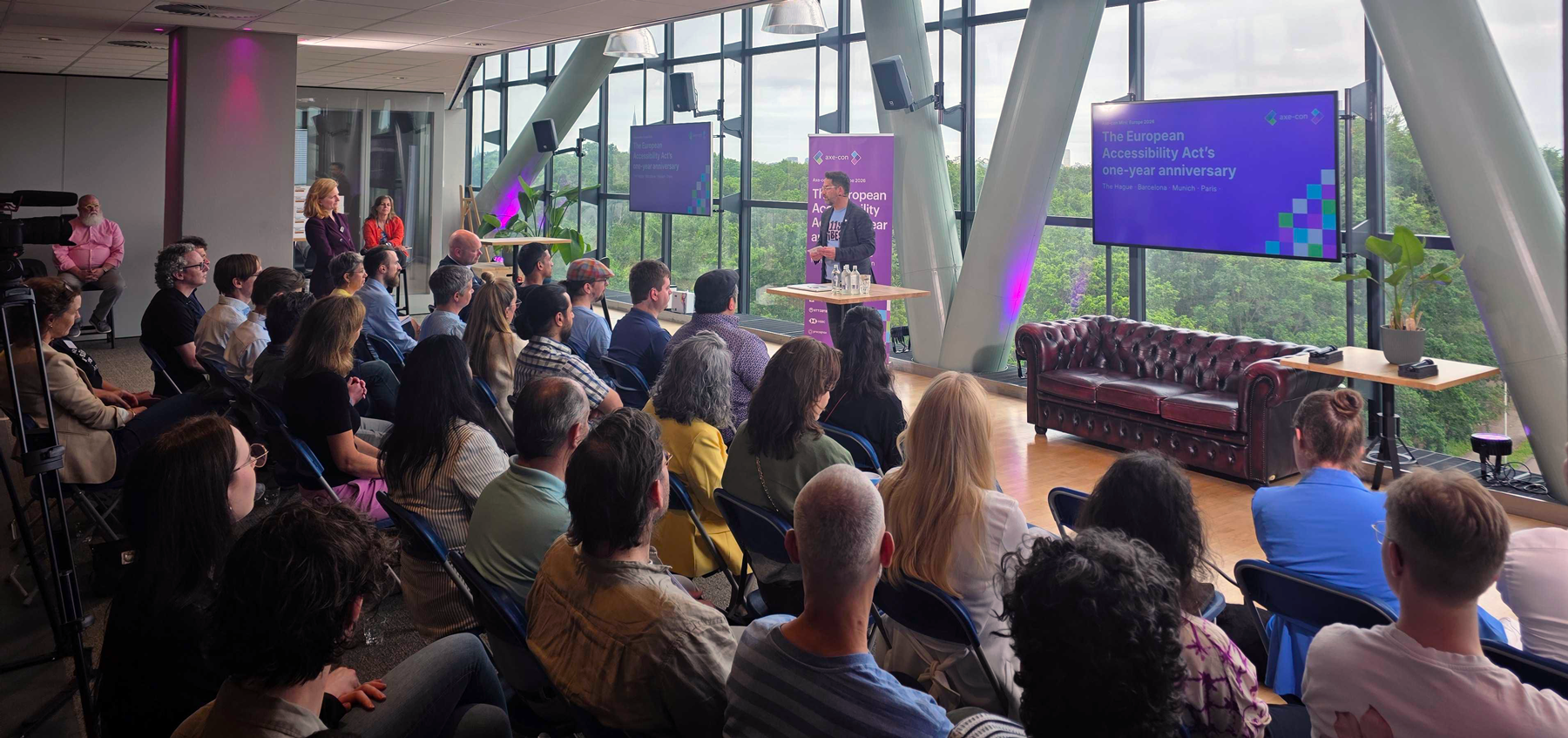
Partnership and collaboration are essential to achieving our mission of digital equality in Europe, and we were thrilled to be joined by VNO-NCW (The Confederation of Netherlands Industry and Employers) and Swink for this event.
With a packed agenda, we kicked things off right away with insights from Mirthe van Gelder and Jurre de Haan of VNO-NCW. Mirthe began her remarks with a wonderful comment about the value of this kind of gathering:
“We host these kinds of events so that people like you, professionals and entrepreneurs, can come together and learn from each other. And we can hear about what is really needed in the practical field. I am super excited that we can add a little bit to make this happen.”
During his portion of the presentation, Jurre delivered a powerful expression of their organization’s mission, and why digital accessibility is so essential:
“We really believe that everyone should be able to participate in society—offline and also online. And for our members, the companies, accessibility is not just a legal obligation. We also believe that it’s an opportunity. By making websites, products, and services accessible, companies can reach more customers, improve user experience, and contribute to a more inclusive society, which is really important for us.”
Deque’s Matthew Luken (SVP, Global Programs & Regulatory Affairs, European Partnerships) followed with a detailed examination of the EAA itself—its goals, scope, applicability, and penalties—with a particular focus on enforcement.
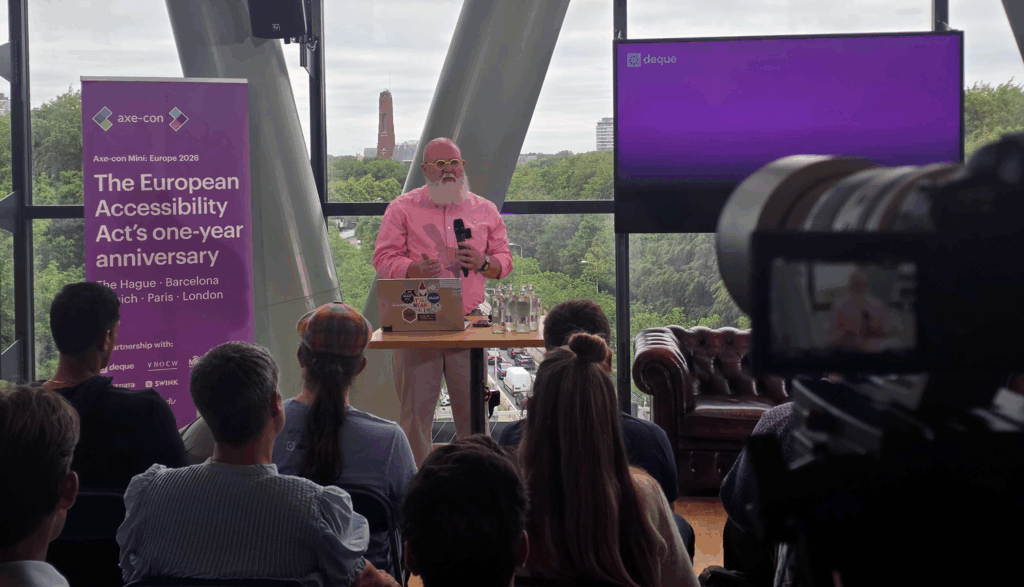
Matthew covered an extraordinary amount of ground, but in his closing, he delivered a wonderfully succinct run-down on what’s most important for organizations to focus on right now, when it comes to EAA compliance and enforcement:
“Some things you should have in place: A common understanding, enterprise-wide, of how the EAA applies to your organization. A common testing standard. A common audit plan. Train your teams and keep records. Publish an accessibility statement and state your conformance. Offer frictionless, accessible feedback routes. Process those in a timely manner. And keep records. If you’re non-conformant, publish a clear roadmap.”
We only have so much room here to share, and there was so much beneficial information shared that we couldn’t possibly fit it into a single post. Still, we absolutely must mention what an honor and pleasure it was to have Larissa Klaassen join us! Larissa Klaassen is a blind Dutch Paralympic cyclist who, with sighted pilot Imke Brommer, won the gold medal in the women’s time trial B event at the 2020 Summer Paralympics. She has also been an accessibility expert for the last 17 years!
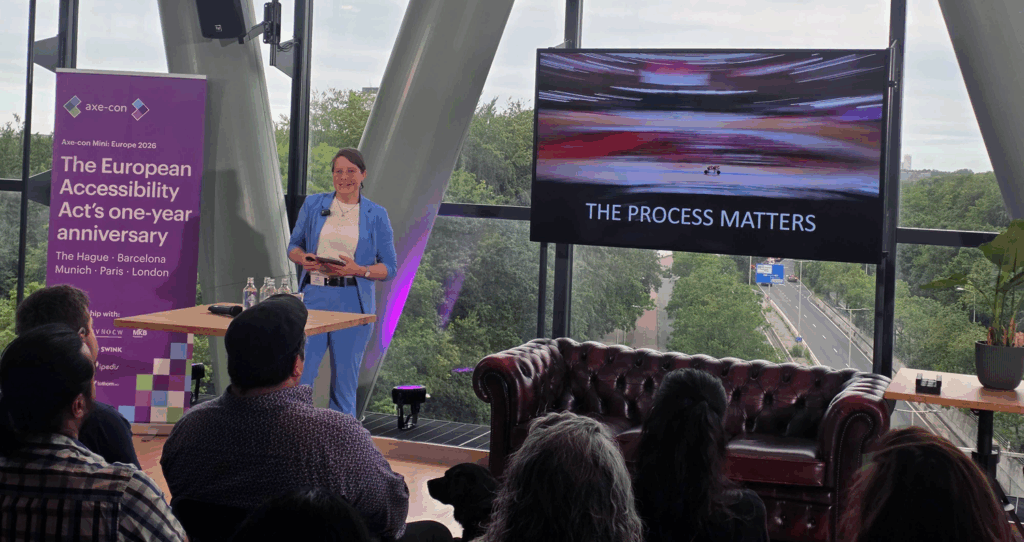
The personal stories that Larissa shared about herself and her family’s experiences were profoundly moving and serve to remind us all what this mission is truly about:
“It’s good that we have the EAA, that we have WCAG, that we have all the accessibility guidelines. And, of course, I really hope that you all make accessible systems so we can all work with them. But please remember that in the end, it’s all about humans—all about you, me, us, and everyone else around you. So, yes, we have the written word, but I am not just the written word. I’m a human being, as well as you are. So, please don’t forget that during your work and making everything for people like us.”
Barcelona
A spirit of partnership was front and center again as our EAA roadshow moved on to the wonderful city of Barcelona, where we joined NTT DATA and its experts Marta Ortigosa de Carlos, Expert Interaction Designer & Accessibility Consultant, and Silvia Ramón Figuerola, UX researcher and accessibility specialist.
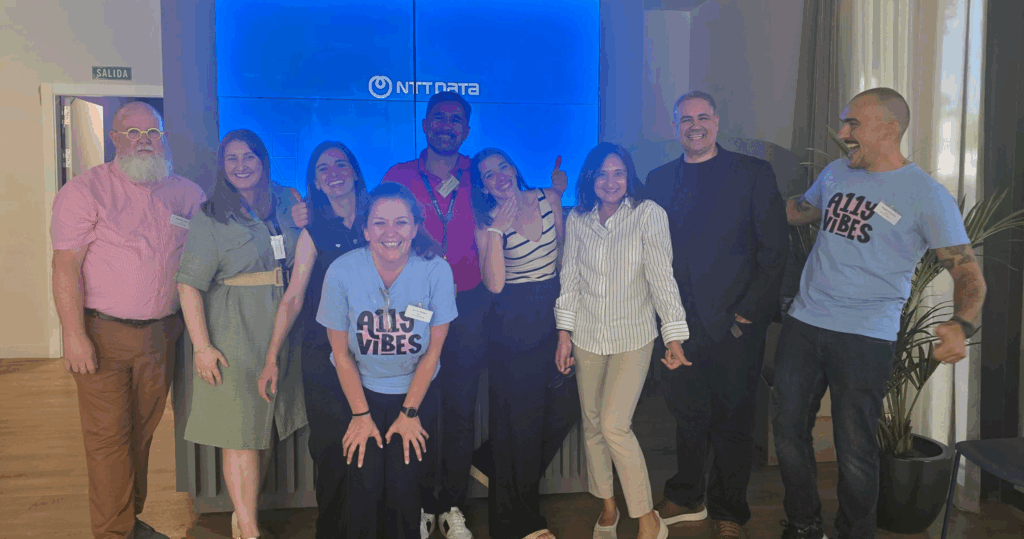
Marta and Silvia’s presentation was equal parts informative and motivating, and one of the most memorable moments came when Silvia answered a question that should be on every organization’s mind across all of Europe: How bad is the risk with the EAA?
“The EAA extends accessibility requirements to a wide range of private-sector products and services. Accessibility is now a legal requirement for many businesses across the EU. Depending on the country, different individuals can file complaints about inaccessible products and services. Authorities can investigate, require fixes, remove products from the market, and impose fines. The exact sanctions differ from country to country, but the overall risk has increased substantially because accessibility has become an enforceable consumer-rights issue rather than a best practice.”
Marta shared a similarly notable moment when she offered a pointed clarification on what accessibility really means under the EAA:
“The EAA is larger than digital products. A customer doesn’t only experience your website. They experience your organization. Imagine a customer who successfully completes an accessible online process. Then receives an inaccessible document. Calls support. Receives unclear guidance. Gets transferred three times. And abandons the journey. Is the website accessible? Maybe. Is the end-to-end experience accessible? Not necessarily.”
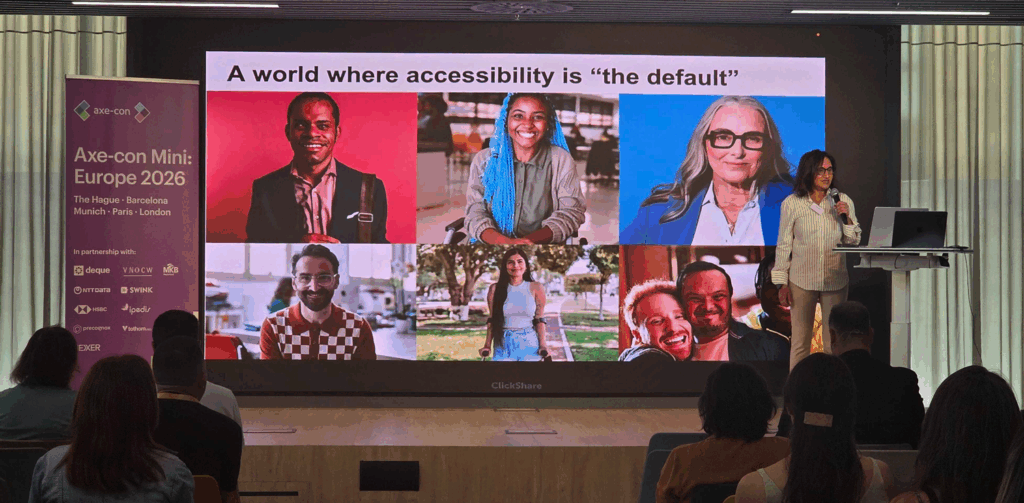
Deque CEO and founder Preety Kumar was in Barcelona for the event, and judging by the number of people who wanted to have a picture taken with her, the accessibility community in Spain was excited to welcome her!
Preety’s talk was both technical and aspirational, and she drew on her long experience as a leader and innovator in the space to recognize the critical moment the EAA represents—what it calls us to, and what we risk if we don’t take action:
“If accessibility isn’t built into AI-generated code, it will get left behind—exactly as it did when the internet was first built. We were too late the first time. This time, we can see it coming, and we can do things differently.”
Munich
We were elated to be joined by an extraordinary group of experts in Munich, including:
- Klaus Hoeckner, Managing Director of the Austrian Association supporting the blind and visually impaired
- Nikolaus Eckereder, Head of Department at the Market Surveillance Authority for Digital Accessibility
- Anja Harport, Head of the Competence Center for Digital Accessibility and a Business Developer at adesso SE
- Jana Scheidemann, Digital Accessibility team, BFSG
- Markus Specker, Digital Accessibility team, BFSG
Our Munich event was especially notable for including a regulators panel moderated by Klaus Hoeckner and featuring Anja Harport and Nikolaus Eckereder. Regulatory insights—always beneficial—are especially valuable right now, as enforcement activity continues to ramp up.
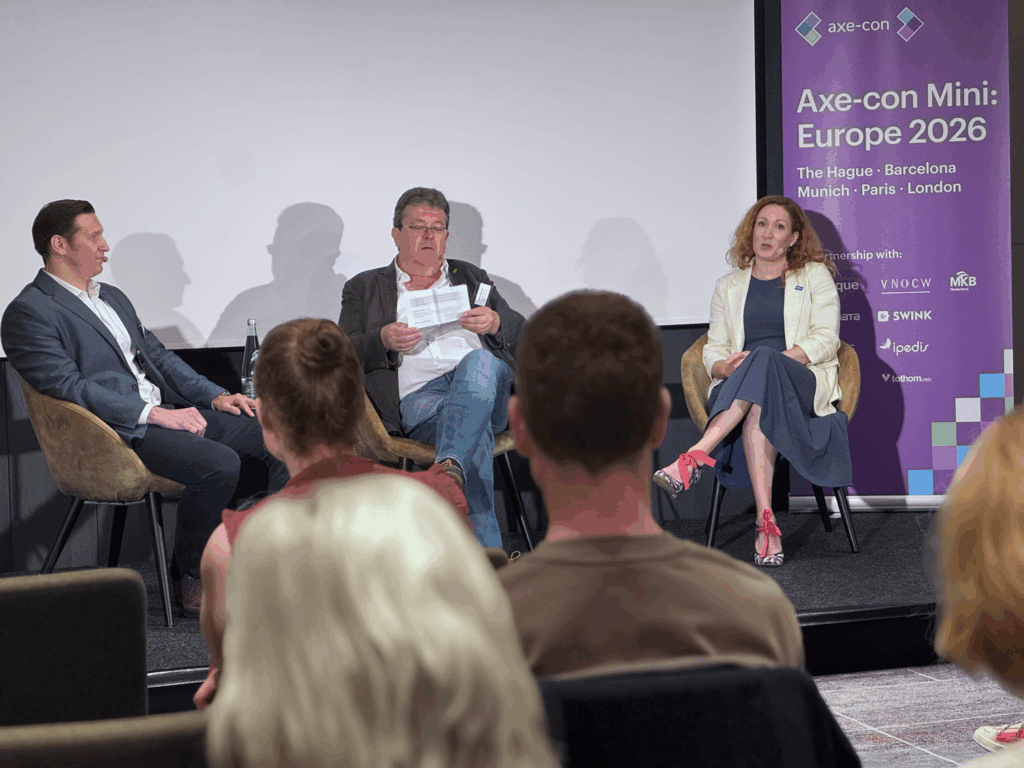
As Matthew Luken noted in his remarks, we’re continuing to see common regulatory exposure gaps, including:
- Legal, compliance, regulatory affairs, and product are not aligned.
- Legal teams lack accessibility expertise.
- Current risk levels are either unknown or not addressed.
- Organizations are waiting for complaints before acting.
- Teams don’t know how to respond to consumer complaints and regulatory inquiries when issues arise.
One theme that has continued to emerge across our EAA roadshow events is the understanding that the EAA is not a single moment but rather a milestone along a journey that is actively progressing and evolving. This was brought home to our Munich audience during the presentation by Jana Scheidemann and Markus Specker, who chronicled an “EAA journey in Germany” that stretches all the way back to 2016—a journey a decade in the making!
Paris
As the Deque group was arriving, Ron Beenen (Deque’s Director of Business Development in Europe) was asked how things were in Paris. “Hot,” he said. The opening lines from yesterday’s article from NPR serve to corroborate his account: “Millions of people across France woke up drenched in sweat on Tuesday after another night of scorching heat, with most of the population exposed to extreme and exceptional temperatures.”
Despite the outside conditions, spirits were exuberant inside the “we are_” club at 73 rue du Faubourg Saint Honoré in Paris, where we joined our French partner Ipedis for what was the fourth of our EAA-themed Europe events.
Once again, we had a remarkable group of experts and advocates gathered together. Alongside Preety and Matthew from Deque, our presenters included Moïse Akbaraly (co-founder of Ipedis), Inès Abroug and Melvyn Blanchet from PwC France & Maghreb, Ioana Tanase (AI and Accessibility Program Manager, Microsoft), Erwann Robbe from the Justice Unit at Intérêt à Agir (the organization that helped bring the case against four major grocers in France), and Emmanuelle Aboaf, who shared her experiences as a Fullstack Angular .NET developer at SHODO who has been deaf from birth.
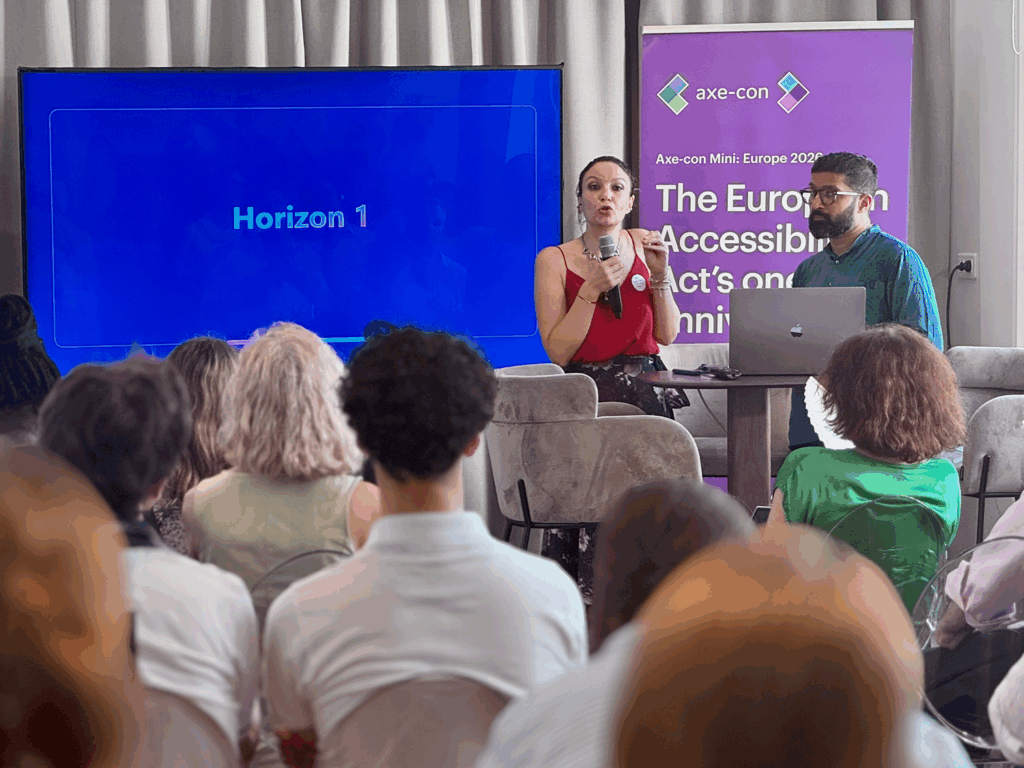
If you’re thinking, by the fourth event, that we might have been running out of topics and insights, think again! One of the most mind-opening moments of the entire series came during Ioana Tanase’s presentation, when she flipped conventional wisdom on its head to present a strategic pivot in which the “finish line” comes BEFORE the “starting block!”
Ioana’s metaphors were as memorable as her strategies, with the “traffic control” example being a particular highlight:
AI is traffic control, not the destination
- The EAA is the road code. It sets the minimum rules so more people can move safely.
- AI is adaptive traffic control. It can sense patterns, remove bottlenecks, and route people better.
- Humans are still the city planners. They decide values, trade-offs, accountability, and what good looks like.
Compliance builds the road. AI helps the whole city move.
This kind of provocative thinking was in evidence everywhere throughout the event, as a sampling of the presentation titles confirms:
- From Compliance to Culture: Sustaining Accessibility at Enterprise Scale
- A World Where Digital Equality is Achievable
- The EAA as an AI Innovation Catalyst
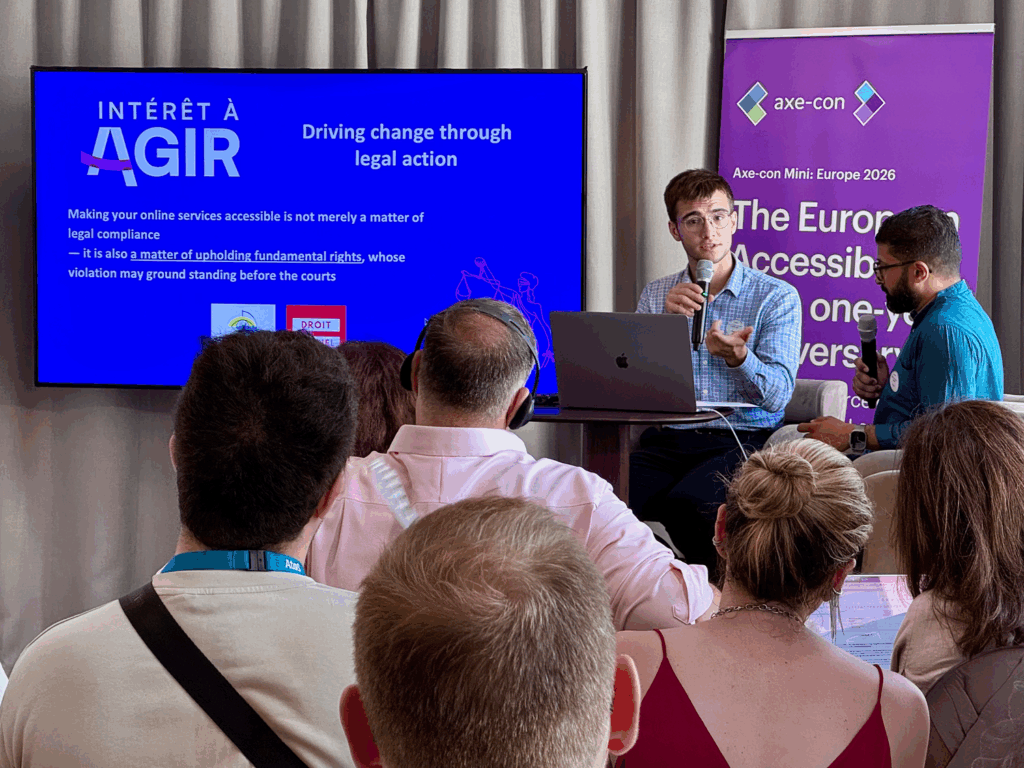
As has been the case at every one of these events, certain moments deeply resonate, and certain quotes that really bring home the reality of what digital accessibility is all about, like this one, which emerged from the conversation between Moïse Akbaraly and Erwann Robbe:
“Making your online services accessible is not merely a matter of legal compliance, it is also a matter of upholding fundamental rights.”
London
There is still one more event to come! It will be held tomorrow, June 25, in London, with our partner Nexer at HSBC.
If you’d like to join Deque, Nexer, and HSBC as we celebrate one year of the EAA, you can still request a seat (as of this writing)!
Whether you are an accessibility practitioner, leader, auditor, compliance officer, regulator, or digital product owner, this promises to be a fantastic wrap-up to a phenomenal series of events. We’d love to have you join us for this event, which will include presentations by Mali M Fernando, MBE (Group Head of Digital Experience and Accessibility, HSBC UK), Chris Bush (Head of Design Group, Nexer), Ben Leonard (CEO & Co-Founder, Life Moments) and Adi Latif, who is a digital accessibility coach, public speaker, blind entrepreneur, and ex-professional blind snowboarder!
The EAA: Today, tomorrow, and beyond
The list of people we have to thank is far too long to include here, but we are deeply grateful to every single individual who has contributed to making these events possible.
Digital accessibility is a global mission, Europe is helping to lead the way, and our team was honored and excited to join so many passionate, talented, and dedicated accessibility experts and practitioners in these beautiful, historic cities. Even as we experience the weight of history, we know that together we are creating it anew every minute. By pursuing this mission with such zeal, this community is helping to ensure that global history will ultimately be accessible history.
With that, we wish the EAA a happy birthday, and we look ahead to another milestone year when we expect to make more meaningful progress than ever. The regulations are here. The technology is here. We are here. Let’s do this!