
The European Accessibility Act (EAA)
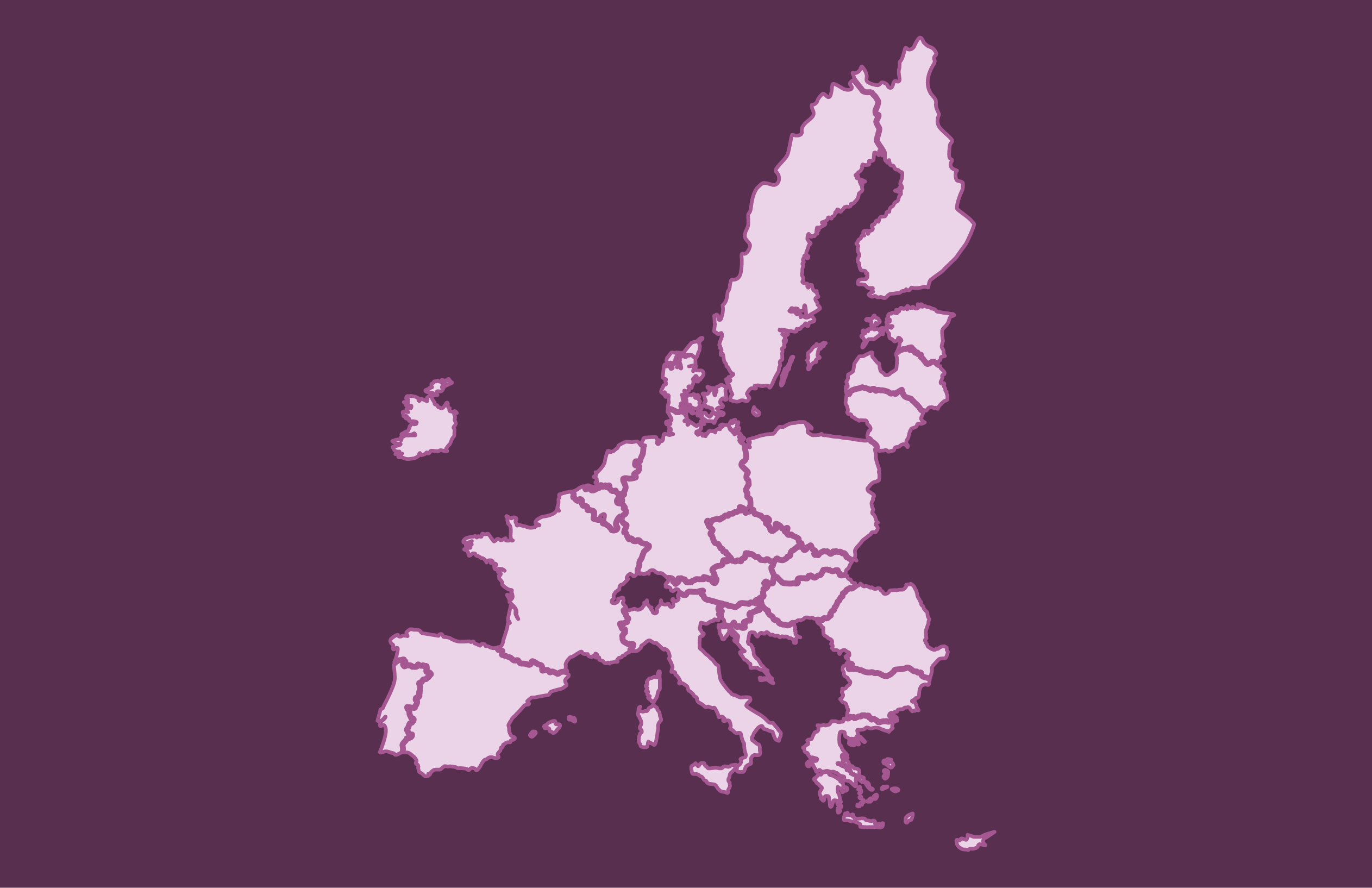
The EAA directive has been transposed into national law in all 27 EU member states. If your business sells digital products or services into or within the EU, the EAA applies to you. Take the right steps today to ensure long-term compliance.
What is the European Accessibility Act?
The European Accessibility Act (EAA) is a directive of the European Union that aims to improve the accessibility of products and services for people with disabilities and the elderly within the EU.
The objective is to remove barriers created by divergent rules in different EU member states. This will make it easier for companies to operate across member states, foster innovation in the development of accessible technologies, and help ensure accessible products and services are more affordable and widely available.
The EAA represents a significant step towards greater inclusivity. It aims to benefit not only people with disabilities and the aging population but also enterprises by creating a larger, unified market for accessible products and services.
The EAA has been transposed into national law and regulations throughout EU member states. Though one goal is to harmonize digital accessibility in Europe, each country has their own specific compliance requirements.
What does the EAA cover?
The European Accessibility Act (EAA) requires specific product and service features to be accessible for persons with disabilities.
Products
- Computers and operating systems
- Smartphones and other communication devices
- TV equipment related to digital television services
- ATMs and payment terminals
- E-readers
- Ticketing and check-in machines
- Interactive self-service terminals (kiosks)
Services
- E-commerce
- Banking services
- Phone services
- Websites and mobile services
- Passenger transport services
- Electronic tickets
- E-books and dedicated software
- Access to audio-visual media services (AVMS)
- Calls to the European emergency number 112
NOTE: Even if a service, or part of a service, is subcontracted to a third party, the accessibility of that service must not be compromised.
EAA compliance inside and outside the EU
Service providers must explain how a service meets the digital accessibility requirements. As applicable, the information must contain:
- A broad overview of the service presented in a manner that everyone can understand, regardless of their accessibility needs
- Detailed guidelines and explanations on using the service
- An explanation of how the service aligns with the digital accessibility standards listed in Annex I of the European Accessibility Act

Service providers must demonstrate that the service is delivered and monitored in compliance with all applicable requirements of the EAA, and this information must be made available to the public in an accessible format. Non-conformance must be reported to the proper authority with some authorities requiring rolling reporting.
Remember, the EAA directive applies to any enterprise or business inside or outside the EU that provides services or sells products in the EU.

The EAA at one year: A Deque report on the state of digital accessibility enforcement
Ensuring compliance
It’s important to understand that the EAA is a directive, not a digital accessibility standard. It does not refer to a specific accessibility standard, and leaves it to each country to define its own regulations and adopt a specific standard and conformance level.
Baked into the EAA are the four principles of accessible websites and mobile applications: Perceivable, Operable, Understandable, and Robust (POUR).
Currently, most member states are implementing EN 301 549 v3.2.1, which cites WCAG 2.1 AA. Some countries are only citing WCAG 2.1 AA. EN 301 549 specifically goes beyond web to include requirements for documents such as PDFs, technologies such as biometrics, and hardware devices such as kiosks and payment terminals.
Deque recommends complying with more stringent accessibility standards such as EN 301 549. Proactive steps reduce the risk of non-conformance from penalties and reduce the burden on your accessibility and development teams. For long-term compliance, consider also testing for WCAG 2.2 AA, which is expected to be incorporated into EN 301 549 v4.1.1 later in 2026.
EN 301 549
The harmonized standard of accessibility requirements for Information and Communications Technology (ICT) products and services in the EU, Canada and Australia.
WCAG 2.1 AA
A W3C recommendation for making web content more accessible. Version 2.1 was extended by WCAG 2.2 in October 2023.
Penalties for non-compliance
The penalties for non-compliance are not detailed in the directive itself and will vary by jurisdiction and severity. Companies are encouraged to prioritize accessibility to avoid legal and financial repercussions. Learn more about country-specific penalties and monitoring authorities.
The directive does mandate that penalties must be “effective, proportionate, and dissuasive,” and consumers can report infringements to a court or the enforcing body in their country.
| Country | National regulation | Enforcement authority | Fines and penalties |
|---|---|---|---|
| Austria | Accessibility Act – BaFG) Social Ministry Service Act | The Federal Office for Social Affairs And Disability. | Fines range up to EUR 80,000. |
| Czechia | Zákon o požadavcích na prístupnost nekterých výrobku a služeb | The Czech Trade Inspection Authority, Czech Telecommunication Office, Council for Radio and Television Broadcasting, Ministry of Transport, Regional Officies, The Railway Authority, Civil Aviation Authority, State Navigation Authority, Municipality of the Capital City of Prague and municipal Offices of the municipality with extended competence. | Fines range up to EUR 400,000. |
| France | Consumer Code Act no. 2005-102, 11 February 2005 Code monétaire et financier Code des transports Post and electronic communications code Act for a Digital Republic | DGCCRF, ARCOM, AFM, Banque de France and ARCEP. | Fines range up to EUR 300,000. |
| Germany | Barrierefreiheitsstärkungsgesetz Verordnung zum Barrierefreiheitsstärkungsgesetz Medienstaatsvertrag | Market surveillance authority and Federal State Media Authority. | Fines range up to EUR 500,000. |
| Hungary | Act XVII of 2022 Government Decree Nr. 605/2022. (XII.28.) Act LXXXVIII of 2021 on the Market Surveillance of Products | NMHH, The consumer protection authority, authorities as determined in Government decree Nr. 382/2016 (XII.2) and 6/203 (I.18). | Fines range up to EUR 1,261,164, or 5% of the annual net turnover. |
| Ireland | S.I. No. 636/2023 – European Union (Accessibility Requirements of Products and Services) Regulations 2023 | Competition and Consumer Protection Commission, Commission for Communications Regulation, Coimisiún na Meán, National Transport Authority, and Central Bank of Ireland. | Fines range up to EUR 60,000. Imprisonment up to 18 months. |
| Italy | Legislative Decree no. 82 of 27 May 2022 Law No. 4 of January 9, 2004 | MIMIT and AdID. | Fine range up to EUR 40,000 or, for private entities that fall within the scope of the Stanca Law, up to 5 percent of turnover. |
| Netherlands | Warenwet Wet Gelijke Behandeling op Grond van Handicap of Chronische Ziekte Telecommunicatiewet Burgerlijk Wetboek 6 Overgangswet Nieuwe Burgerlijk wetboek Wet op Financieel Toezicht Wet Handhaving Consumentenbescherming | AFM, ACM and ILT. | Fines range up to EUR 103,000. |
| Slovakia | Act No. 351/2022 Coll Government Decree Nr. 282/2023 Coll (products) Government Decree No. 283/2023 Coll. (services) Electronic Communications Act no. 452/2021 Coll. Multimodal Access Services | The Slovak Trade Inspection and Council for Media Services. | Fines range up to 200,000. |
| Spain | Law 11/2023 of May 8 Law 34/2002 of July 2011 Law 33/2023 of November 3 Law 29/2005 of December 29 Royal Legislative Decree 1/2023 of November 29 Royal Decree 946/2001, of August 3 | Autonomous communities, the cities of Ceuta and Melila and The cities of Ceuta and Melila. | Fines range up to EUR 1,000,000. |
Exceptions to EAA coverage
EU Member States hold the authority to grant specific exceptions under certain circumstances.
Microenterprises
The directive does not impose accessibility requirements on companies with less than 10 employees and an annual turnover/balance sheet of less than €2 million.
Disproportionate burden
An organization can receive an exemption for disproportionate burden if it can document that the cost of making its products or services accessible would be significantly more than the value of the increased accessibility to people with disabilities. The directive contains extensive criteria for determining whether something constitutes a disproportionate burden. The directive further details that a company must continue to meet EAA requirements while any application for an exemption is pending. Applying for an exception does not pause compliance requirements, and because the level of proof is very high, companies should expect to maintain proactive compliance practices.
Meet European Accessibility Act requirements with Deque

Regional experts
Deque has offices, partners, and employees in Europe and worldwide with deep knowledge of local guidelines.
Strategic consulting
Our Principal Strategy Consultants help build, run and improve the world’s largest digital accessibility programs.
Trusted and proven tools
Our axe accessibility testing tools are the defacto global standard with 800,000+ installs
Team training
Equip your team with the skills to confidently build and maintain accessible solutions.
By working with Deque’s industry experts now, you can build your European Accessibility Act compliance roadmap to ensure ongoing EAA compliance.
Contact UsAdditional resources
An introduction to the European Accessibility Act (EAA)
What you need to know about the European Accessibility Act (EAA).

The EAA anniversary: Compliance, community, and what’s next
Gain perspectives from accessibility and compliance leaders on the vision and long-term future of the EAA.

One year of the EAA: What’s changed, what’s coming, and what to do next
EAA is now actively assuming conformance all over Europe. Learn three steps to prepare.
Prepare your business for the European Accessibility Act
Get the expert EAA compliance guidance you need in this comprehensive and actionable report.
Frequently asked questions
At a year into the EAA, is Deque seeing increased monitoring body or authority activity in the market?
Yes. Activity is intensifying rapidly, with authorities increasing monitoring and hiring more staff. They are also processing consumer complaints and using these instances as opportunities to apply broader audits. Authorities are issuing demand letters as well, and, in some cases, defining timelines and potential fines and leveraging their right to inspect. Read more in our article, One year of the EAA: What’s changed, what’s coming, and what to do next.
When do US businesses have to comply?
The directive applies to enterprises outside of the EU that provide services or sell products to consumers within the EU. For instance, US-owned retail websites aimed at consumers in the EU or within a specific country of the EU, or smartphone or e-reader devices sold in the EU by a US-based company. For all countries, the same date applies: June 28, 2025.
How does EAA apply to B2B and B2C?
At first glance, the conventional understanding here seems straightforward and legal experts are in agreement: B2C is covered under the EAA, while B2B is presumed to be out of scope.
However, upon closer inspection, the reality is more complicated. Don’t forget that some B2B use cases have consumer implications. Closely examine your user journeys to ensure that you have accounted for full supply chain support and economic journeys. For example, look out for support, survey, and warranty processes that may be subject to compliance when serving a consumer. Contact us for a deeper examination of your B2B products or services.
Are there any exceptions to the EAA?
Microenterprises (defined as a small business with fewer than 10 employees and/or less than €2 Million annual turnover or annual balance sheet total) which provide services are exempted.
What is the “disproportionate burden” clause?
The “disproportionate burden” clause within the EAA is designed to balance the goal of widespread accessibility with the practical limitations of some organizations for reasons of proportionality.
In certain cases, the cost of compliance may be too high, in which case the economic operator may rely on this exception. The economic operator may use the following for its assessment:
- The ratio of the costs of compliance to the overall costs of the economic operators.
- The estimated costs and benefits in relation to the estimated benefits to persons with disabilities and the ratio of the net costs of compliance to the net turnover.
Companies need to analyze and assess whether this exception would apply, and document the assessment.
