
Axe-core
The global standard in automated web accessibility testing
Get the tools that power the Axe Platform, Google Lighthouse, and thousands of testing programs.
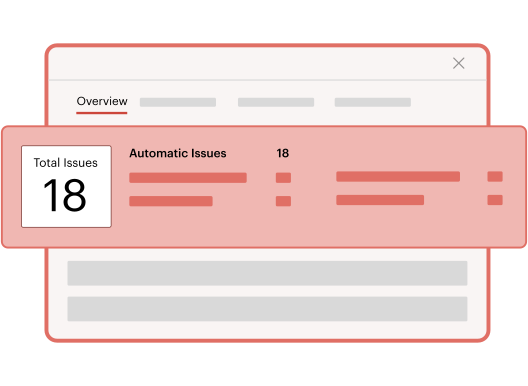
The engine behind the world’s most reliable accessibility testing solutions.

Trusted
Build with the world’s most trusted accessibility testing library, backed by thousands expert contributions from Deque and the open-source community.

Accurate
Benefit from Axe’s commitment to zero false positives and get the same reliable results trusted by Google, Microsoft, and other industry leaders.

Flexible
Integrate automated accessibility testing into your functional tests with support for all modern browsers, tools, frameworks, and environments—no WCAG expertise required.
Achieve accessibility goals without slowing development
Maintain compliance at scale
Axe-core’s rules library is constantly updated and covers WCAG 2.0, 2.1, and 2.2 at levels A, AA, and AAA. The testing engine also adheres to rules outlined in global accessibility standards and regulations such as Section 508, EN 301 549, RGAA, and ADA, enabling you to ensure you’re meeting all your compliance requirements.

Save time and focus on what matters
Shift accessibility testing earlier in your development lifecycle by seamlessly integrating Axe-core into your tools. Catch common issues like missing headings or ARIA mistakes without false positives. Ensure your team gets accurate results they can act on, so they can save time on costly reworks and create digital experiences that work for everyone.

Trusted worldwide for automated accessibility testing
5 Billion+
Axe-core has been downloaded 5 Billion+ times.
13M
Axe-core is used in over 13 million GitHub projects.
18
The Axe-core community maintains 18 translations.
Our commitment to zero false positives
Our goal is to ensure you can focus on addressing real accessibility issues without wasting time and effort chasing false alarms. Our dedication to accuracy in accessibility testing ensures that actual violations are reported, uncertain cases are flagged for manual review, and false positives are treated as bugs and fixed accordingly. The result is that your accessibility efforts are efficient, reliable, and impactful.
“Having tools that allow you to automate the scans and integrate them into your build process helps a lot because you don’t have to rely on somebody remembering to do it as part of your release process– it just happens automatically.”
Bob Andreasen
Executive Director of Software Quality Assurance, Harland Clarke
Use Axe-core to make your digital experiences accessible
Additional resources
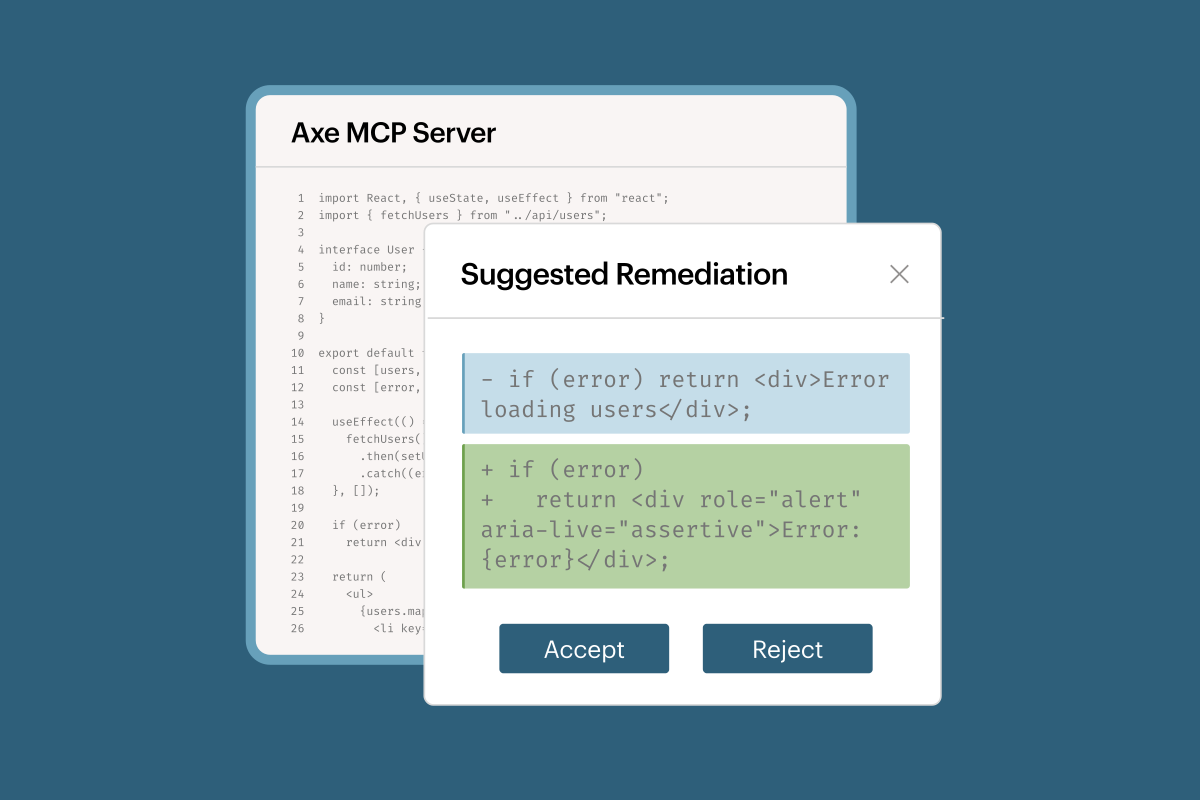
How a large media enterprise automated accessibility remediation with the Axe MCP Server
Can an AI agent handle remediation end-to-end, with minimal manual support?

Deque University
Get training and on-demand reference materials for every level and area of expertise in digital accessibility.
How to make the leap to paid accessibility tools
Learn what paid accessibility tools actually do and how to make the business case for using them at your organization.
Frequently asked questions
How does Axe-core identify accessibility issues and help organizations achieve conformance?
With Axe-core, you’re able to test against WCAG 2.0, 2.1, and 2.2, at levels A, AA, and AAA. You can also use Axe-core-powered tools to meet requirements of a wide range of global laws, standards, and guidelines that rely on WCAG, including Section 508, EN 301 549, RGAA, the Americans with Disabilities Act (ADA), and more. With Axe-core’s comprehensive rules, you’re able to align with best practices and easily identify common accessibility issues.
Is Axe-core free?
Yes, Axe-core is free and open-source with an MPL 2.0 license.
What is the difference between Axe-core and other Axe tools?
Axe-core is the automated testing rules library that powers other Axe tools such as Axe DevTools, Axe Auditor, and Axe Monitor.
Does Axe-core work for native mobile accessibility testing?
No. While Axe-core is an accessibility testing engine for websites and other HTML-based user interfaces, Deque’s mobile testing rulesets for iOS and Android are written to evaluate native app views (not HTML) and the accessibility tree provided by the Android and iOS platforms.
