
Das Europäische Gesetz zur Barrierefreiheit (EAA)
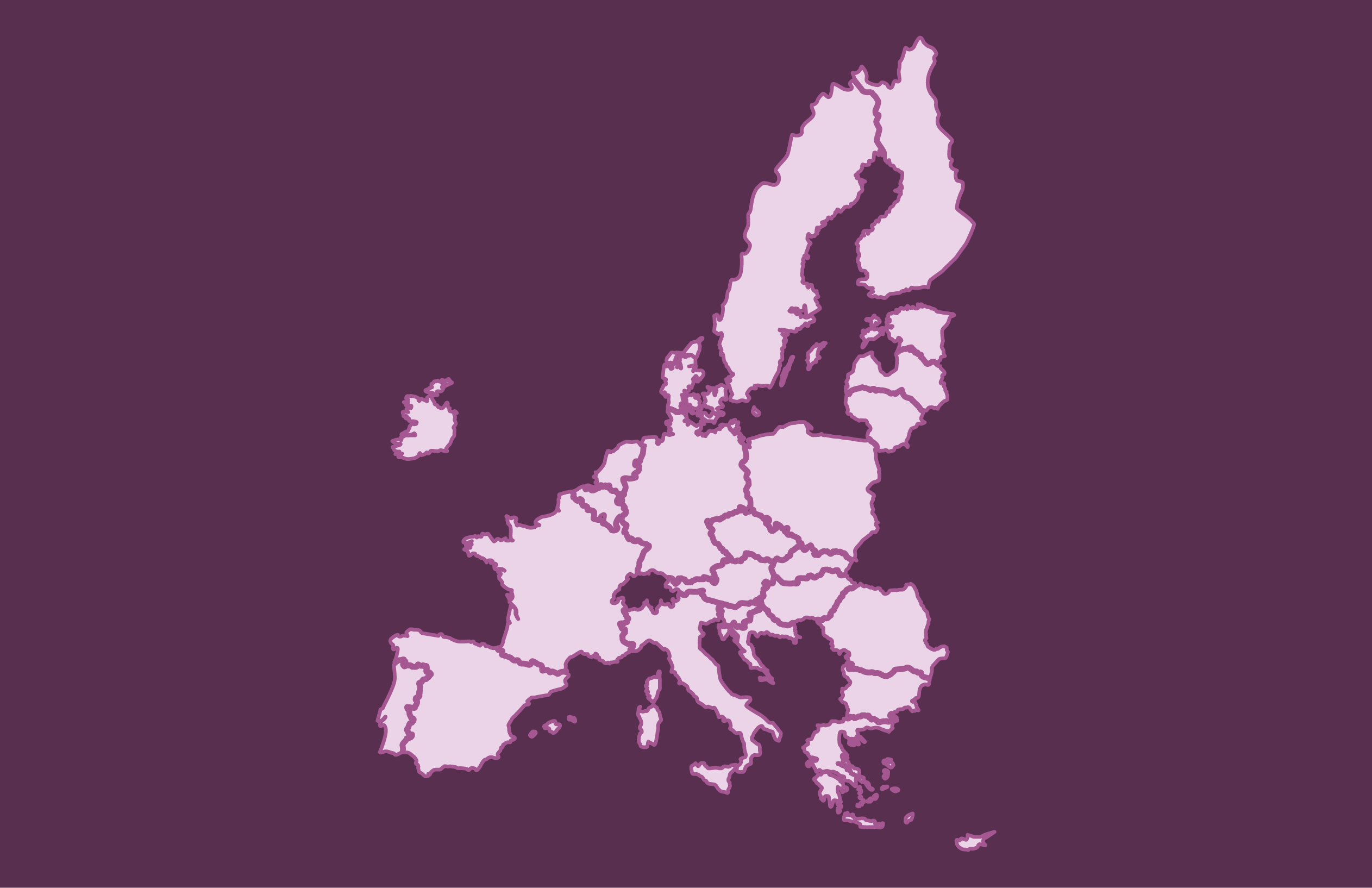
The EAA directive has been transposed into national law in all 27 EU member states. If your business sells digital products or services into or within the EU, the EAA applies to you. Take the right steps today to ensure long-term compliance.
Was ist das Europäische Gesetz zur Barrierefreiheit?
The European Accessibility Act (EAA) is a directive of the European Union that aims to improve the accessibility of products and services for people with disabilities and the elderly within the EU.
The objective is to remove barriers created by divergent rules in different EU member states. This will make it easier for companies to operate across member states, foster innovation in the development of accessible technologies, and help ensure accessible products and services are more affordable and widely available.
The EAA represents a significant step towards greater inclusivity. It aims to benefit not only people with disabilities and the aging population but also enterprises by creating a larger, unified market for accessible products and services.
The EAA has been transposed into national law and regulations throughout EU member states. Though one goal is to harmonize digital accessibility in Europe, each country has their own specific compliance requirements.
Was deckt die EAA ab?
The European Accessibility Act (EAA) requires specific product and service features to be accessible for persons with disabilities.
Produkte
- Computer und Betriebssysteme
- Smartphones und andere Kommunikationsgeräte
- Fernsehgeräte für digitale Fernsehdienste
- Geldautomaten und Zahlungsterminals
- E-Reader
- Fahrkarten- und Check-in-Automaten
- Interactive self-service terminals (kiosks)
Services
- E-Commerce
- Bankdienstleistungen
- Telefondienste
- Websites und mobile Dienste
- Passenger transport services
- Elektronische Tickets
- E-books and dedicated software
- Zugang zu audiovisuellen Mediendiensten (AVMS)
- Anrufe bei der europäischen Notrufnummer 112
NOTE: Even if a service, or part of a service, is subcontracted to a third party, the accessibility of that service must not be compromised.
EAA-Konformität innerhalb und außerhalb der EU
Service providers must explain how a service meets the digital accessibility requirements. As applicable, the information must contain:
- Ein umfassender Überblick über das Angebot, der so dargestellt wird, dass er für jeden verständlich ist, unabhängig von seinen Bedürfnissen im Bereich Barrierefreiheit
- Ausführliche Anleitungen und Erläuterungen zur Nutzung des Dienstes
- Eine Erläuterung dazu, inwiefern der Dienst den in Anhang I des Europäischen Barrierefreiheitsgesetzes

Service providers must demonstrate that the service is delivered and monitored in compliance with all applicable requirements of the EAA, and this information must be made available to the public in an accessible format. Non-conformance must be reported to the proper authority with some authorities requiring rolling reporting.
Remember, the EAA directive applies to any enterprise or business inside or outside the EU that provides services or sells products in the EU.

Die EAA nach einem Jahr: Ein Deque zum Stand der Durchsetzung der digitalen Barrierefreiheit
Einhaltung der Vorschriften sicherstellen
It’s important to understand that the EAA is a directive, not a digital accessibility standard. It does not refer to a specific accessibility standard, and leaves it to each country to define its own regulations and adopt a specific standard and conformance level.
Baked into the EAA are the four principles of accessible websites and mobile applications: Perceivable, Operable, Understandable, and Robust (POUR).
Currently, most member states are implementing EN 301 549 v3.2.1, which cites WCAG 2.1 AA. Some countries are only citing WCAG 2.1 AA. EN 301 549 specifically goes beyond web to include requirements for documents such as PDFs, technologies such as biometrics, and hardware devices such as kiosks and payment terminals.
Deque recommends complying with more stringent accessibility standards such as EN 301 549. Proactive steps reduce the risk of non-conformance from penalties and reduce the burden on your accessibility and development teams. For long-term compliance, consider also testing for WCAG 2.2 AA, which is expected to be incorporated into EN 301 549 v4.1.1 later in 2026.
EN 301 549
Die harmonisierte Norm für Barrierefreiheitsanforderungen an Produkte und Dienstleistungen der Informations- und Kommunikationstechnologie (IKT) in der EU, Kanada und Australien.
WCAG 2.1 AA
Eine W3C-Empfehlung zur Verbesserung der Barrierefreiheit von Webinhalten. Version 2.1 wurde im Oktober 2023 durch WCAG 2.2 ergänzt.
Sanktionen bei Nichteinhaltung
Die Sanktionen bei Nichteinhaltung sind in der Richtlinie selbst nicht im Einzelnen aufgeführt und variieren je nach Rechtsordnung und Schweregrad des Verstoßes. Unternehmen werden dazu angehalten, der Barrierefreiheit Priorität einzuräumen, um rechtliche und finanzielle Konsequenzen zu vermeiden. Erfahren Sie mehr über länderspezifische Sanktionen und Aufsichtsbehörden.
Die Richtlinie schreibt vor, dass Sanktionen „wirksam, verhältnismäßig und abschreckend“ sein müssen, und Verbraucher können Verstöße bei einem Gericht oder der zuständigen Vollzugsbehörde ihres Landes melden.
| Land | National regulation | Enforcement authority | Fines and penalties |
|---|---|---|---|
| Österreich | Accessibility Act – BaFG) Social Ministry Service Act | The Federal Office for Social Affairs And Disability. | Die Bußgelder betragen bis zu 80.000 Euro. |
| Tschechien | Gesetz über die Anforderungen an die Barrierefreiheit bestimmter Produkte und Dienstleistungen | Die Tschechische Handelsaufsichtsbehörde, das Tschechische Telekommunikationsamt, der Rat für Rundfunk und Fernsehen, das Verkehrsministerium, die Regionalämter, die Eisenbahnbehörde, die Zivilluftfahrtbehörde, die Staatliche Schifffahrtsbehörde, die Stadtverwaltung der Hauptstadt Prag sowie die Stadtämter mit erweiterten Zuständigkeiten. | Die Geldbußen betragen bis zu 400.000 Euro. |
| Frankreich | Consumer Code Act no. 2005-102, 11 February 2005 Code monétaire et financier Code des transports Post and electronic communications code Act for a Digital Republic | DGCCRF, ARCOM, AFM, Banque de France und ARCEP. | Die Geldbußen betragen bis zu 300.000 Euro. |
| Deutschland | Barrierefreiheitsstärkungsgesetz Verordnung zum Barrierefreiheitsstärkungsgesetz Medienstaatsvertrag | Marktüberwachungsbehörde und Landesmedienanstalt. | Die Geldbußen betragen bis zu 500.000 Euro. |
| Ungarn | Act XVII of 2022 Government Decree Nr. 605/2022. (XII.28.) Act LXXXVIII of 2021 on the Market Surveillance of Products | NMHH, die Verbraucherschutzbehörde, sowie die in den Regierungsverordnungen Nr. 382/2016 (XII.2) und Nr. 6/203 (I.18) festgelegten Behörden. | Die Geldbußen betragen bis zu 1.261.164 Euro oder 5 % des jährlichen Nettoumsatzes. |
| Irland | S.I. Nr. 636/2023 – Verordnung der Europäischen Union (Anforderungen an die Barrierefreiheit von Produkten und Dienstleistungen) von 2023 | Competition and Consumer Protection Commission, Commission for Communications Regulation, Coimisiún na Meán, National Transport Authority, and Central Bank of Ireland. | Die Geldstrafen betragen bis zu 60.000 Euro. Die Freiheitsstrafe beträgt bis zu 18 Monate. |
| Italien | Legislative Decree no. 82 of 27 May 2022 Law No. 4 of January 9, 2004 | MIMIT und AdID. | Geldbuße bis zu 40.000 Euro oder, bei privaten Einrichtungen, die in den Anwendungsbereich des Stanca-Gesetzes fallen, bis zu 5 Prozent des Umsatzes. |
| Niederlande | Warenwet Wet Gelijke Behandeling op Grond van Handicap of Chronische Ziekte Telecommunicatiewet Burgerlijk Wetboek 6 Overgangswet Nieuwe Burgerlijk wetboek Wet op Financieel Toezicht Wet Handhaving Consumentenbescherming | AFM, ACM und ILT. | Die Bußgelder betragen bis zu 103.000 Euro. |
| Slowakei | Act No. 351/2022 Coll Government Decree Nr. 282/2023 Coll (products) Government Decree No. 283/2023 Coll. (services) Electronic Communications Act no. 452/2021 Coll. Multimodal Access Services | Die slowakische Handelsaufsicht und der Rat für Mediendienste. | Die Bußgelder betragen bis zu 200.000. |
| Spanien | Law 11/2023 of May 8 Law 34/2002 of July 2011 Law 33/2023 of November 3 Law 29/2005 of December 29 Royal Legislative Decree 1/2023 of November 29 Royal Decree 946/2001, of August 3 | Autonomous communities, the cities of Ceuta and Melila and The cities of Ceuta and Melila. | Die Geldbußen betragen bis zu 1.000.000 Euro. |
Ausnahmen vom EAA-Versicherungsschutz
Die EU-Mitgliedstaaten sind befugt, unter bestimmten Umständen spezifische Ausnahmen zu gewähren.
Kleinstunternehmen
Die Richtlinie sieht keine Barrierefreiheitsanforderungen für Unternehmen mit weniger als 10 Beschäftigten und einem Jahresumsatz bzw. einer Bilanzsumme von weniger als 2 Millionen Euro vor.
Disproportionate burden
An organization can receive an exemption for disproportionate burden if it can document that the cost of making its products or services accessible would be significantly more than the value of the increased accessibility to people with disabilities. The directive contains extensive criteria for determining whether something constitutes a disproportionate burden. The directive further details that a company must continue to meet EAA requirements while any application for an exemption is pending. Applying for an exception does not pause compliance requirements, and because the level of proof is very high, companies should expect to maintain proactive compliance practices.
Erfüllen Sie mit Deque die Anforderungen des Europäischen Barrierefreiheitsgesetzes

Regionale Experten
Deque Niederlassungen, Partner und Mitarbeiter in Europa und weltweit, die über fundierte Kenntnisse der lokalen Vorschriften verfügen.
Strategische Beratung
Unsere leitenden Strategieberater tragen dazu bei, die weltweit größten Programme zur digitalen Barrierefreiheit aufzubauen, zu betreiben und zu verbessern.
Bewährte und zuverlässige Werkzeuge
Unsere Tools zum Testen der Barrierefreiheit von Axe sind mit über 800.000 Installationen der weltweite De-facto-Standard.
Teamtraining
Vermitteln Sie Ihrem Team die Fähigkeiten, barrierefreie Lösungen souverän zu entwickeln und zu pflegen.
Wenn Sie jetzt mit den Branchenexperten Dequezusammenarbeiten, können Sie Ihren Fahrplan zur Einhaltung des Europäischen Barrierefreiheitsgesetzes (EAA) erstellen, um die kontinuierliche Einhaltung der EAA-Vorgaben sicherzustellen.
Kontaktieren Sie unsWeitere Ressourcen
Eine Einführung in das Europäische Barrierefreiheitsgesetz (EAA)
Was Sie über das Europäische Barrierefreiheitsgesetz (EAA) wissen müssen.

Das EAA-Jubiläum: Compliance, Gemeinschaft und die Zukunft
Gain perspectives from accessibility and compliance leaders on the vision and long-term future of the EAA.
Ein Jahr EAA: Was hat sich verändert, was steht an und wie geht es weiter?
Die EAA setzt sich nun europaweit aktiv für die Einhaltung der Vorschriften ein. Erfahren Sie, wie Sie sich in drei Schritten darauf vorbereiten können.
Bereiten Sie Ihr Unternehmen auf das Europäische Barrierefreiheitsgesetz vor
In diesem umfassenden und praxisorientierten Bericht erhalten Sie die fachkundige Beratung zur Einhaltung der EAA-Vorschriften, die Sie benötigen.
Häufig gestellte Fragen
At a year into the EAA, is Deque seeing increased monitoring body or authority activity in the market?
Yes. Activity is intensifying rapidly, with authorities increasing monitoring and hiring more staff. They are also processing consumer complaints and using these instances as opportunities to apply broader audits. Authorities are issuing demand letters as well, and, in some cases, defining timelines and potential fines and leveraging their right to inspect. Read more in our article, One year of the EAA: What’s changed, what’s coming, and what to do next.
Ab wann müssen US-Unternehmen die Vorschriften einhalten?
Die Richtlinie gilt für Unternehmen außerhalb der EU, die Dienstleistungen erbringen oder Produkte an Verbraucher innerhalb der EU verkaufen. Dazu gehören beispielsweise US-amerikanische Online-Shops, die sich an Verbraucher in der EU oder in einem bestimmten EU-Land richten, oder Smartphones und E-Reader, die von einem in den USA ansässigen Unternehmen in der EU verkauft werden. Für alle Länder gilt derselbe Stichtag: der 28. Juni 2025.
Inwiefern gilt EAA für B2B und B2C?
Auf den ersten Blick scheint die gängige Auslegung hier eindeutig zu sein, und Rechtsexperten sind sich einig: B2C fällt unter das EAA, während B2B als außerhalb des Geltungsbereichs liegend gilt.
However, upon closer inspection, the reality is more complicated. Don’t forget that some B2B use cases have consumer implications. Closely examine your user journeys to ensure that you have accounted for full supply chain support and economic journeys. For example, look out for support, survey, and warranty processes that may be subject to compliance when serving a consumer. Contact us for a deeper examination of your B2B products or services.
Gibt es Ausnahmen vom EAA?
Kleinstunternehmen (definiert als kleine Unternehmen mit weniger als 10 Beschäftigten und/oder einem Jahresumsatz oder einer Jahresbilanzsumme von weniger als 2 Millionen Euro), die Dienstleistungen erbringen, sind davon ausgenommen.
Was ist die Klausel zur „unverhältnismäßigen Belastung“?
The “disproportionate burden” clause within the EAA is designed to balance the goal of widespread accessibility with the practical limitations of some organizations for reasons of proportionality.
In certain cases, the cost of compliance may be too high, in which case the economic operator may rely on this exception. The economic operator may use the following for its assessment:
- The ratio of the costs of compliance to the overall costs of the economic operators.
- The estimated costs and benefits in relation to the estimated benefits to persons with disabilities and the ratio of the net costs of compliance to the net turnover.
Companies need to analyze and assess whether this exception would apply, and document the assessment.
