New forces are reshaping the global digital accessibility landscape. Most notably, the European Accessibility Act (EAA) has now been in effect for a year, and we’ve already seen far-reaching regulatory and legal developments as a result. Simultaneously, AI coding assistants continue to use inaccessible content to generate even more content, leading to rapidly swelling volumes of inaccessible code.
In this time of great opportunity and equally great challenge, Deque and Eficode are announcing a strategic partnership to provide a practical, low-friction path to EAA compliance that does not require slowing down delivery or rebuilding workflows.
“This new era of digital accessibility demands an approach that combines the speed and scale of AI with human expertise. Eficode has the highest number of IAAP CPWA-certified professionals of any organization in the European Economic Area and supports its customers across the full software and service lifecycle. This is a natural and impactful partnership, and we’re excited to bring our collective expertise to new and existing Deque and Eficode customers.” —Preety Kumar, CEO and founder, Deque
Achieving digital accessibility compliance in the EAA era is a complex effort that requires collaboration among stakeholders across many teams and disciplines, including Chief Technology Officers and Engineering VPs, DevOps leads, compliance officers, and digital accessibility leads. Through this new partnership, organizations can achieve sustainable accessibility at scale by combining Eficode’s user-centered design and DevOps expertise with Deque’s innovative accessibility technology.
By embedding automated, AI-powered accessibility testing into continuous integration and continuous delivery (CI/CD) pipelines—and embracing a shift-left approach where testing is performed earlier in the design and development process—organizations can catch up to 80% of defects before production.
As a leading global provider of DevOps, AI-driven software development, and human-centered design services, Eficode combines modern technology, strong DevOps practices, and deep expertise in accessibility and user experience. Deque, meanwhile, is recognized by leading industry analysts for its AI-powered tools, comprehensive services, and developer-trusted solutions, and for delivering the industry’s most complete accessibility offering.
“By combining Deque’s industry-leading accessibility tools with Eficode’s highly skilled experts, we help organizations shift from reactive fixes to proactive prevention, and from mere compliance to genuinely inclusive digital experiences, embedding accessibility from design through continuous delivery.”—Jussi Rämänen, VP, Software and Applications, Eficode
Together with Deque, Eficode is helping teams at companies across Finland, Sweden, Denmark, and Norway implement accessibility testing technology to ensure they meet the needs of their audiences, the goals of their businesses, and the relevant global regulatory requirements.
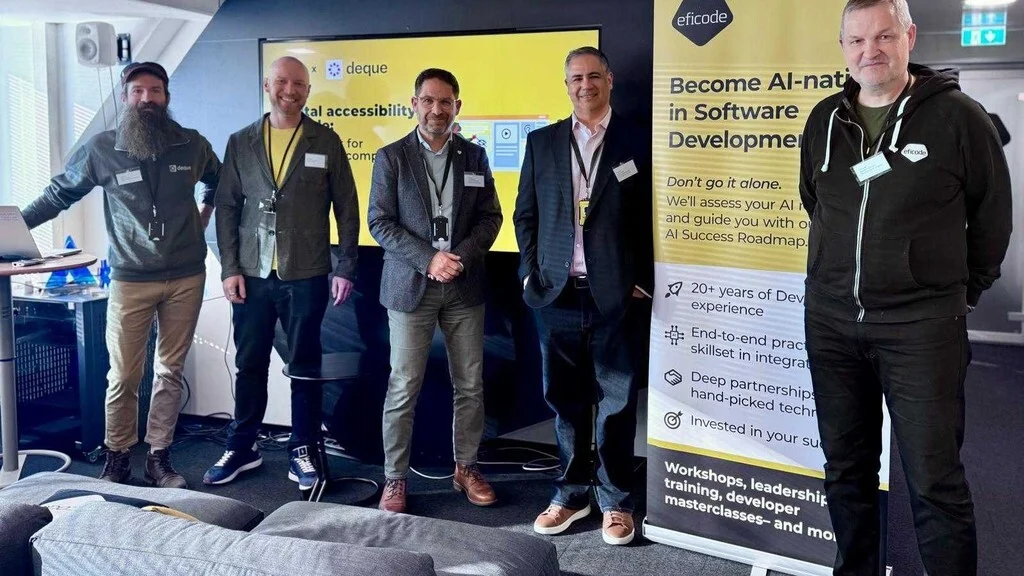
An essential component of how Deque advances its mission of digital equality is our global network of trusted partners, each committed to delivering the highest standards of digital accessibility excellence. Thanks to our new partnership with Eficode, we are better positioned than ever to support not only existing Eficode and Deque customers but any organization across the EU that wants to reduce EAA compliance risk and lower the cost of accessibility remediation while maintaining delivery velocity.
As global digital accessibility continues to evolve rapidly, disruptions will persist—including the very real legal risks posed by inaccessible, AI-generated code. The best way to ensure your organization stays ahead is to work with trusted, innovative leaders who can help you credibly demonstrate to regulators, customers, and stakeholders that accessibility is built into your software delivery process by design.
We’re inviting every organization that needs to achieve EAA compliance, including all current Eficode customers, to reach out today for strategic digital accessibility guidance.