Section 508 & Web Accessibility
Federal agencies, private entities that receive public funding, and vendors are required by law to make Information and Communication Technology (ICT) accessible. Find out what this means for your organization!
What is Section 508?
Section 508 is a sub-section of the Rehabilitation Act of 1973 that prohibits discrimination on the basis of disability in federal programs or programs receiving federal aid or employment.
And more specifically, Section 508 of the Act focuses on technology. The legislation requires the federal government to provide equal access to Information and Communication Technology, or ICT for short. This includes ICT the Federal government develops or builds, uses, maintains, and procures.
So what does it really mean? Websites, web apps, electronic documents, software, hardware, and even office equipment used by the government and its partners must be accessible to people with disabilities.
1973
Rehabilitation Act and creation of the Access Board to promote accessibility
1998
Rehabilitation Act was amended to include electronic and information technology
2017
Section 508 refresh (Includes WCAG success criteria)
What is the Section 508 Refresh?
The Rehabilitation Act has been updated a few times since it was introduced. First, it was amended by Congress and signed into law by President Bill Clinton in 1998 to include the “digital” side of accessibility.
In 2018, the Section 508 and Section 255 refresh filled in gaps in the standards and aligned with international requirements. In fact, the Web Content Accessibility Guidelines (WCAG) 2.0 level A and AA are explicitly referenced in the refreshed Section 508. Nice!
A group called the Access Board is responsible for determining what electronic and information technology is, determining what access means, determining what the standards are for access, and reviewing and updating the Section 508 standards to make sure it reflects technological advancements.

What does Section 508 cover today?
In today’s day and age, the legislation covers a whole lot more technological ground than it did in 1998.
Section 508 defines ICT as: “Information technology and other equipment, systems, technologies, or processes, for which the principal function is the creation, manipulation, storage, display, receipt, or transmission of electronic data and information, as well as any associated content.”
This includes, but is not limited to:
Hardware
- Computers
- Monitors and mouses
- Telecommunications equipment
- Multifunction office machines
- Kiosks and transaction machines
Software
- Desktop software like Word, PowerPoint, or Excel
- Web software like Facebook, Office 365, SharePoint Online
- Applications
Electronic Content (Web and Non-web)
- Websites
- Videos
- Electronic documents like PDFs
- Email & email attachments
- Social media
- Support documentation
What is the difference between ADA, Section 508, and WCAG?
ADA: Civil Right Law
Who it’s for: The ADA applies to US citizens and organizations.
The Americans with Disabilities Act is a United States law established to protect the rights of people with disabilities including their right to employment, public services, and public accommodations.
Section 508: Federal Law
Who it’s for: Section 508 applies Applies to US government agencies and citizens.
Section 508 of the Rehabilitation Act of 1973 is a law that requires the Federal Government to provide access to its Information and Communication Technology (ICT) to people with disabilities.
WCAG: Widely adopted guidelines
Who it’s for: WCAG is global standard adopted by the accessibility community
WCAG, a.k.a. the Web Content Accessibility Guidelines, are the technical guidelines created by the World Wide Web Consortium (W3C) for accessible web-based content.
How does Section 508 define website compliance?
According to the Section 508 standards, all electronic content is required to conform to the Web Content Accessibility Guidelines (WCAG) 2.0 level A and AA.
If you already know about WCAG, you’re in great shape! But it’s important to note: There are a few additional key requirements for 508 compliance that go beyond the WCAG success criteria.
Are there any Section 508 exemptions?
Yes, there are a few core exemptions that are worth noting.
Legacy ICT
Any ICT, component of ICT, or portion of ICT that complies with the previous standard and has not been altered after the Refresh standards fall under the safe harbor provision. If you decide to update a specific section of your website, anything new added must meet the Section 508 standards.
Contracts
Any ICT that has been acquired by a contractor incidental to a contract does not have to comply with Section 508.
Undue burden
If any agency determines compliance will fundamentally change the ICT or cause an extreme financial burden, they can make the case that they will meet the standards until that point. But beware: Documentation and providing alternative access are requirements. You can’t ignore accessibility!
How can I test my website for 508 conformance?
To work toward Section 508 compliance, we recommend incorporating accessibility testing into existing testing processes. Accessibility should be a sustainable, permanent part of your workflow. If you’re already practicing Agile, this approach will come naturally for you. In other words, testing early and often so that accessibility is a proactive measure, to achieve compliance most efficiently.
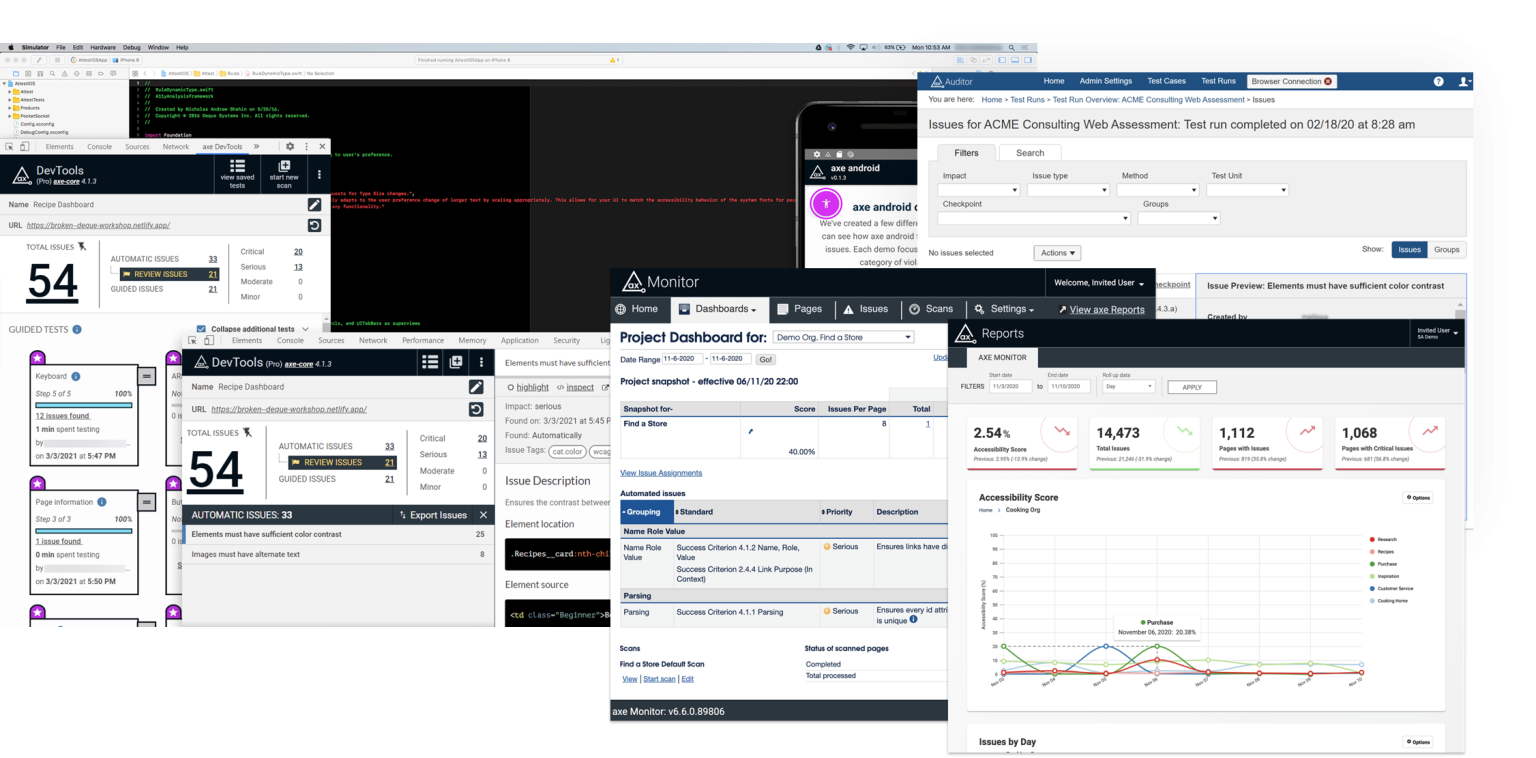
Don’t want Section 508 compliance testing to slow you down? Deque’s suite of Axe tools is built for the modern development environment with an emphasis on scalability, efficiency, versatility, and innovation.