
Anlässlich des diesjährigen Global Accessibility Awareness Day (GAAD) wollen wir einen Blick auf den aktuellen Stand der Barrierefreiheit werfen.
Die Barrierefreiheit entwickelt sich stetig weiter und verändert sich; die Downloadzahlen für „axe“ steigen exponentiell, wichtige Akteure wie Microsoft und Google investieren verstärkt in die Barrierefreiheit, und unsere Kunden bauen erfolgreiche und nachhaltige Programme zur Barrierefreiheit auf.
In diesem Beitrag geben wir einen Überblick über die Änderungen bei den Vorschriften, Nutzertrends, Trends im Bereich Barrierefreiheit, den Stand der Barrierefreiheit in wichtigen Branchen sowie Prognosen zur Barrierefreiheit für das Jahr 2019. Wenn Sie möchten, können Sie sich unser On-Demand-Webinar ansehen, in dem die unten aufgeführten Details behandelt werden.
Vorschriften und Rechtsstreitigkeiten bei fehlenden Vorschriften
In unserem Bericht „State of Accessibility“ aus dem Jahr 2018 war die Aktualisierung von Section 508 die wichtigste Änderung im Bereich der Vorschriften. Seitdem gab es einige weitere Änderungen.
Europäisches Gesetz zur Barrierefreiheit
Das Europäische Gesetz zur Barrierefreiheit wurde im November 2018 vorläufig unterzeichnet und im April dieses Jahres vom Europäischen Parlament endgültig verabschiedet. Dieses Gesetz erweitert die Barrierefreiheit öffentlicher Dienste über den öffentlichen Sektor hinaus und umfasst nun auch den E-Commerce, den Verkehrssektor, das Bankwesen usw. Es ist wichtig zu beachten, dass diese Verordnung auch die Barrierefreiheit im Internet und bei nativen mobilen Anwendungen umfasst. Mobile Anwendungen werden zu einem festen Bestandteil unseres Lebens und damit auch der Barrierefreiheit.
Gesetz über integrierte digitale Erlebnisse im 21. Jahrhundert (IDEA)
Im Dezember 2018 unterzeichnete Präsident Trump den „21st Century Integrated Digital Experience Act“ (IDEA). Dieses Gesetz verpflichtet Bundesbehörden zur Modernisierung ihrer Websites. Diese Modernisierung umfasst auch die Barrierefreiheit, die für interne und externe Anwendungen der Bundesregierung gilt.
Die Verantwortung für die Barrierefreiheit liegt beim Leiter der Behörde. Darüber hinaus sind die CIOs verpflichtet, sicherzustellen, dass ausreichende Mittel und Ressourcen zur Erfüllung der Anforderungen zur Verfügung stehen. Die CIOs sind zudem verpflichtet, über den Stand der Umsetzung dieser neuen Anforderung Bericht zu erstatten. Dadurch werden die Bundesbehörden stärker für ihre Barrierefreiheit in die Pflicht genommen als dies nach den derzeitigen Section-508-Standards der Fall ist.
Die Zahl der ADA-Klagen im Bereich Web (und Mobilgeräte) nimmt weiter zu
Obwohl das Justizministerium erneut bekräftigt hat, dass Titel III des ADA sehr wohl für Websites gilt, weigert es sich weiterhin, konkrete Anforderungen an die Einhaltung dieser Vorschriften zu nennen. Das Fehlen einer einheitlichen, übergreifenden Regelung hat zu einem Anstieg der ADA-Klagen im Bereich Web und Mobilgeräte geführt. Von 2014 bis 2017 war ein steiler Anstieg der Gesamtzahl der ADA-Klagen zu verzeichnen. Im Jahr 2018 gab es einen extremen Anstieg der ADA-Klagen im Webbereich um 181 %.
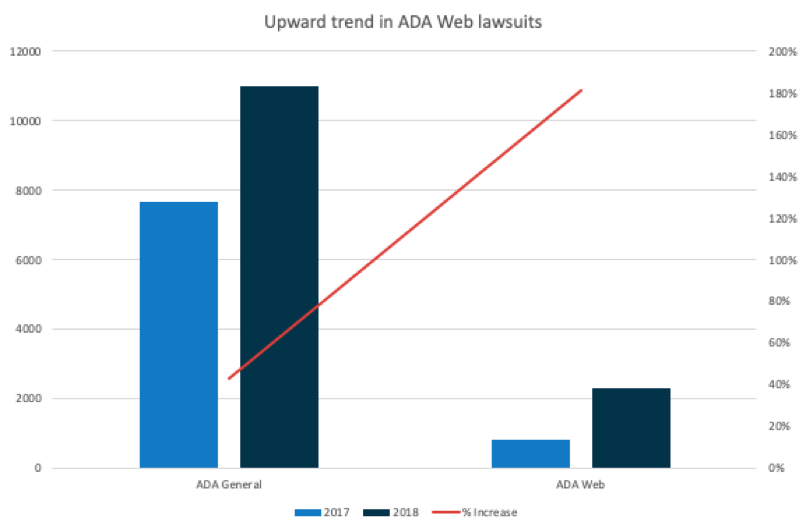
Im ersten Quartal 2019 betrafen 20 % (~420) der eingereichten ADA-Klagen die Barrierefreiheit im Internet. Zu den Klägern in diesen Verfahren zählen mittlerweile auch Menschen mit anderen Behinderungen, nicht mehr nur Sehbehinderte.
Nutzertrends
Die Nutzung von Mobilgeräten, Smart-Home-Assistenten und anderen Geräten im „Internet der Dinge“ nimmt weiter zu. Zudem besteht ein starker Bedarf an der Online-Ermöglichung von Zahlungen, Lieferdiensten und anderen alltäglichen Verbraucheraktivitäten. Da unser Leben immer stärker von Online-Transaktionen und -Interaktionen geprägt ist, ist digitale Personalisierung eine unverzichtbare Voraussetzung für die Online- und E-Commerce-Erfahrungen der Nutzer. Für viele von uns haben diese Innovationen das Leben bequemer und produktiver gemacht. Für Menschen mit Behinderungen bedeutet die zunehmende Verbreitung von Online-Diensten ein Maß an Unabhängigkeit, das keine frühere Generation erleben konnte. Die Barrierefreiheit dieser Dienste und Technologien ist für so viele dieser Nutzer von entscheidender Bedeutung und verändert ihr Leben grundlegend.
Deque Derzeit nimmt das Unternehmen an einem Forschungsprojekt mit einem Marktforschungsinstitut teil; der vollständige Bericht wird in Kürze veröffentlicht. Erste Ergebnisse zeigen, dass etwa 40 % der Websites für Blinde nicht barrierefrei sind. Darüber hinaus weisen die verbleibenden 60 %, die bis zu einem gewissen Grad barrierefrei sind, Hindernisse in Form von eingeschränkter Barrierefreiheit, Verschlechterung der Barrierefreiheit und häufig vorkommenden Funktionen auf, die den Zugriff blockieren, wie beispielsweise Captchas. Noch wichtiger ist, dass blinde Internetnutzer jeden Monat zwei Unternehmen aufgrund mangelnder Barrierefreiheit im Internet den Rücken kehren.
Tatsächlich sprechen sich neun von zehn blinden Internetnutzern lautstark gegen Unternehmen aus, deren Websites nicht barrierefrei sind. Dies überträgt sich in der Regel auch auf Freunde und Familie, was ein großes Risiko für Ihre Marke insgesamt darstellt. Schließlich rufen blinde Internetnutzer wegen der Barrierefreiheit von Websites einmal pro Woche beim Kundenservice an. Die Kosten für einen Anruf beim Kundenservice betragen 40 Dollar, während eine Online-Interaktion nur 2 Cent kostet.
Abgesehen von Rechtsstreitigkeiten ist es wichtig zu beachten, dass jeder Dritte im Alter von 65 bis 74 Jahren unter einem Hörverlust leidet. Vor dem Hintergrund des Videotrends ist es daher äußerst wichtig, diese Inhalte mit Bildunterschriften, Untertiteln oder Gebärdensprache zu versehen. Auch Nutzer, für die Englisch eine Zweitsprache ist, profitieren von einer einfachen Sprache. Menschen mit kognitiven Beeinträchtigungen (z. B. Autismus, Alzheimer, traumatische Hirnverletzungen usw.) verstärken die Notwendigkeit, das Internet einfach und benutzerfreundlich zu gestalten. Ganz zu schweigen davon, dass wir in einer Welt mit vielen Geräten alle einfache Nutzererfahrungen benötigen, die keine große Aufmerksamkeitsspanne erfordern.
Trends im Bereich Barrierefreiheit
Die diesjährigen Trends im Bereich Barrierefreiheit reichen von technologischen Verbesserungen über einen Anstieg der Downloadzahlen für Open-Source-Tools zur Prüfung der Barrierefreiheit bis hin zu einer zunehmenden Sensibilisierung für kognitive Behinderungen:
- Maschinelles Lernen ist ein neues und hervorragendes Werkzeug für die Barrierefreiheit. So gelingt es beispielsweise der Bilderkennung von Microsoft aus Azure, Bilder zuverlässig zu identifizieren und zu kennzeichnen.
- Die Bilderkennung von Microsoft in der Google Cloud-Version ermöglicht Anmerkungen mit hoher Zuverlässigkeit. Die Möglichkeiten zur Automatisierung der Barrierefreiheit werden kontinuierlich erweitert.
- Die sichtbare und öffentliche Barrierefreiheit wird auf Google Maps und Yelp zunehmend verbessert, indem barrierefreie Einrichtungen und Infrastrukturen gekennzeichnet werden.
- Die Zahl der Open-Source-Tools nimmt zu, was zeigt, dass das Thema in der Entwickler-Community zunehmend an Bedeutung gewinnt. Die wöchentlichen Downloads von Axe haben sich innerhalb eines Jahres verfünffacht. Die Chrome-Lighthouse-Entwicklertools, das „Accessibility Insights“-Tool von Microsoft und Pa11y nutzen alle die Axe-Regelbibliothek.
- Der Umfang, in dem Automatisierung Verstöße gegen die Barrierefreiheit aufdecken kann, nimmt zu. Axe hat im letzten Jahr sieben neue Regeln hinzugefügt, und das Team wird voraussichtlich in diesem Jahr fünf weitere Regeln veröffentlichen.
- Das Bewusstsein für kognitive Beeinträchtigungen nimmt zu. Es gibt etwa 16 Millionen Menschen mit kognitiven Beeinträchtigungen (das Doppelte der Einwohnerzahl von New York City). Angesichts der fortschreitenden Alterung der Bevölkerung wird dies zu einem immer dringlicheren Thema im Bereich der Barrierefreiheit. Die gute Nachricht ist, dass die Arbeitsgruppe für kognitive Barrierefreiheit des World Wide Web Consortium (W3C) weiterhin Fortschritte dabei erzielt, wie die Community Web- und mobile Plattformen auf ihre Eignung für Menschen mit kognitiven Beeinträchtigungen testen kann.
Jährliche Umfrage zur Barrierefreiheit in verschiedenen Branchen
Jedes Jahr scanne und untersuche ich mithilfe von axe die Startseiten der fünfzig weltweit führenden Websites. In diesem Jahr wurden auf den Startseiten der fünfzig weltweit führenden Websites durchschnittlich 120 Verstöße gegen die Barrierefreiheit festgestellt. Nachfolgend finden Sie die Ergebnisse für die fünf führenden Websites jeder Branche. Diese Zahlen beziehen sich auf Verstöße, die durch automatisierte Barrierefreiheits-Scans von axe ermittelt wurden.
Finanzdienstleistungsbranche
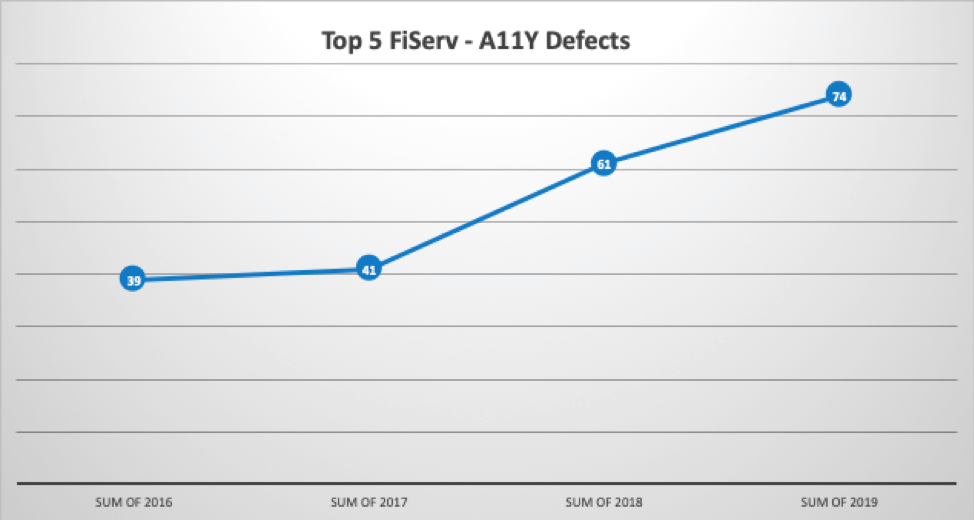
Von 2018 bis 2019 verschlechterte sich die Barrierefreiheit von Websites im Finanzdienstleistungsbereich um 50 % – von durchschnittlich 61 auf 74 Verstöße pro Seite.
Websites der Luftfahrtbranche
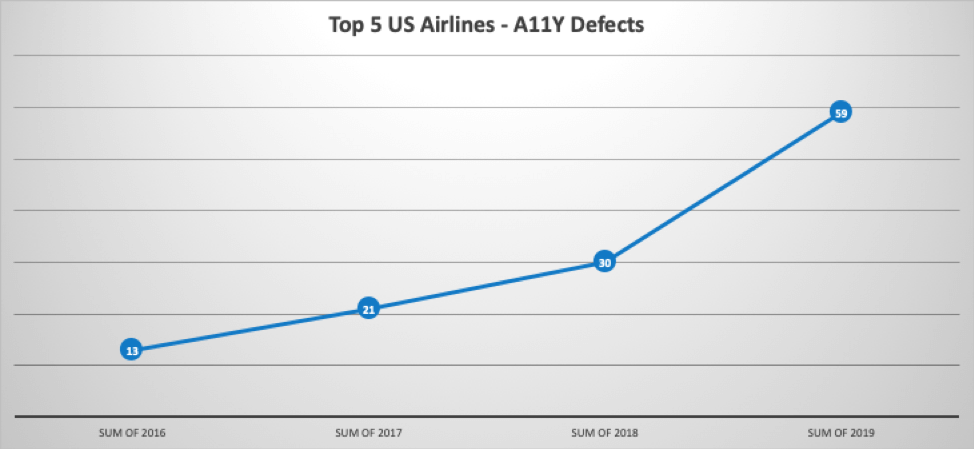
Bei den Fluggesellschaften, für die die Frist des „Air Carrier Access Act“ (ACAA) inzwischen abgelaufen ist, stieg die durchschnittliche Anzahl der Verstöße gegen die Barrierefreiheitsvorschriften bei den fünf größten US-Fluggesellschaften von 30 auf 59 Mängel pro Seite.
Einzelhandel
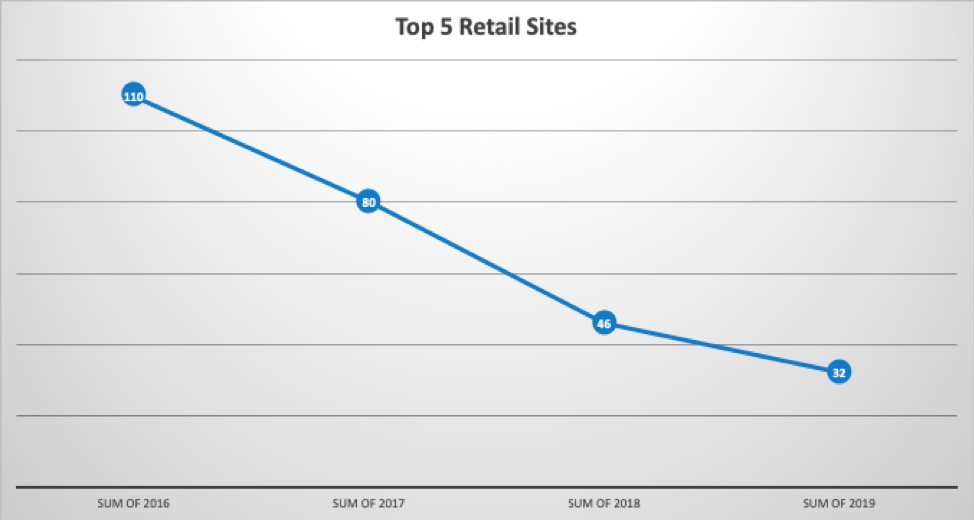
Die gute Nachricht ist, dass sich die durchschnittliche Barrierefreiheit im Einzelhandel insgesamt verbessert. Dies hängt höchstwahrscheinlich mit der Zunahme von Rechtsstreitigkeiten im Zusammenhang mit der Barrierefreiheit im Internet zusammen. Bei den fünf führenden Einzelhandels-Websites sank die durchschnittliche Anzahl der Barrierefreiheitsverstöße pro Seite von 46 im Jahr 2018 auf 32 im Jahr 2019.
Gesundheitswesen
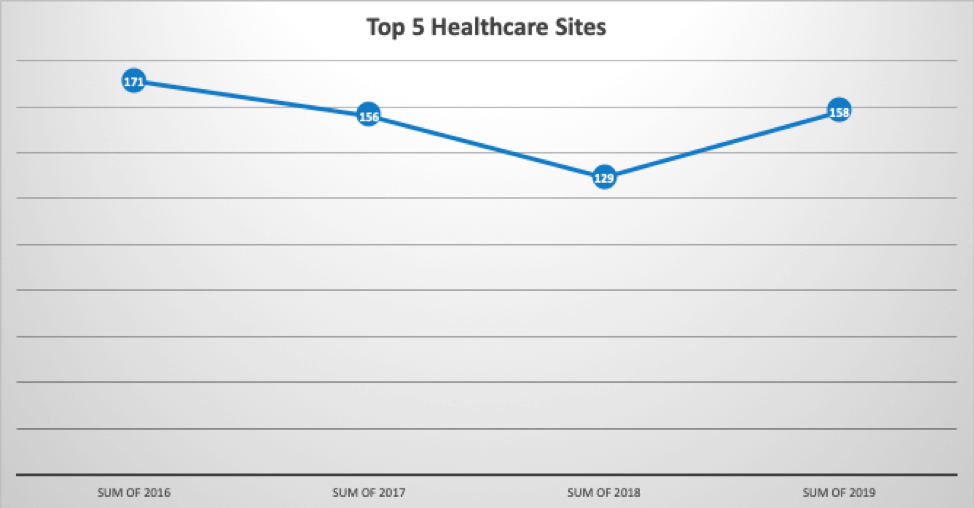
Im Gesundheitswesen stieg die durchschnittliche Anzahl der Verstöße gegen die Barrierefreiheit bei den fünf meistbesuchten Websites an, und der Durchschnitt liegt dort weiterhin über dem anderer Branchen.
Die zehn besten Websites der US-Bundesregierung
Im Folgenden sind die zehn besten Websites der Bundesregierung aufgeführt. In dieser Gruppe gibt es einige Ausreißer mit sehr wenigen Verstößen im Durchschnitt.
| Startseite der Website | Verstöße im Jahr 2019 |
|---|---|
| Energy.gov | 12 |
| Faa.gov | 0 |
| Dhs.gov | 82 |
| Nih.gov | 2 |
| Treasury.gov | 17 |
| Cia.gov | 82 |
| Census.gov | 32 |
| Occ.gov | 23 |
| Omb.gov | 6 |
| Epa.gov | 2 |
Prognosen zur Barrierefreiheit
Im vergangenen Jahr haben wir prognostiziert, dass der Schwerpunkt der Barrierefreiheit künftig auf Bildern, Sprache, Augmented/Virtual Reality, Kundensupport und Benutzererfahrung liegen wird. In diesem Jahr gehen wir davon aus, dass sich die Barrierefreiheitsbranche im Jahr 2019 auf folgende Bereiche konzentrieren wird:
- Unternehmen werden bestrebt sein, die Kosten für Barrierefreiheit zu senken und gleichzeitig sicherzustellen, dass die Geschwindigkeit der Softwareentwicklung nicht beeinträchtigt wird. Dies wird wiederum dazu führen, dass sie ihren Kundenstamm vergrößern, die Kundenbindung stärken und die Kundenbindung verbessern – und gleichzeitig die gesetzlichen Vorschriften einhalten.
- Die Nutzer werden voll und ganz an der digitalen Revolution und Transformation teilhaben wollen, und dieser Anspruch auf Gleichbehandlung wird sich auch in ihren Bemühungen fortsetzen, Unternehmen durch Klagen zur Rechenschaft zu ziehen.
- Die Aufsichtsbehörden wollen sicherstellen, dass die Barrierefreiheit nicht außer Acht gelassen wird; sie wollen jedoch nicht die Rolle von Aufsehern übernehmen.
- Die Millennials werden sich weiterhin für soziale Gerechtigkeit und die Rechte von Menschen mit Behinderung einsetzen und von Unternehmen verlangen, ihre Nutzer mit Empathie zu behandeln.
- Barrierefreiheit wird im Lebenszyklus der Softwareentwicklung weiterhin immer früher in den Prozess integriert, und die Automatisierung wird den Umfang der Barrierefreiheitsprüfungen weiter ausbauen.
- Die Open-Source-Richtlinien zur Barrierefreiheit werden um weitere Kennzahlen und Berichterstattungselemente erweitert.
Zusammenfassung
Nachdem Sie nun einen Überblick über die Trends im Bereich Barrierefreiheit aus dem Jahr 2018 erhalten haben, wissen Sie, dass das Bewusstsein für Barrierefreiheit und die Testmöglichkeiten in diesem Bereich für 2019 zunehmen. Aktionstage wie der „Global Accessibility Awareness Day“ tragen maßgeblich zu dieser Dynamik bei. Eine hervorragende Möglichkeit, sich in Ihrem Unternehmen für mehr Barrierefreiheit einzusetzen, besteht darin, Ihrer Geschäftsleitung zu verdeutlichen, dass Barrierefreiheit zunehmend zum Mainstream wird und dass Menschen mit Behinderungen eine Zielgruppe darstellen, die Sie nicht ignorieren können.