Je tiens tout d’abord à dire que j’adore mon métier. Pourquoi ? Parce que je passe chaque semaine à échanger avec nos clients sur l’accessibilité numérique. C’est ma passion, et j’aime partager mon point de vue et mon expérience avec ceux qui s’efforcent de mettre en place des programmes d’accessibilité numérique au sein de leur entreprise. Je les aide à identifier leurs défis et leurs opportunités, et je travaille avec eux pour définir et atteindre leurs objectifs en matière d’accessibilité numérique.
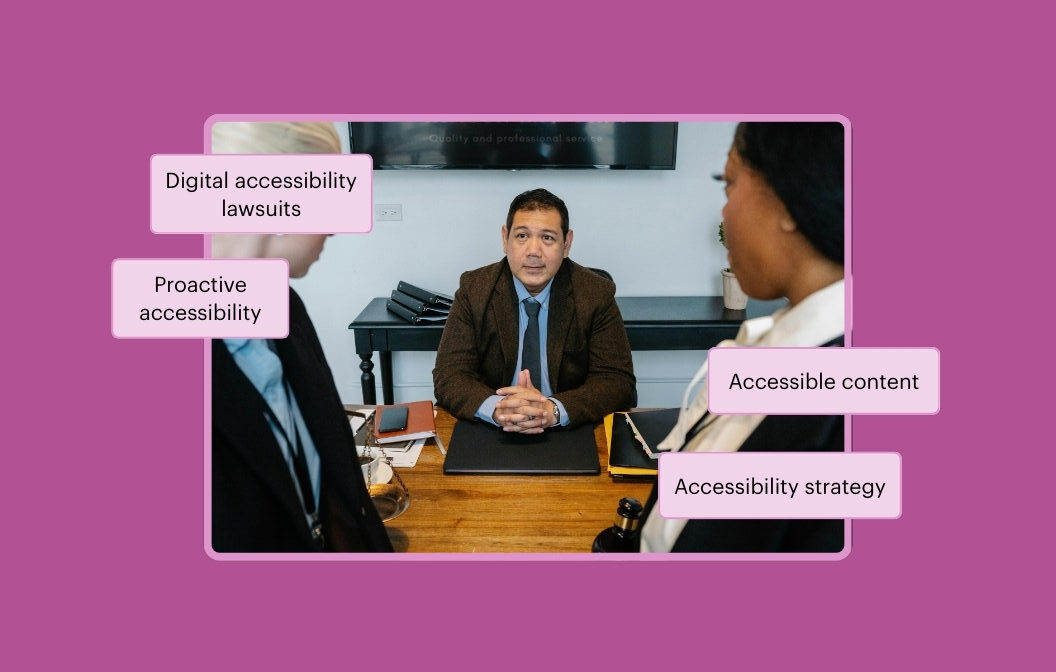
Au cours des deux dernières semaines, j'ai eu au moins trois échanges avec des clients à la suite d'un article paru dans le Wall Street Journal intitulé « Le cabinet d'avocats qui intente des milliers de procès pour invalidité contre des entreprises ».
Si vous êtes abonné au Wall Street Journal, vous pouvez consulter l'article par vous-même. Mais si ce n'est pas le cas, je peux vous dire qu'on comprend très bien pourquoi tout chef d'entreprise qui le lirait se sentirait inquiet. À lui seul, un cabinet d'avocats a déposé plus de 1 000 plaintes liées à l'accessibilité numérique aux États-Unis rien que l'année dernière !
Quand on examine ces actions en justice, on constate très clairement qu’une approche de type « copier-coller » est adoptée, l’objectif étant d’intenter le plus grand nombre possible de poursuites dans l’espoir d’obtenir des règlements financiers rapides.
Même si de nombreuses actions en justice relatives à l'accessibilité numérique partent d'une bonne intention, les types d'actions décrites dans cet article ne sont pas utiles. Elles ne contribuent pas à rendre le Web plus accessible et plus inclusif pour tous, ce qui est pourtant l'essentiel. Et elles constituent en réalité un gaspillage d'argent qui pourrait être consacré à l'amélioration des contenus numériques.
Je suis particulièrement préoccupé par le risque que les actions en justice de ce type finissent par être considérées comme un « mal nécessaire ». Si une action en justice vise à obtenir un règlement financier rapide, les entreprises pourraient estimer qu’il leur reviendra finalement moins cher de transiger que de déployer les efforts nécessaires pour rendre leurs contenus accessibles.
Cela pose problème pour de nombreuses raisons, la principale étant que ce n'est pas vrai !
Il y a plusieurs années, j'ai mené une étude portant sur des entreprises du classement Fortune 50 qui avaient fait l'objet d'une procédure judiciaire liée à l'accessibilité numérique. Mon objectif était d'examiner dans les moindres détails l'ampleur des efforts et des coûts nécessaires pour faire face à l'une de ces poursuites abusives, en m'intéressant tout particulièrement aux affaires qui avaient abouti à un règlement rapide pour un montant relativement faible.
Je m'attendais à ce qu'il y ait des coûts cachés qui finiraient par s'accumuler, mais malgré tout, j'ai quand même été surpris par le résultat.
Lorsque nous avons calculé le coût total final engagé par une entreprise moyenne pour toutes les démarches nécessaires à la suite d'une action en justice — ce qui comprenait notamment le recours à des avocats externes spécialisés dans le domaine de l'accessibilité numérique et titulaires d'une licence —, nous avons constaté que ce montant pouvait atteindre 350 000 dollars, voire plus !
(Pour en savoir plus sur les résultats de cette étude, vous pouvez suivre ce webinaire organisé par l'Deque : « Le coût réel des plaintes et des poursuites judiciaires liées à l'accessibilité »)
L'un des exemples cités dans l'article du Wall Street Journal concerne un procès intenté contre une petite entreprise de vélos électriques. L'accord proposé s'élevait à 4 950 dollars. Mais pour parvenir à ce montant négocié, l'entreprise a dû débourser environ 46 000 dollars en frais juridiques ! C'est plus du double du coût de la simple correction du contenu en question. La mise à jour de ses sites web n'a coûté que 13 000 dollars.
En lisant cela, tout m’a semblé très familier. Au fil des ans, j’ai recueilli de très nombreux cas similaires où les frais juridiques et administratifs étaient exponentiellement plus élevés que les montants des règlements eux-mêmes. L’idée selon laquelle conclure un accord permettrait de faire des économies est une idée fausse, tout comme celle selon laquelle se mettre en conformité dès maintenant et le rester coûterait plus cher que de devoir faire face à d’éventuels problèmes juridiques plus tard.
Comme le souligne clairement l'article du Wall Street Journal, les poursuites judiciaires ne sont pas près de disparaître. En réalité, elles sont de plus en plus fréquentes. Certaines entreprises sont même visées à plusieurs reprises. Continuer à verser des indemnités pour tenter de parvenir à un accord n'est tout simplement pas viable. Votre entreprise sera toujours sur la défensive et paiera toujours plus que nécessaire.
Heureusement, il existe une meilleure solution.
La meilleure défense, c'est l'attaque. N'attendez pas d'être poursuivi en justice, puis de l'être à nouveau. Ne payez pas plus que nécessaire pour défendre votre organisation contre des poursuites abusives qui imposent des coûts cachés élevés sous prétexte de règlements rapides. Investissez plutôt dès maintenant dans l’accessibilité numérique et évitez ainsi tout risque de poursuites futures. Vous paierez moins au total, et les avantages pour votre entreprise s’inscriront dans la durée. De plus, vous agirez de la bonne manière en rendant votre contenu plus inclusif et accessible à tous, ce qui est le véritable objectif !