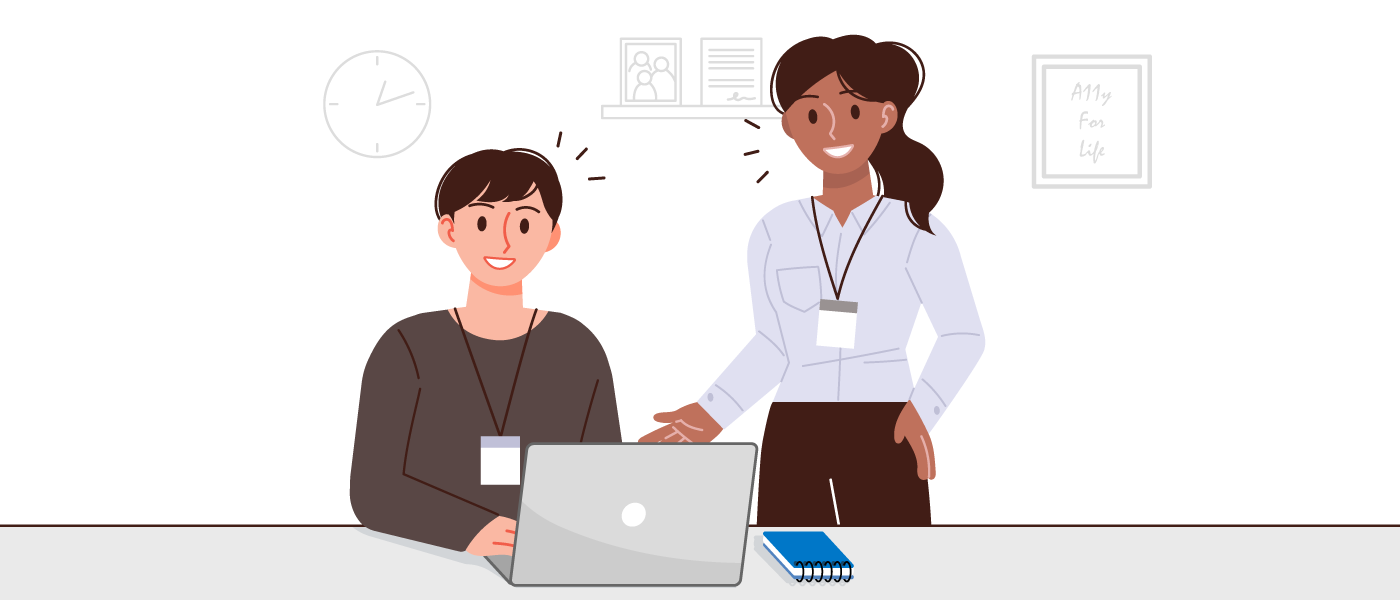
When I audit websites, it’s evident that some of the issues I identify could have been avoided either directly in design or early in development if the developer knew what the designer intended the functionality of the element to be. This boils down to the fact that having effective collaboration between designers and developers with respect to accessibility must be the way forward for all of us to see a more inclusive world.
Effective collaboration between designers and developers is crucial for creating accessible websites and applications from the start. Accessibility is a shared responsibility, with both parties working together to ensure that the end product is usable by all, including those with disabilities. In this blog post, we will explore various strategies and best practices to bridge the gap between designers and developers focusing on accessibility.
- Leadership buy in: The key to leadership buy in is to frame accessibility as a business imperative and show them the ROI. When they understand that being inclusive means they can capture more of their market, they will see the business value. Also, adding the cost of legal noncompliance helps leadership buy in. Layer on top of those, being accessible is a serious market differentiator these days. More and more people without disabilities care about accessibility. Increase revenue, lower risk, and improved brand—it’s hard to argue with these.
- Foster communication: The key to successful collaboration is open and regular communication. Schedule joint meetings, brainstorming sessions, and discussions to gain insight into each other’s perspectives, knowledge and job requirements. This will promote understanding and a shared vision for creating accessible designs.
- Educate on Accessibility Principles: Conduct joint training sessions or workshops to educate everyone on accessibility principles, guidelines, and best practices. By providing a common foundation of knowledge, everyone will be better equipped to make the project successful.
- Establish Design Systems and Guidelines: Creating a shared design system or style guide that includes accessibility considerations is a valuable resource for everyone. The system should outline accessible design patterns, color contrast requirements, font sizes, and other accessibility information. By having a clear set of guidelines, the team can ensure consistency and accessibility across different projects.
- Implement Accessibility Testing: Integrate accessibility testing into the design/development process to identify and address accessibility issues. Collaborate to understand and resolve any design or development-driven accessibility challenges. Encourage feedback and suggestions from everyone to improve the overall accessibility of the product.
- Use Assistive Technology: Developers/testers can help designers understand how assistive technologies, such as screen readers, interact with the design. By testing designs using assistive technologies in the design phase, designers the user experience for people with disabilities can be built in before any code is written. This will ultimately result in more inclusive and accessible designs and far less rework.
- Continuous Learning and Improvement: Accessibility is ever evolving, with new technologies, techniques and guidelines being introduced regularly. Stay updated through webinars, conferences, and online resources, ensuring that you are aware of the latest best practices. Continuous learning will enhance your accessibility knowledge, resulting in more productive collaboration and make accessible design outcomes faster and easier.
Conclusion
Effective collaboration between designers and developers is essential for creating accessible digital products. By fostering communication, education, and continuous learning, we can bridge the gap between designers and developers, ensuring that accessibility becomes an intrinsic part of the design and development process. Ultimately, this collaboration will lead to more inclusive and usable experiences for everyone, regardless of their abilities.