We are living in a time of accelerated change powered by transformational technologies. Across virtually every landscape—legal, financial, political, ethical—the impact has been profound. And we are still only seeing the tip of the iceberg.
What’s striking is how quickly enterprises have adapted. Think about how far we’ve come with privacy and security. Just a decade ago, the GDPR didn’t exist, and enterprise security often still meant relying on perimeter-based defenses like firewalls. Today, privacy and security are built-in expectations, embedded into every product decision. Advanced solutions now harness artificial intelligence, machine learning, and automation to deliver comprehensive coverage at scale—even for the largest and most complex enterprises.
What’s also striking is that digital accessibility hasn’t yet reached that same baseline status. It’s every bit as fundamental to building inclusive products that serve more people, deliver against business objectives, provide better experiences, and meet today’s ethical and regulatory expectations. But unlike privacy and security, digital accessibility still isn’t universally baked into every decision.
The question is: Why not?
Democratizing digital accessibility
The answer is that, until now, we haven’t made it easy enough. If we expect digital accessibility to be ubiquitous, we must democratize it so that anyone, anywhere, can build accessibly from the start.
Today, I feel more hopeful than ever that we’ve reached the turning point. I’ve been in digital accessibility for more than twenty years. For much of that time, this mission has felt like an uphill battle. But what I feel now is shared momentum. Digital accessibility is finding its way into the very heart of modern web and mobile development.
I’ve said before that I think of myself as a humanist, a technologist, and a pragmatist. When it comes to democratizing digital accessibility, my focus—as the CEO of a software company—is on the people doing the hard work every day. That includes the designers, developers, and testers building the products and, just as importantly, the accessibility leaders setting the vision, shaping the strategy, and securing the resources.
These are the individuals we must empower with solutions that make digital accessibility not just possible, but doable. If digital accessibility is going to be mandatory, then mandatory must be easy.
Embedding digital accessibility expertise where it’s needed most
Enacting this shift from optional to essential means embedding digital accessibility directly into the tools developers and content creators use every day. At Deque, we’ve just announced a new product called the axe MCP Server that’s designed to do exactly that. It will connect the digital accessibility expertise of the axe Platform with AI agents across the development lifecycle. This will enable developers to identify root causes and apply suggested code changes directly within their IDE.
Teams will be able to find and fix more issues—earlier and faster, with greater accuracy. They’ll build their expertise over time, but expertise will no longer be a prerequisite for impact.
This is what I mean by democratizing digital accessibility: easily doable, by all.
In a previous post, I wrote about digital accessibility and the EAT model: Expertise, Automation, and Training. This model is essential to the process of democratizing digital accessibility. Without expertise, you don’t have accuracy. Without automation, you can’t scale. And without training, you can’t achieve organizational self-sufficiency.
Ensuring digital accessibility is the expectation, not the exception
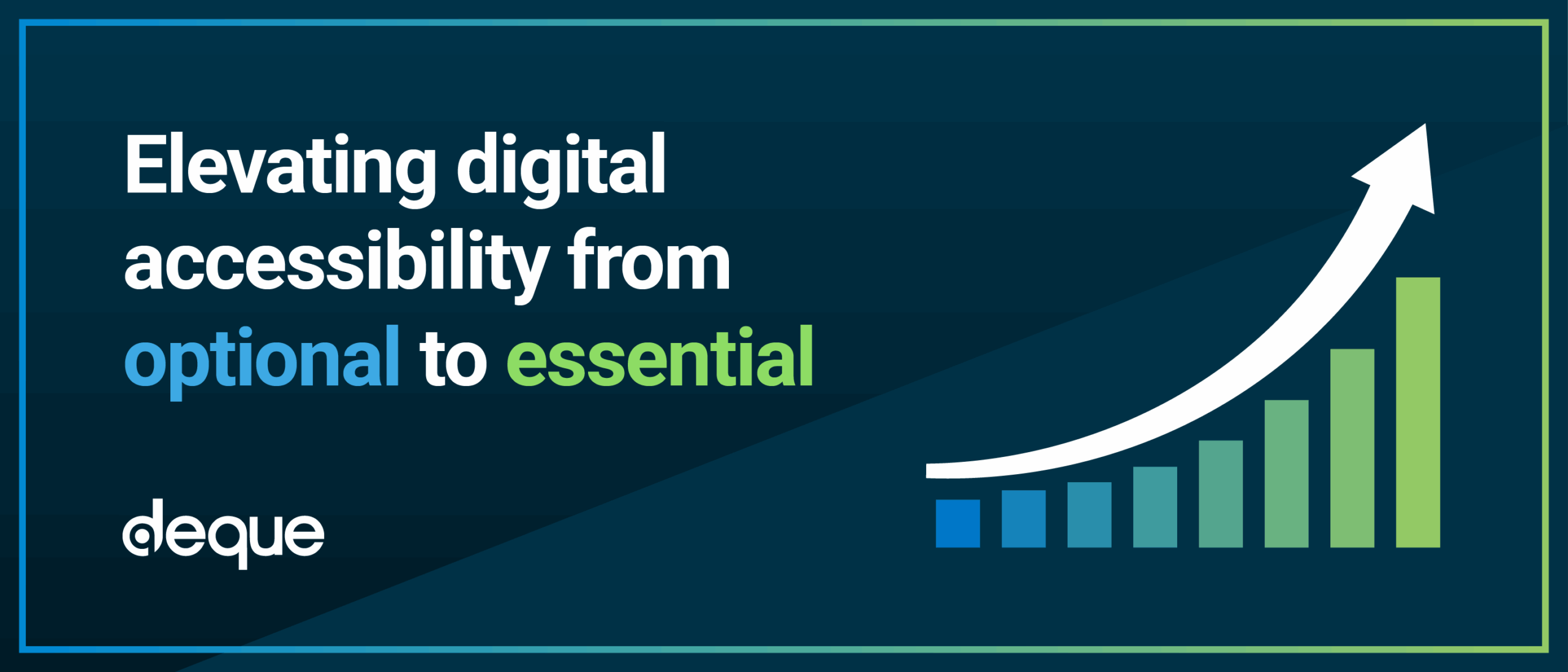
To elevate digital accessibility to the level of privacy and security—where it’s no longer optional but essential—we must enable enterprises through a holistic approach, leveraging the EAT model to embed digital accessibility across the organization. And we must prioritize software solutions that are simultaneously transformational and practical, like the axe MCP Server.
AI-powered, expertise-informed technologies have already transformed how enterprises manage privacy and security—automating everything from threat detection to data classification and anonymization—making them an everyday part of conducting business in the global digital economy.
We are just steps away from achieving the same for digital accessibility.
We’ve seen what’s possible when enterprise priorities align with powerful tools and practical workflows. We can do the same for digital accessibility—ensuring it’s no longer the exception but the expectation.
The vision is there. The momentum is real. And now, we have the tools and the processes to make it easy—to create a world where digital accessibility is simply how we build.