Weit draußen in den unerforschten Randgebieten des unmodernen Endes des westlichen Spiralarms der Galaxie liegt ein völlig unbedeutender kleiner blaugrüner Planet (das sind wir). Und dieser Planet hat ein Problem: Die meisten Menschen, die versucht haben, das Internet zu nutzen, tun sich damit schwer.
Die Leute vom W3C versuchen, hier Abhilfe zu schaffen.
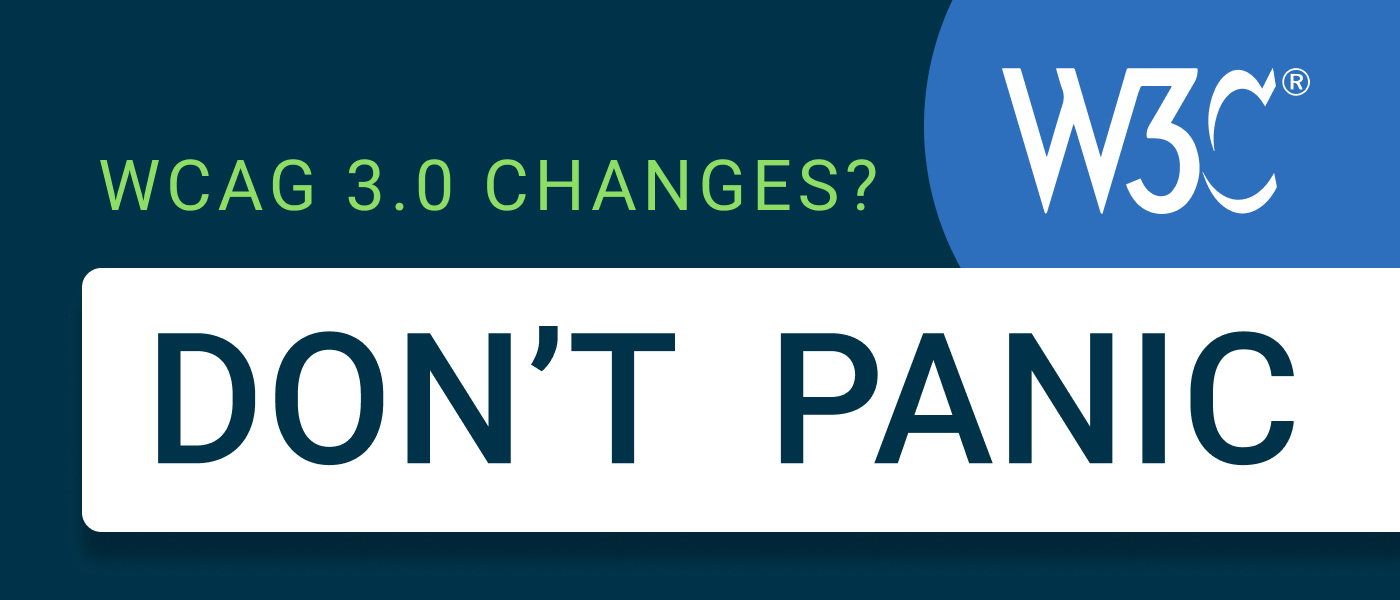
Anlässlich des diesjährigen Global Accessibility Awareness Day (GAAD) veröffentlicht das W3C seinen neuesten Entwurf der WCAG 3.0, der 174 neue Erfolgskriterien enthält. Und unsere Botschaft an Sie spiegelt eine wider, an die Sie sich vielleicht aus „Per Anhalter durch die Galaxis“ erinnern (die ich mir gerade aus dem obigen Text ausgeliehen habe): Keine Panik.
Wesentliche Unterschiede
Der auffälligste Unterschied zwischen dem kommenden Entwurf und seinem Vorgänger sind diese 174 neuen Ergebnisse (die neue Bezeichnung für Erfolgskriterien in den WCAG 3.0). Diese Ergebnisse werden voraussichtlich den Hauptteil der WCAG 3.0 bilden. Zum Vergleich: Die WCAG 2.1 umfassen 78 Erfolgskriterien, bzw. 50, wenn man die Stufe AAA nicht mitzählt.
Das sind eine Menge neuer Ergebnisse, aber bevor Sie sich davon zu sehr überwältigt fühlen, sollten Sie folgende wichtige Punkte beachten:
- Es handelt sich hierbei um sehr frühe Entwürfe.
- Viele Ergebnisse werden wahrscheinlich verworfen.
- Über das Konformitätsniveau muss noch entschieden werden.
Ziele für den neuen Entwurf
Mit diesem Entwurf legt das W3C praktisch alle Karten auf den Tisch und fragt: „Was haben wir übersehen?“ Es gibt Aspekte, von denen das W3C weiß, dass sie für Menschen mit Behinderungen wichtig sind, für die es jedoch noch nicht genügend Forschungsergebnisse gibt. Wahrscheinlich gibt es auch andere Bedürfnisse von Menschen mit Behinderungen, die dem W3C noch nicht bekannt sind. Daher fordert dieser Entwurf entsprechende Forschungsarbeiten und bittet darum, solche Lücken zu melden.
Zum jetzigen Zeitpunkt handelt es sich bei den Ergebnissen um Ideen dazu, was ein bestimmtes Thema umfassen könnte – ohne detaillierte Definitionen, Ausnahmelisten und Beispiele. Ob ein bestimmtes Ergebnis letztendlich in die endgültige Fassung der WCAG 3.0 aufgenommen wird, hängt von vielen Faktoren ab.
Aus den WCAG 2 wissen wir, dass Anforderungen, die 1) schwer einheitlich zu testen sind, 2) zu viele Randfälle aufweisen oder 3) auf unzureichender Forschung beruhen, im Schreibprozess in der Regel aussortiert werden. Oder sie werden auf eine höhere Konformitätsstufe angehoben (Stufe AAA in den WCAG 2, Gold in den WCAG 3.0), deren Einhaltung von Organisationen zwar empfohlen, aber nicht vorgeschrieben wird.
Was steht in den neuen Lernzielen?
Auch wenn viele dieser Ergebnisse jedem, der im Bereich der digitalen Barrierefreiheit tätig ist, bekannt sein dürften, enthält der Bericht doch einige neue Ansätze, die es zu beachten gilt. Zu den wichtigsten Punkten zählen:
Nonverbale Signale: Mediale Alternativen erklären nonverbale Signale wie Tonfall, Mimik, Gestik oder Musik mit emotionaler Bedeutung.
Dieses Lernziel soll Menschen, denen das Verstehen nonverbaler Signale schwerfällt, dabei helfen, den Zweck von Bildern, Videos und anderen Medien zu verstehen. Davon profitieren beispielsweise Menschen mit Autismus-Spektrum-Störungen, die Schwierigkeiten haben, soziale Signale zu verstehen.
Eine einzige Idee: Jeder Textabschnitt [z. B. Satz, Absatz, Aufzählungspunkt] behandelt ein Konzept.
Wenn ein längerer Text, der mehrere Themen behandelt, in kleinere Absätze unterteilt wird, wobei jeder Absatz ein anderes Thema behandelt, wird das Textverständnis verbessert. Dies ist für alle hilfreich, insbesondere aber für Menschen mit Einschränkungen des Kurzzeitgedächtnisses. Durch richtig gegliederte Texte lässt sich leichter zum gewünschten Thema zurückkehren und dieses noch einmal nachlesen, ohne sich in anderen Themen zu verlieren.
Datenschutz im Zusammenhang mit Behinderungen: Informationen über Behinderungen werden nicht an Dritte oder Algorithmen (einschließlich KI) weitergegeben oder von diesen verwendet.
Die Bedürfnisse im Zusammenhang mit einer Behinderung, die Präferenzen einer Person sowie die Nutzung von assistiven Technologien sind äußerst persönlicher Natur. Sie sind mit anderen medizinischen Informationen gleichzusetzen. Diese Informationen können – und werden oft – dazu genutzt, Menschen den Zugang zu Bildung, Wohnraum, Versicherungen, Beschäftigung und vielem mehr zu verwehren. Viele Websites verwenden heutzutage Widgets, die den Zugriff auf Informationen verhindern, sofern die Nutzer nicht bereit sind, ihre Bedürfnisse im Zusammenhang mit einer Behinderung gegenüber dem Widget-Anbieter offenzulegen. Dieses Ergebnis zielt darauf ab, Menschen vor solchen Praktiken zu schützen.
Wann können wir das nutzen?
Der neueste Entwurf der WCAG 3.0 enthält viele großartige Ideen. Es gibt jedoch noch sehr viel zu klären. Das W3C bezeichnet dies als die „explorative“ Phase der WCAG 3.0-Ergebnisse. Im Laufe der Arbeit werden die Ergebnisse von der explorativen Phase über die Entwicklungs- und Verfeinerungsphase bis hin zur ausgereiften Phase weiterentwickelt.
Wir raten davon ab, diese neuen Ergebnisse vorerst als Anforderungen für ein Produkt heranzuziehen. Wenn Sie jedoch bereit für eine neue Herausforderung sind, lohnt es sich, sie als zusätzliche Best Practices in Betracht zu ziehen. WCAG 2.0, 2.1 und 2.2 sollten auf absehbare Zeit die Grundlage jedes Programms zur Barrierefreiheit im Web bleiben.
Das W3C hat derzeit keinen Zeitplan dafür, wann WCAG 3.0 als „Empfehlung“ veröffentlicht wird (der Zeitpunkt, an dem das Dokument fertiggestellt ist). Die aktuelle Roadmap reicht bis 2026, aber selbst im optimistischsten Szenario wird WCAG 3.0 wahrscheinlich nicht vor 2028 fertiggestellt sein. Angesichts der bisherigen Fortschritte – und im Vergleich dazu, wie lange es gedauert hat, bis WCAG 2.0 ab dem Zeitpunkt der ersten Liste von Erfolgskriterien fertiggestellt war (7 Jahre) – werden wir WCAG 3.0 möglicherweise nicht vor 2030 zu sehen bekommen.
Feedback geben
Diese Arbeitsentwürfe werden vom W3C veröffentlicht, um den Fortschritt aufzuzeigen und Rückmeldungen aus der Öffentlichkeit einzuholen. In der Anmerkung des Herausgebers werden die folgenden drei Fragen ausdrücklich angesprochen:
- Welche Ergebnisse sind erforderlich, um Webinhalte barrierefrei zu gestalten, und welche fehlen in dieser Liste?
- Welche Forschungsergebnisse stützen oder widerlegen diese Ergebnisse?
- Fallen die hier aufgeführten Ergebnisse nicht in den Geltungsbereich der Leitlinien zur Barrierefreiheit, und warum?
Wenn Sie Feedback geben möchten, können Sie dies tun, indem Sie ein GitHub-Issue eröffnen oder eine E-Mail an public-agwg-comments@w3.org senden (Kommentararchiv).