Nous sommes à un tournant décisif en matière d'accessibilité numérique. Alors que l'intelligence artificielle accélère la création de contenu et la génération de code, et que les réglementations et normes internationales évoluent rapidement, le rythme auquel les équipes doivent proposer des expériences de qualité, conformes et accessibles s'intensifie, tout comme la pression qui pèse sur elles.
Pour relever ce défi, les organisations doivent disposer des outils adéquats leur permettant de développer l’accessibilité numérique, de s’adapter aux exigences actuelles et de continuer à progresser vers un monde numérique plus accessible. Pour surmonter les défis en matière d’accessibilité posés par l’IA, il faut des solutions d’accessibilité basées sur l’IA, et c’est exactement ce que propose Deque .
Nos deux dernières fonctionnalités basées sur l'IA sont les tests guidés intelligents automatisés et les règles avancées. Bien que de nombreux clients professionnels les utilisent déjà depuis plusieurs mois, vous pouvez désormais accéder à ces fonctionnalités directement depuis votre extension de navigateur, ce qui vous permet de les intégrer encore plus facilement à vos flux de travail.
Optimisez l'efficacité de vos tests d'accessibilité grâce à des fonctionnalités basées sur l'IA
Grâce à nos fonctionnalités optimisées par l'IA, vous bénéficierez d'une couverture automatisée élargie qui aidera vos équipes à identifier et à corriger plus rapidement un plus grand nombre de problèmes d'accessibilité. Vous pourrez également élargir le cercle des personnes autorisées à participer aux tests, ce qui permettra à davantage de collaborateurs de détecter plus facilement des problèmes qui, auparavant, ne pouvaient être identifiés que par des experts. Cela se traduira par une détection plus rapide des problèmes, une réduction de la charge de travail manuel et davantage de temps à consacrer aux tâches stratégiques liées à l'accessibilité.
Tests guidés intelligents automatisés
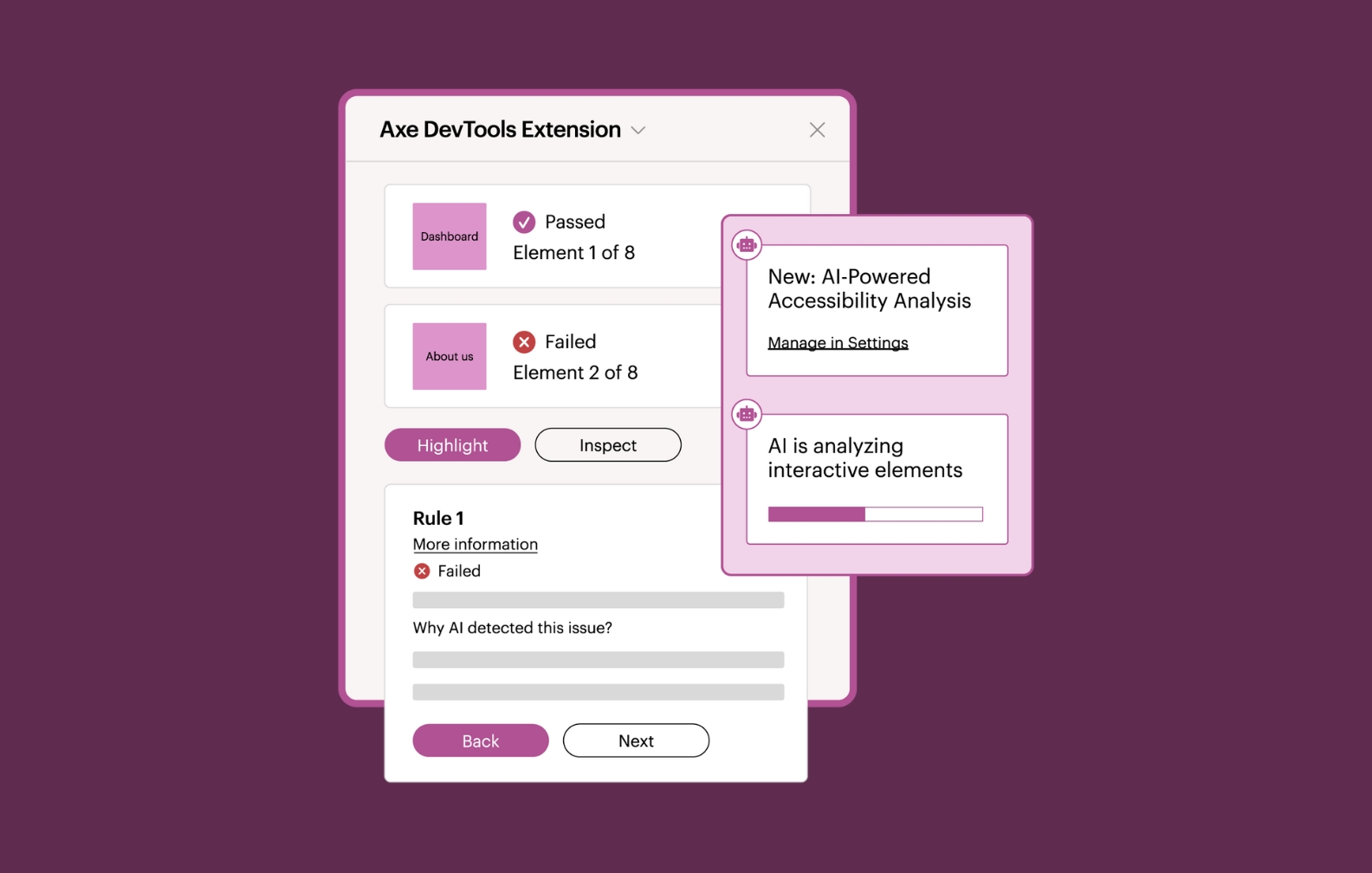
Les tests guidés intelligents automatisés s'appuient sur l'IA pour aider vos équipes à réaliser des tests d'accessibilité plus complexes, plus rapidement et avec une plus grande cohérence, sans pour autant priver les experts humains de leur rôle. Au lieu de suivre manuellement les questions et les étapes guidées, l'IA intervient en analysant les schémas récurrents, en mettant en évidence les problèmes potentiels et en présentant des conclusions claires que votre équipe peut examiner et valider d'un simple clic. Vous bénéficiez ainsi de la rapidité et de la cohérence de l'automatisation tout en conservant l'entière maîtrise des résultats finaux.
Les tests automatisés et guidés intelligemment fournissent également une explication pour chaque résultat, ce qui permet à votre équipe de comprendre pourquoi un problème a été signalé. Cela renforce la confiance et favorise une compréhension commune entre les équipes.
Le premier test guidé intelligent automatisé disponible concerne les éléments interactifs. Nous travaillons activement à l'automatisation d'autres tests guidés intelligents (tels que les tests au clavier) afin de continuer à contribuer à lever les obstacles à l'accessibilité, à faciliter les tests dès les premières phases du cycle de développement logiciel (SDLC) et à étendre cette approche à l'ensemble des équipes.
Règles automatisées avancées
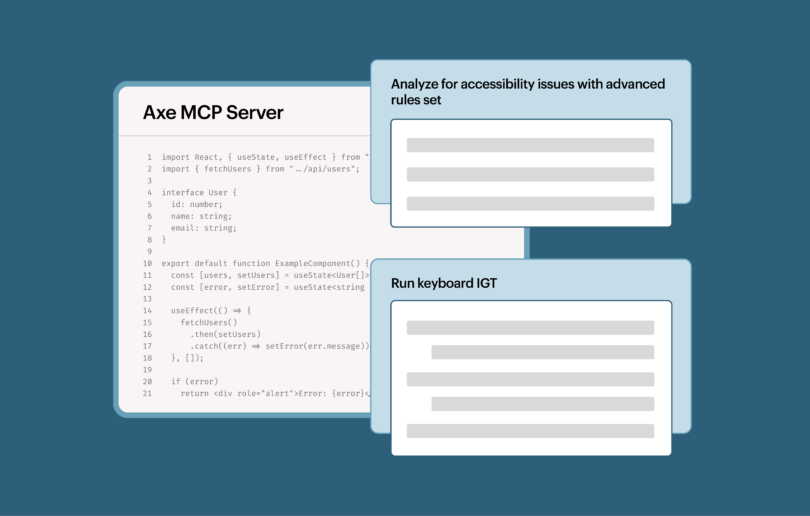
Ces règles basées sur l’IA traitent des problèmes tels que la structure des titres, les indicateurs de focus, le contraste du texte et les images décoratives — des domaines qui nécessitaient auparavant des tests manuels ou des tests guidés intelligents. Désormais, vos développeurs et vos équipes d’assurance qualité peuvent détecter ces problèmes de manière précoce, cohérente et rapide. Cela signifie qu’un plus grand nombre de membres de vos équipes ont la possibilité de contribuer immédiatement à l’accessibilité et d’accélérer les flux de travail. Vous permettrez également à vos experts de se concentrer sur les problèmes les plus complexes et les plus stratégiques.
L'impact : des tests d'accessibilité plus rapides, plus simples et plus évolutifs
Auparavant, les équipes passaient entre 30 et 45 minutes à parcourir manuellement, à l'aide de la touche Tab, chaque élément interactif, à détecter les problèmes liés au clavier, à les documenter et à rédiger des recommandations de correction. Grâce aux tests guidés intelligents (IGT), nous avons pu réduire considérablement ce temps à 2 ou 3 minutes. Désormais, grâce aux tests IGT automatisés basés sur l’IA, ces mêmes tests s’effectuent en quelques secondes, soit jusqu’à 4 fois plus vite qu’un test IGT standard (et jusqu’à 60 fois plus vite qu’un test manuel).
Comme vous pouvez le constater, ces nouvelles fonctionnalités basées sur l'IA vous offrent véritablement des avantages concrets dans le cadre de votre stratégie d'accessibilité. Votre équipe peut détecter automatiquement davantage de problèmes d’accessibilité avec moins de travail manuel, tout en vous laissant le contrôle des décisions finales. Les tâches routinières sont traitées plus rapidement, ce qui vous permet de vous concentrer sur les défis d’accessibilité critiques et à fort impact. Et comme davantage de personnes (et pas seulement les spécialistes) peuvent contribuer en toute confiance, vous mettez en place un programme d’accessibilité plus évolutif et plus résilient. C’est le moyen idéal pour garder une longueur d’avance dans notre monde axé sur l’IA.
Si vous souhaitez découvrir ces nouvelles fonctionnalités et en savoir plus, contactez notre équipe pour obtenir une démonstration ou commencer un essai gratuit de l'extension Axe DevTools.
Demandez une démonstration dès aujourd'hui !