Depuis plus de deux décennies, les experts et les défenseurs de l'accessibilité numérique s'efforcent de démontrer que l'accessibilité numérique n'est pas une option. Nos arguments reposaient jusqu'à présent à la fois sur la conformité, l'éthique et l'ampleur considérable du public que les organisations excluaient. Aujourd'hui, ce débat prend une nouvelle dimension, liée à l'essor rapide de l'IA.
Les agents IA et l'arborescence d'accessibilité
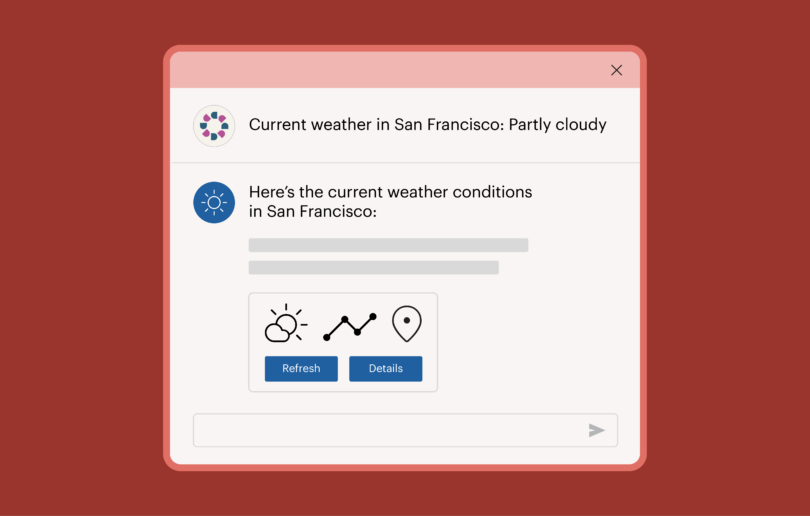
Nous savons que le Web d'aujourd'hui est en pleine transformation, avec la généralisation des agents d'IA : des outils qui naviguent, cliquent, remplissent des formulaires et effectuent des tâches pour le compte d'une personne. Comme l'a récemment rapporté CNET, les bots d'IA agissant comme des agents génèrent désormais plus de requêtes sur le Web à l'échelle mondiale que les humains.
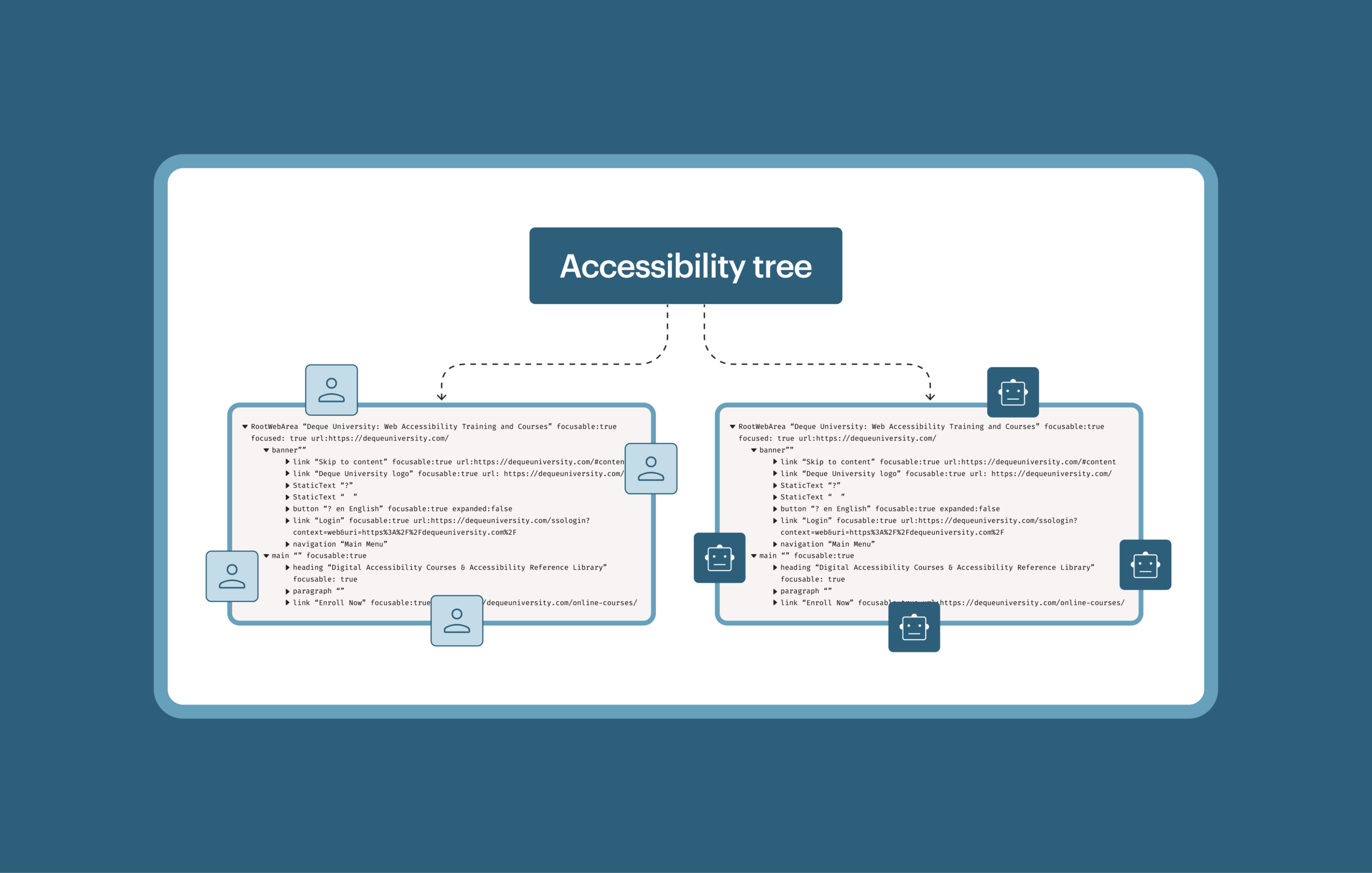
Ce que l’on sait moins, c’est que l’infrastructure qui rend cela possible est la même que celle que les équipes chargées de l’accessibilité mettent en place depuis des années : une structure composée de code HTML sémantique, d’attributs ARIA et conforme aux WCAG (Web Content Accessibility Guidelines). Neil Patel aborde cette convergence dans sa récente vidéo intitulée «L'opportunité marketing de la décennie (mais pas pour longtemps) », dans laquelle il explique comment les agents d'achat basés sur l'IA évaluent un site web et fait remarquer avec pertinence que « l'accessibilité pour les humains est devenue la visibilité pour l'IA ».
Les agents d’IA perçoivent les pages web essentiellement de la même manière que les lecteurs d’écran. Pour bien saisir toute la portée de ce constat, il suffit de se tourner vers la référence incontournable en matière de recherche et de résumés générés par l’IA : Google. Un article récent de Chrome for Developers consacré à l’évaluation de la navigation par agent dans Lighthouse expose clairement la situation, en qualifiant l’arborescence d’accessibilité de « métrique fondamentale pour la navigation par agent » et en précisant que « les agents s’appuient sur l’arborescence d’accessibilité comme modèle de données principal ». Les auteurs précisent ensuite que la visibilité — « un sous-ensemble spécifique des audits d’accessibilité qui est essentiel à l’interaction avec les machines » — consiste à « s’assurer que le contenu n’est pas masqué dans l’arborescence d’accessibilité tout en restant interactif ». Leur recommandation ? « Veillez à ce que l’arborescence d’accessibilité soit correcte. »
Ce qui est indéniable, c'est que l'accessibilité numérique n'a jamais été aussi importante, et nous avons aujourd'hui encore plus de raisons de penser que le Web doit être accessible à tous.
IA et accessibilité : identifier les lacunes
Compte tenu de cette nouvelle réalité, on pourrait penser que l'accessibilité numérique serait la priorité numéro un de chaque développeur et de chaque responsable technique au sein de toutes les organisations disposant d'actifs numériques. Malheureusement, cela ne semble pas être le cas.
Selon le rapport « 2026 Million » de WebAIM, 95,9 % des pages d'accueil présentent désormais des défauts d'accessibilité détectables. Ce chiffre s'est détérioré pour la première fois en six ans.
Par ailleurs, les responsables techniques font confiance au code généré par l'IA. Dans notre propre enquête menée auprès de 200 responsables techniques utilisant du code généré par l'IA et des agents de codage, 88 % ont déclaré avoir confiance dans l'accessibilité du code généré par l'IA, et 96 % ont indiqué qu'ils demandaient activement à leurs agents IA de produire des résultats accessibles.
Le code lui-même ne justifie pas cette confiance. Dans le cadre d’évaluation de Microsoft, six modèles d’IA sur dix ont échoué à tous les tests d’accessibilité automatisés. Dans le benchmark AIMAC de la Fondation GAAD, 35 des 37 principaux modèles d’IA présentaient par défaut de multiples problèmes d’accessibilité critiques et graves.
Le même schéma se reproduit après la mise en production du code. 64 % des responsables techniques affirment que les problèmes d’accessibilité constituent l’une des principales raisons justifiant une refonte du code après sa mise en production. 72 % d’entre eux indiquent que le développement assisté par l’IA a accru leur risque de non-conformité. Pourtant, lorsque ces mêmes responsables classent leurs préoccupations en matière de conformité, l’accessibilité arrive en dernière position.
IA et accessibilité : combler les lacunes
Cela ne signifie pas pour autant que l'occasion est manquée. Cela signifie au contraire que la voie est encore grande ouverte, et que les organisations qui comblent cet écart dès maintenant, avant que cela ne devienne la norme, pourront prendre les devants plutôt que de devoir courir après. Les données le confirment : détecter un problème d’accessibilité dès la phase de conception coûte environ 21 dollars et prend moins de 15 minutes. Détecter ce même problème une fois qu’il a atteint la phase de production coûte plus de 637 dollars, soit 30 fois plus. Pour une entreprise de taille moyenne, anticiper ce travail peut permettre d’économiser plus d’un million de dollars par an.
La conclusion est claire : il faut intégrer l’accessibilité dès la première instruction donnée à l’IA pour la rédaction de code, et non pas y remédier a posteriori. Et comme la communauté des personnes en situation de handicap perfectionne depuis des décennies l’interaction homme-machine pour différentes modalités d’entrée et de sortie, son expertise n’est pas seulement importante d’un point de vue moral ; elle est techniquement essentielle pour développer une IA robuste et fiable qui fonctionne réellement. N’oublions pas l’« accessibilité » dans l’arborescence de l’accessibilité !
Une IA qui fonctionne
Quand je parle d’« IA qui fonctionne », je parle de confiance. D’un code sur lequel on peut compter. C’est un enjeu crucial pour l’IA agentique. Comment pourrions-nous confier la responsabilité de nos tâches à un agent si nous ne pouvons pas être sûrs qu’il les exécutera avec précision et exactitude — ou même qu’il parviendra à démarrer, sans se perdre dans le labyrinthe d’un balisage mal conçu ? La réponse est simple : nous ne le pouvons pas. Et la réponse est la même pour tout le monde — pas seulement pour les personnes en situation de handicap. Une structure claire, des balises simples et un comportement robuste et prévisible facilitent la lecture d’une page par un lecteur d’écran. Ils facilitent également la lecture par un agent IA. Et plus la lecture est facile pour l’agent IA, plus il a de chances d’accomplir correctement sa tâche.
Lorsqu’une personne en situation de handicap ne parvient pas à consulter une page web, nous savons ce qui peut se passer. Elle peut vivre une expérience frustrante qui se traduira par la perte d’un client pour l’entreprise si elle quitte la page. Elle peut se sentir frustrée et déposer une réclamation ou laisser un avis négatif, ce qui peut nuire à la réputation de la marque. Elle peut saisir des informations erronées sans s’en rendre compte, ou renoncer à ses droits à la vie privée pour surmonter les obstacles à l’accessibilité, obligeant ainsi un membre de l’équipe d’assistance à corriger manuellement le problème. Toutes ces conséquences entraînent des coûts bien réels, tant en temps qu’en argent. Dans certains cas, la personne peut engager une action en justice, et l’entreprise pourrait alors devoir faire face à un procès. L’inaccessibilité est synonyme de risque.
Il existe également des risques concrets si un agent IA ne parvient pas à traiter une page. L’agent peut abandonner la tâche, ou celle-ci peut tout simplement échouer. Il peut se rabattre sur la lecture d’une capture d’écran au lieu de la structure sous-jacente de la page, ce qui est plus lent et moins précis. Il peut compléter ce qu’il n’a pas pu lire par une supposition plutôt que par un fait, et cette supposition peut ressembler en tous points à une réponse correcte : une commande passée, un formulaire envoyé, une décision prise, le tout sur la base d’une « hallucination » de l’IA. Et comme un agent peut répéter cette erreur sur de nombreuses transactions pendant le temps qu’il faut à une personne pour en commettre une seule, cette erreur se propage bien plus rapidement qu’une simple erreur humaine ne pourrait jamais le faire.
De nouvelles solutions pour l'ère de l'IA agentique
L'IA agentique est peut-être une nouveauté, mais ces problèmes, eux, ne datent pas d'hier. Cela fait trente ans que nous développons des solutions pour y remédier. Et nous sommes en mesure de résoudre ces problèmes à l'ère de l'IA agentique. Nous disposons de l'expérience vécue par les personnes en situation de handicap ainsi que de l'expertise des défenseurs de leurs droits, de leurs alliés et des professionnels du secteur. Nous disposons des outils, des technologies et des données nécessaires. Nous disposons des réglementations, des normes et des lignes directrices. Nous avons tout ce dont nous avons besoin.
Nous avons tout ce qu’il faut, sauf une chose : la cohésion. Nous avons besoin d’un engagement unanime à tous les niveaux, depuis les équipes de direction qui réalisent des investissements à l’échelle de l’entreprise dans l’IA jusqu’aux équipes de développement qui produisent du nouveau code à chaque minute de chaque jour. Il faut que tout le monde s’accorde sur la nécessité absolue d’adopter l’accessibilité numérique.
C'est là le véritable choix auquel est confrontée aujourd'hui toute organisation qui développe des solutions basées sur l'IA. Si vous considérez l'accessibilité comme un élément fondamental de votre stratégie en matière d'IA, vous offrez à votre entreprise une véritable opportunité de prospérer à l'ère de l'IA agentique et, ce faisant, de devenir leader sur le marché.
Nous explorons plus en détail cette opportunité dans notre nouveau rapport, De la dette au dividende : comment les responsables techniques peuvent faire progresser l’accessibilité à l’ère de l’IA. Il s’agit d’un guide pratique pour intégrer l’IA afin d’atteindre et de maintenir la conformité tout en minimisant les risques financiers, juridiques et de réputation, et en concevant des solutions accessibles dès le départ.
L'accessibilité à la vitesse de l'IA
Le Web a toujours été un espace dynamique, en constante évolution. Mais ce à quoi nous assistons aujourd’hui est un changement véritablement radical. Le Web est consulté chaque jour par un nombre croissant d’agents d’IA, et ce nombre ne fera qu’augmenter. L’accessibilité numérique centrée sur l’humain et l’accessibilité centrée sur les agents convergent, redéfinissant ainsi notre conception même de l’accessibilité. Heureusement, malgré le caractère bouleversant de cette transformation, nous disposons de l’expertise nécessaire pour y faire face. Cette expertise a toujours existé. Depuis des décennies, une communauté mondiale de défenseurs des droits des personnes en situation de handicap, d’experts et de professionnels, dont beaucoup sont eux-mêmes en situation de handicap, pose les fondations d’un Web accessible. Nous pouvons tirer parti de cette expertise. Le besoin est urgent. C’est maintenant qu’il faut agir. Nous pouvons atteindre l’accessibilité à la vitesse de l’IA. Nous le pouvons, et nous le devons.