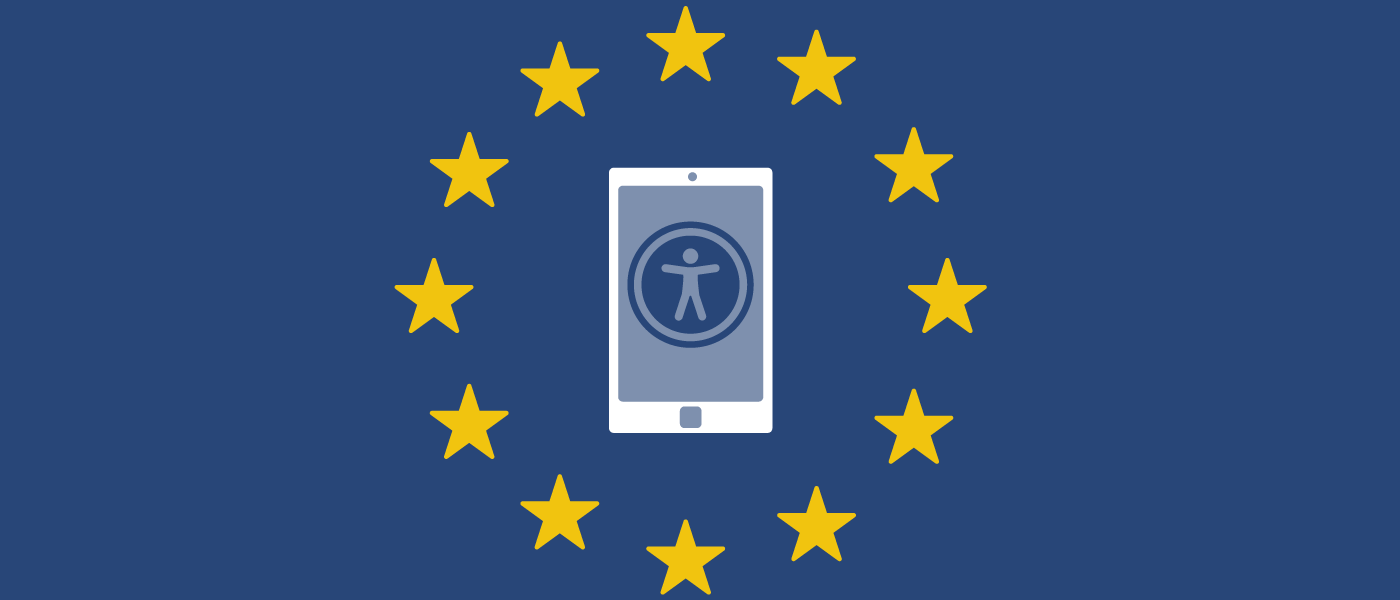
In recent years, the European Union put two pieces of legislation in place. They contain deadlines for making mobile products and services accessible in both the public and private sector. These will improve the use for people with disabilities in the EU, accounting for approximately 80 million people. The deadline for the public sector is in 2021, and for the private sector in 2025.
Public sector mobile applications
All EU member states have developed national legislation for public sector bodies based on the European Web Accessibility Directive. The effective date for mobile applications is June 23, 2021. The Directive refers to the accessibility standard EN 301 549.
It is important to note that although the EU Web Accessibility Directive applies to public-sector websites and apps, it will have an impact on private organizations as well. For instance, organizations that provide mobile products or services that impact public-facing government apps may need to comply.
From June 23, 2021, public sector bodies have the responsibility to make their mobile app content accessible to everyone. To achieve this they must have the following in place for their mobile products and services:
- An accessibility statement
- An accessible feedback mechanism
- Standards for monitoring methodology and reporting
Private sector mobile applications
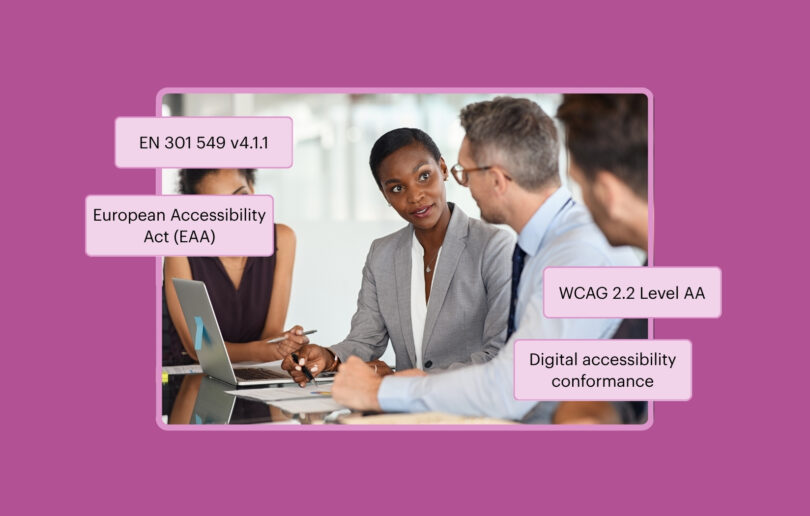
The national laws developed by the Member States that comply with the European Accessibility Act (EAA) will be published by June 28, 2022. Three years later, on June 28, 2025, the requirements must be implemented in products and services, including all mobile versions. These cover a wide category of mobile products and services such as:
- Services bancaires
- Commerce en ligne
- Mobile services related to air, bus, rail and waterborne passenger transport
- Telephone services and related equipment
- Smartphones
- Systèmes d'exploitation
- Livres électroniques
The EAA covers all apps sold or in use within the EU that fall into one of these categories. That means if your app is available in an app store of a country within the EU, the EAA applies to you.
There is no official reference yet to the accessibility standard EN 301 549, but that is to be expected in 2021.
Harmonized Accessibility Standard EN 301 549
The European Web Accessibility Directive references the four principles of accessibility (Perceivable, Operable, Understandable and Robust) and sets the minimum standard for accessibility equivalent to WCAG 2.1 AA. The method of enforcement for this directive is called EN 301 459.
EN 301 549 is an accessibility standard that covers all information and Communication Technology (ICT), including mobile. EN 301 549 points to the Web Content Accessibility Guidelines (WCAG) version 2.1 AA as a minimum level of compliance.
Steps Your Organization Can Take to Be prepared for EU regulation
- Provide an accessibility statement for your app in the app store – As a public sector body, you need to have a detailed, comprehensive and clear accessibility statement for your mobile app in place that shows the current state of accessibility. This should at least contain:
- The compliance status (for EU: WCAG 2.1 AA)
- An overview of what content is inaccessible, and why
- Accessible alternatives to that content
- Date and methods used to produce the accessibility statement
- A link to contact information for feedback on the accessibility of your app
As part of the European legislation, the EU developed a model accessibility statement. W3C also built an online accessibility statement generator.
- Choose Deque expert services or axe DevTools for Mobile – Relying on accessibility experts will save countless hours of missteps that hundreds of organizations are making today. By working with Deque to test your native Android or iOS apps, you’ll build better experiences for everyone and achieve your desired level of compliance, while still maintaining development velocity