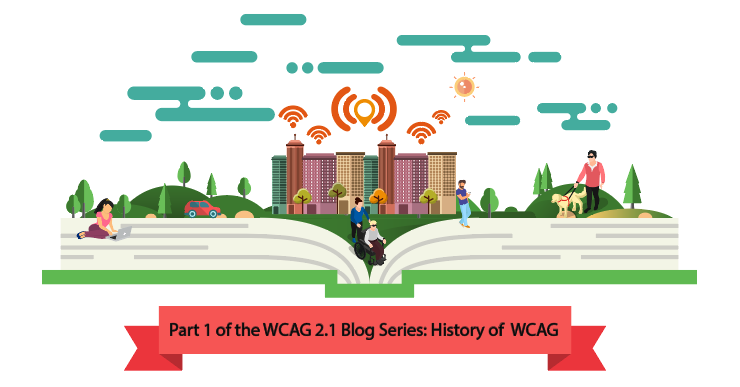
Was ist WCAG 2.1? Oh, das ist eine spannende Frage. Ich würde sie gerne in mehreren Teilen beantworten, wenn es Ihnen nichts ausmacht. Mein Name ist Glenda „The Goodwitch“ Sims und ich bin bereits seit vor dem Jahr 2000 im Bereich Barrierefreiheit tätig. Derzeit habe ich das große Privileg, aktives Mitglied der Arbeitsgruppe für Barrierefreiheitsrichtlinien beim W3C zu sein. Das mache ich ehrenamtlich. Mein Hauptberuf ist die Leitung einer wunderbaren Gruppe von Barrierefreiheitsexperten bei Deque.
Um diese Frage zu beantworten, wollen wir zunächst einen Blick auf die Geschichte der Web Content Accessibility Guidelines (WCAG) werfen. Wenn Sie Videos bevorzugen, können Sie sich gerne die untenstehende Aufzeichnung mit Untertiteln ansehen:
Was hat es mit diesem ganzen Gerede über WCAG 2.1 auf sich, und was ist WCAG überhaupt?
Die Richtlinien für barrierefreie Webinhalte, auch bekannt als WCAG (1.0), gibt es bereits seit dem 5. Mai 1999. Die Version 1.0 wurde an diesem Tag vor vielen Jahren veröffentlicht. Diese erste Version der Barrierefreiheitsrichtlinien konzentrierte sich stark auf HTML und war ein großartiger Schritt vorwärts, um das Web und die digitale Technologie barrierefrei zu gestalten. Einige Jahre später, genauer gesagt am 11. Dezember 2008, folgte dann WCAG 2.0.
Was ist der Unterschied zwischen 1.0 und 2.0?
In diesen fast zehn Jahren hatte man im Rahmen von WCAG 2.0 viel gelernt, und auch die Technologie hatte große Fortschritte gemacht. Mit der Version 2.0 wollte das W3C sicherstellen, dass die Richtlinien für die Barrierefreiheit von Webinhalten technologieunabhängig sind. Der Fokus lag nicht mehr nur auf HTML, da HTML nicht das einzige digitale Medium ist, über das wir verfügen und das wir nutzen. Ob es sich nun um PDF-Dateien, Textdokumente wie Word- oder Google-Docs-Dateien, Tabellenkalkulationen, Präsentationen, E-Books oder native mobile Apps handelt – all dies sind digitale Inhalte, die barrierefrei sein müssen. Daher erweiterte WCAG 2.0 im Jahr 2008 den technischen Anwendungsbereich der Richtlinien.
Die vier Grundsätze der WCAG 2.0
Ein weiterer wichtiger Bestandteil der WCAG 2.0 waren die vier festgelegten Grundsätze, und diese Grundsätze sind großartig, weil es sich nicht nur um eine lange Checkliste von Punkten handelt. Es geht um das Konzept, Dinge für Menschen mit Behinderungen digital zugänglich zu machen. Wenn man die Konzepte „wahrnehmbar“, „bedienbar“, „verständlich“ und „robust“ versteht, kann man auch den Lackmustest durchführen. Ist etwas aus einer übergeordneten Perspektive betrachtet für Sie zugänglich – in Ihrem Kopf und in Ihrem Herzen? „Wahrnehmbar“, „bedienbar“, „verständlich“ und „robust“ waren also die Grundsätze, die in den WCAG 2.0 klar definiert wurden. Das war ein wunderbares Geschenk.
Ein Sprung von 2008 ins Jahr 2017: WCAG 2.1 und Silver
Nun sind wir also im Jahr 2017 angelangt, und die WCAG 2.0 vom 11. Dezember 2008 ist nach wie vor unser Maßstab für Barrierefreiheit. Das Web und die digitale Technologie haben sich in den Jahren seit 2008 stark verändert. Daher gibt es Bestrebungen, eine neue Version der WCAG zu erstellen, nämlich die WCAG 2.1. Der Entwurf dafür wird derzeit ausgearbeitet. Der Entwurf steht zur öffentlichen Begutachtung bereit.
Im Großen und Ganzen wird WCAG 2.1 die Version 2.0 ergänzen. Die Version 2.0 war 2008 so gut verfasst, dass sie sich über die Jahre bewährt hat – alle Anforderungen sind nach wie vor sehr, sehr gültig. Halten Sie also an Version 2.0 fest, und lassen Sie uns sie um Version 2.1 ergänzen. Parallel zur WCAG 2.1-Punkt-Version gibt es eine weitere Initiative. Die 2.1-Punkt-Version konzentriert sich vor allem darauf, bekannte Lücken zu schließen. Schließlich gibt es noch eine weitere Initiative namens Silver, bei der es sich um die Barrierefreiheitsrichtlinien 3.0 handelt.
Wenn wir mit allem, was wir heute wissen, neu durchstarten könnten – vielleicht auf dem Mars –, wie würden wir dann heute die Richtlinien zur Barrierefreiheit gestalten? Das ist „Silver“. Wenn wir uns also die WCAG ansehen, sollten wir anerkennen, dass es sich um einen hervorragenden Standard handelt, den wir heute nutzen können, und ich freue mich darauf, Ihnen in zukünftigen Beiträgen mehr über die kommende WCAG 2.1 und „Silver“ im Detail zu berichten.