Die digitale Barrierefreiheit hat große Fortschritte gemacht. Allerdings ist die Kluft zwischen dem, was wir in Zukunft erreichen wollen, und dem, wo wir heute stehen, noch zu groß. Im Jahr 2024 weisen 96 % der eine Million meistbesuchten Startseiten Verstöße gegen die WCAG 2 auf.
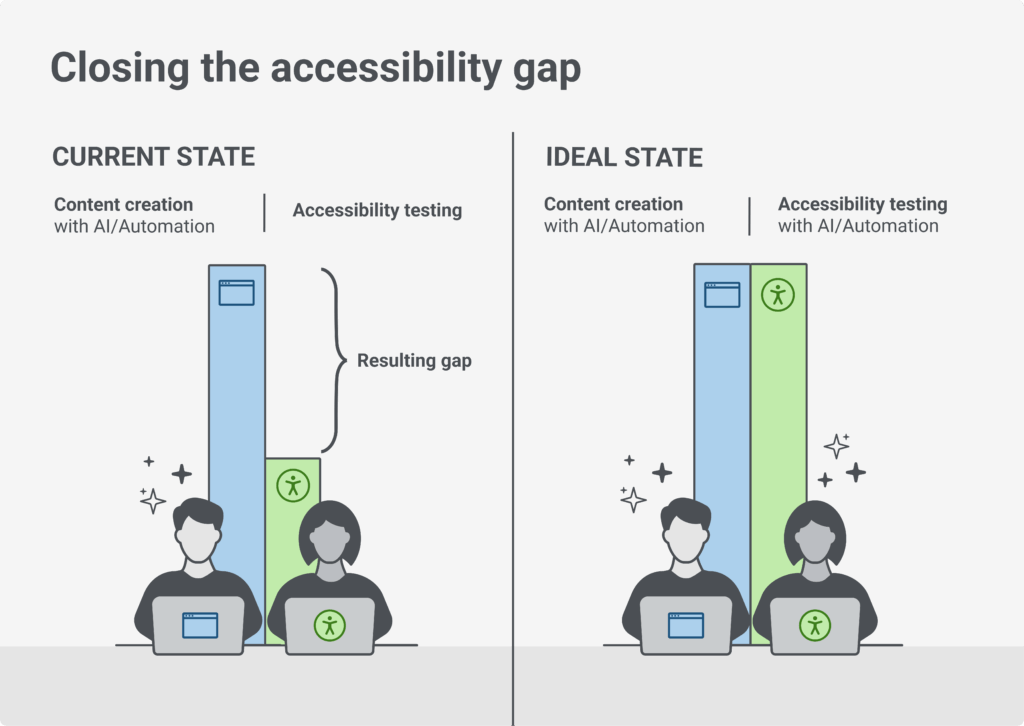
Die Erstellung digitaler Inhalte wird immer einfacher und schneller, da Content-Ersteller zunehmend auf Automatisierung und künstliche Intelligenz (KI) zurückgreifen – doch die Barrierefreiheitslücke wird größer, anstatt sich zu verringern. Die digitale Barrierefreiheit hält nicht Schritt. Wir müssen vorangehen und diese Lücke schließen.
Glücklicherweise stehen für dieses Vorhaben umfangreiche Ressourcen zur Verfügung.
Wir verfügen über etablierte Barrierefreiheitsexperten, die wirkungsvolle Initiativen leiten, Innovationen vorantreiben und die strategische Ausrichtung steuern können. Wir verfügen über einen umfangreichen Pool an Entwicklern, die wir mit fortschrittlichen Tools zur Prüfung der Barrierefreiheit ausstatten können. Und wir verfügen über die Technologie, um unsere Bemühungen zu beschleunigen und auszuweiten.
Bei „ Deque “ setzen wir uns dafür ein, die digitale Barrierefreiheit weltweit zu verbessern, und Menschen mit Behinderungen leisten einen wesentlichen Beitrag zum Erfolg dieser Mission – als Mitarbeiter von „ Deque “, als Fürsprecher für die Belange von Menschen mit Behinderungen und als Mitglieder der Gemeinschaft.
Barrierefreiheit soll in die Verantwortung aller gehen
Barrierefreiheit kann nicht ausschließlich von einer kleinen Gruppe von Experten gewährleistet werden, die sich allein auf manuelle Tests stützen. Es wird niemals genügend Barrierefreiheitsexperten geben, um alle Aufgaben zu bewältigen. Wir müssen die Barrierefreiheitsexperten entlasten, damit sie sich auf Strategie, Beratung und Innovation konzentrieren können, und gleichzeitig Entwickler und Designer so ausstatten, dass sie die tägliche Arbeit daran beschleunigen können, das Web für alle barrierefrei zu gestalten.
Wir streben eine Zukunft an, in der Barrierefreiheitstests und die Behebung von Mängeln keine speziellen Fachkenntnisse erfordern und Entwickler in die Lage versetzt werden, von Anfang an barrierefreie Nutzererlebnisse zu gestalten. Durch die Durchführung von Barrierefreiheitstests bereits in frühen Phasen des Design- und Entwicklungsprozesses („Shifting Left“) können Teams Probleme früher und präziser erkennen und beheben, wodurch Zeit und Geld gespart und bessere sowie barrierefreiere Produkte geschaffen werden.
Automatisierung und KI nutzen, um die Maßnahmen auszuweiten
Um unsere Ziele im Bereich der digitalen Barrierefreiheit zu erreichen, müssen wir effizient und effektiv vorgehen. Wir müssen die Kosten senken und gleichzeitig unser Tempo steigern sowie die Wirkung vergrößern.
Dazu ist Automatisierung unerlässlich. Nicht, um Menschen aus der Arbeit zu verdrängen, sondern um allen Menschen zu ermöglichen, ihre beste Arbeit zu leisten. Fortschrittliche Automatisierung ersetzt das Fachwissen im Bereich Barrierefreiheit nicht, sondern verstärkt und erweitert es.
Auch KI ist unverzichtbar. Denn obwohl KI kein Allheilmittel ist, kann sie Entwickler unterstützen, die Arbeitsgeschwindigkeit steigern und dazu beitragen, unsere Ziele zu verwirklichen, wenn sie verantwortungsbewusst eingesetzt wird. In einer Welt, in der die Erstellung von Inhalten durch den Einsatz von KI und Automatisierung rasant zunimmt, müssen wir sicherstellen, dass sich Befürworter der digitalen Barrierefreiheit und Entwickler auf fortschrittliche Automatisierungs- und KI-Lösungen stützen können, um Fortschritte zu erzielen und die Barrierefreiheitslücke zu schließen.
Unser Ziel ist es, Entwicklern die Möglichkeit zu geben, alle WCAG-Konformitätsprobleme in ihrem Code zu erkennen und zu beheben – noch bevor dieser in die Produktion gelangt. Aus diesem Grund streben wir an, die Konformitätsprüfungen so weit wie möglich mit höchster Genauigkeit zu automatisieren.
Den Barrierefreiheitsexperten mehr Befugnisse und Kontrolle einräumen
Barrierefreiheitsexperten müssen in der Lage sein, ihren Fokus auf die Maßnahmen mit dem größten Nutzen zu richten – Benutzerfreundlichkeit, menschenzentrierte Bewertung und langfristige Wirkung –, um so zu strategischen Führungskräften aufzusteigen, die Teams leiten, Technologien mitgestalten und die Barrierefreiheit vorantreiben. Die fachliche Aufsicht ist zudem von entscheidender Bedeutung, da wir weiterhin mit den Grenzen und Risiken der KI konfrontiert sind.
Bei der digitalen Barrierefreiheit geht es um weit mehr als nur die Einhaltung von Mindestanforderungen. Barrierefreiheitsexperten können gemeinsam mit unseren Partnern aus der Behindertengemeinschaft den Weg zu einer wahrhaft globalen Kultur der Inklusion ebnen.
Die Zukunft der digitalen Barrierefreiheit beginnt jetzt
KI und Automatisierung müssen sinnvoll, ethisch und zum Wohle der Menschen eingesetzt werden. Es gibt verständliche Skepsis gegenüber der Testautomatisierung im Bereich der Barrierefreiheit. Deshalb entwickeln wir diese Technologien in Zusammenarbeit mit unserer Community, um sicherzustellen, dass sie echte Probleme lösen und echte Bedürfnisse erfüllen.
Unsere Vision ist klar: eine Zukunft, in der Barrierefreiheit für Entwickler selbstverständlich ist, in der Experten Innovationen vorantreiben und in der digitale Erlebnisse wirklich inklusiv sind.
Erfolg bedeutet, dass Menschen mit Behinderungen ohne Frustration im Internet navigieren können, Experten sich auf Benutzerfreundlichkeit und Innovation konzentrieren können und Entwickler barrierefreie Software effizient und effektiv erstellen können. Gleichzeitig können Unternehmen Risiken minimieren, ihre Märkte erweitern, herausragende Benutzererlebnisse bieten und ihr gesellschaftliches Engagement fördern.