As we get ready to observe Global Accessibility Awareness Day 2022, I would like to reflect on some perceptions that are changing both in and outside the digital equality community from my perspective as an accessibility expert and consultant who is also blind.
While the term disability is still widely accepted as a way to describe someone who experiences a reduction or missing ability (vision, speech, cognition, etc.), and is a much better term for the out-of-date term handicapped, I see the term disability as one day being relegated to the same status. No, we aren’t there yet, but a lot of magnificent work has been accomplished these past 20 years in the field of digital accessibility including general awareness of the challenges facing people and the need for digital equality, which is elevating the status of what it means to have a disability. While the general public doesn’t understand the concept of digital accessibility, business leaders, government officials and the legal sector are becoming increasingly aware of the need to be inclusive of people who use assistive technology or have special needs to engage with technology in a productive and meaningful way.
As the importance of technology continues to play a greater role in our lives and as access to that technology, in general, becomes more accessible for all, thanks to digital inclusion, the disparities disabled people experience continue to shrink. While we aren’t in a place where we can point to a particular technology and say it has completely eliminated all of the barriers someone with a disability might experience, it has made dealing with life’s challenges much more manageable. While I feel that advancements in science and technology may one day remove all or most disabilities, that day is a long way off and I may not be there to celebrate but I can dream about that future state.
Accessibility in the mid-20th century
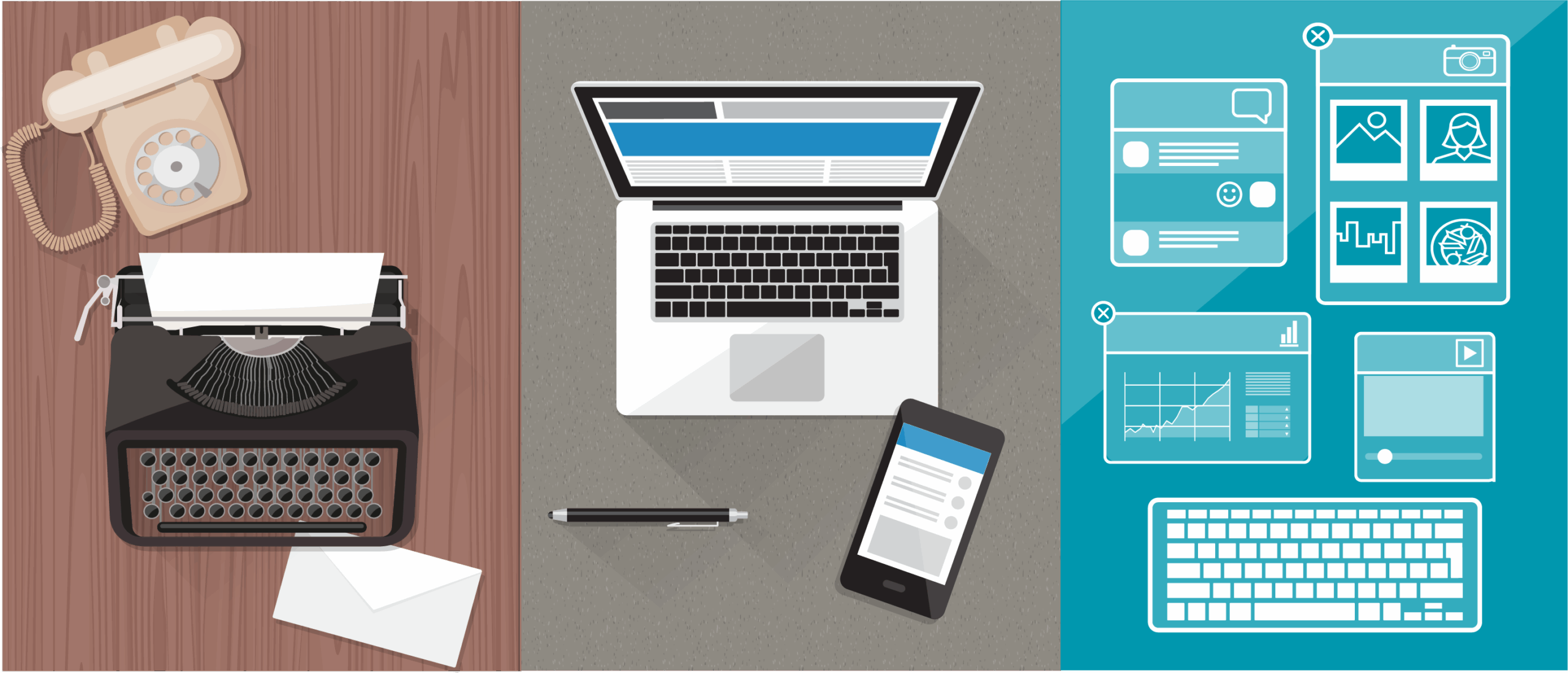
To put some perspective on where technology has taken us in the last 50 years, let’s take a look at what it was like to communicate, travel and consume products and services in the mid-20th century through the lens of a person with no vision (total blindness).
Landlines, typewriters, and limited braille resources
We communicated with landline-based telephones, wrote by using inaccessible typewriters to produce print our peers could understand and had limited access to books, magazines and newspapers only through special libraries for the blind that were delivered by the mail. We weren’t able to read a prescription label or the label from a can of soup and Braille signs in buildings weren’t existent. We could listen to television but couldn’t see the action.
Few transportation options
Unless you lived in a large metropolitan area with a transit system, you were limited to expensive taxi services if available in your area. The right to rail and air travel wasn’t guaranteed. Tools to independently tell us where we were located or aid in navigation was nonexistent. Navigating large in-door spaces was a challenge requiring dedicated orientation services or assistance from the public.
Brick-and-mortar shopping
If you were lucky enough to have a job and move about independently, purchasing products and services was dependent upon assistance from the company or store owner of the establishment you were shopping at and were not always available. Shopping independently was a possibility for some but could be very stressful.
Accessibility innovation in the past 50 years
However you want to term it– digital accessibility, digital equality or digital inclusion– the following examples demonstrate what good accessible technology and a lot of innovative ideas have done for us 50 years later by allowing us to be independent and move up many notches on the equality ladder.
Connected through (assistive) technology
We now talk on a variety of devices, from cell phones to computer workstations via Zoom. We create reports with word processors, email and text from any place there is a Wi-Fi or cell signal. We have access to almost any magazine, newspaper or book we can think of. Prescription bottles and grocery store products, cans boxes and packages, are now accessible in a variety of ways. This is all due to the use of great assistive technology like screen readers, screen magnifiers or automated captioning systems coupled with accessible digital content. We can now watch many television programs with the development of descriptive video service (DVS) and most buildings have Braille labels on room signs and elevator buttons thanks to the Americans with Disabilities Act (ADA).
Travel is just a click away
Access to rail and air travel is now protected in many parts of the world and moving about in metropolitan areas is now a few clicks away with rideshare on a mobile device. GPS has improved our independence and ability to travel both on foot and by car. Apps like AIRA and Be My Eyes provide augmented reality tools that allow live streaming sighted assistance over our cell phones for independent travel in new spaces like large buildings.
Shopping goes digital
The ability to consume has dramatically improved just in the last five years with the ability to have anything you can think of delivered straight to your door. Online retailing not only has given us the ability to have purchases delivered, but it has also opened up the ability to shop and browse products and services online we might not even know about if we were in a brick-and-mortar store. Moreover, due to the COVID-19 pandemic, grocery delivery is a service I don’t think will ever go away.
Yes, things have improved and yes, they are not perfect. A lot of work still needs to be accomplished to improve accessibility and make it the norm (expectation). Many PDFs and web forms are missing basic accessibility features that block equal access to people with disabilities. Ease of travel could be improved by providing greater flexibility to where we can go and access to many e-commerce sites for shopping still need work. But compared to where we were even just twenty years ago, life is a lot better.
Technological innovation leads to accessibility advancements
All of these advancements have moved us forward greatly in the journey to go from unable to able in the arena of performing day-to-day tasks that most take for granted. While a lot of the advancement has come about due to technology, a lot has also evolved due to the desire to provide more convenience for mainstream consumers. I love the quote I recently heard that said, “one person’s convenience is another’s accessibility.” Grocery delivery solves many problems for the masses but is essential to those who don’t see well enough to drive and navigate a grocery store.
Technology will continue to be the driver of even more advancements to shrink the disability and ability gap when things like 5G networks coupled with super-fast AI (Artificial Intelligence) and ML (Machine Learning) systems will allow wearable technology to help us see, hear and process the world around us. While access to digital content like web pages, multimedia, mobile apps and common office files continues to improve, access to some digital content is just starting to be looked at. Technology keeps moving into all parts of our life from touch screen interfaces on appliances and fitness equipment to the climate controls for our homes. These forms of digital content also need full access to make our dream of full inclusion come true.
While the advancement of technology has improved the quality of life for many of us, true digital equality is still a way from being a reality. Regardless, digital accessibility is here to stay. Let’s embrace it and continue improving it through awareness, education and collaboration until it is no longer a specialized skill set people try to avoid, but the norm for quality digital solutions to make our lives easier and more enjoyable.
Celebrate Global Accessibility Day 2022 this May 19th and learn how we can all make everyone’s lives a little more inclusive of accessible digital technology of all forms.